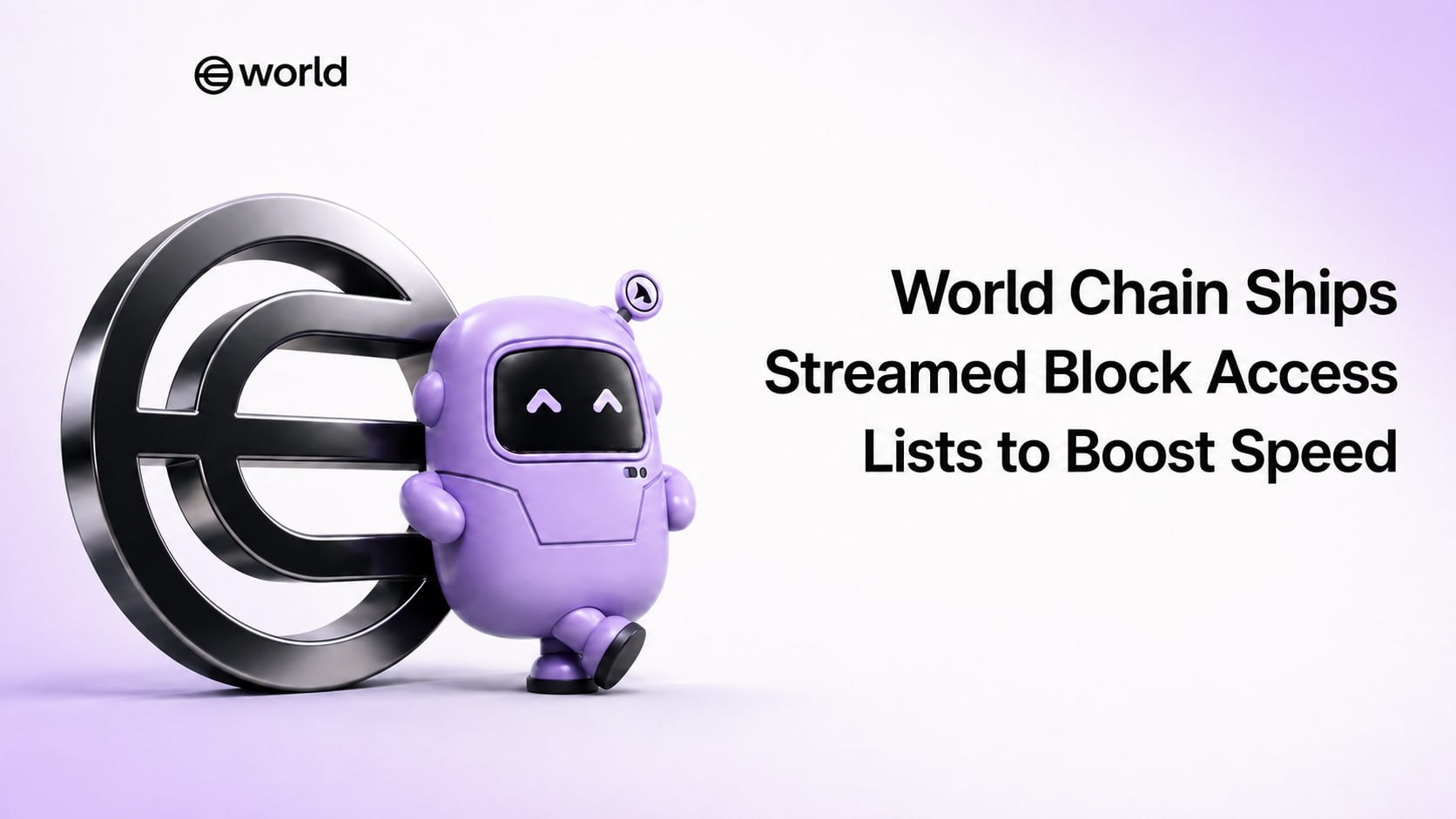
World Chain Ships Streamed Block Access Lists to Boost Speed
World Chain is trying something new on its Ethereum layer-2 mainnet. Instead of making validator nodes wait around for entire blocks to finish building, the network is now streaming block acc
A
AnonymousCryptoCompass newsroom
August 18, 2026
2 min read
NEWS
CryptoCompass editorial visual for altcoins coverage.
World Chain is trying something new on its Ethereum layer-2 mainnet. Instead of making validator nodes wait around for entire blocks to finish building, the network is now streaming block access list data in real time under the EIP-7928 standard. The team hopes this tweak will let nodes check unrelated transactions side by side, ramping up capacity without forcing node runners to buy pricy server upgrades.
Breaking the Sequential Bottleneck
Traditional blockchains process activity in a straight line. One transaction wraps up, and only then does the next one run.
EIP-7928 changes this dynamic by mapping out which accounts and storage slots a block touches. With that map in hand, computers can read disk storage and verify math in parallel. World Chain ties this directly into its existing Flashblocks setup, pushing out updates every 200 milliseconds. Validators get an early look at incoming data, meaning they can start checking transactions before the full block even closes.
Deployment Without the Hard Fork Drama
Rolling out core technical upgrades often means coordinating messy hard forks. World Chain bypassed that friction entirely by flipping a runtime flag.
According to internal benchmark numbers from the team, test networks hit speeds up to one gigabyte per second on everyday cloud servers without seeing validation lag spike. It is worth noting that outside researchers have not audited those benchmark figures yet, but the early performance targets are ambitious.
A Real-World Test for Ethereum Scaling
Validators struggle when transaction traffic surges. If hardware requirements climb too fast, fewer people can afford to run nodes, which hurts decentralization.
By showing which transactions stay out of each other's way ahead of time, block-level access lists remove the guesswork from parallel execution. Because Ethereum core developers are tracking EIP-7928 as part of the future Glamsterdam roadmap, World Chain is effectively serving as a live testing ground.
The upgrade does not change token mechanics, but it provides a working blueprint for the wider ecosystem. How well it holds up under heavy, messy mainnet traffic will determine whether streamed access lists become the standard blueprint for layer-2 networks going forward.
Bitcoin, Federal Reserve’in 2023’ten bu yana yaptığı ilk faiz artışının ardından önce 75.000 doların altını test etti, ardından yeniden toparlandı. Fed politika faizini 25 baz puan artırarak
Bitwise views the Senate setback as temporary rather than decisive. Bitcoin rallied while passage odds fell, weakening a direct price link. Agency rules can advance, but Congress offers stron
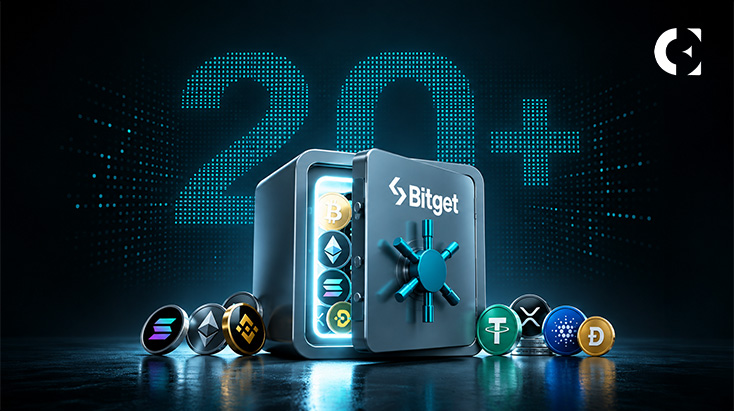
Bitget expands its Proof of Reserves system from four crypto to over 20 major assets. Covered assets include BGB, BTC, USDT, ETH, USDC, XRP, SOL, DOGE, BNB. Users can also view details such a