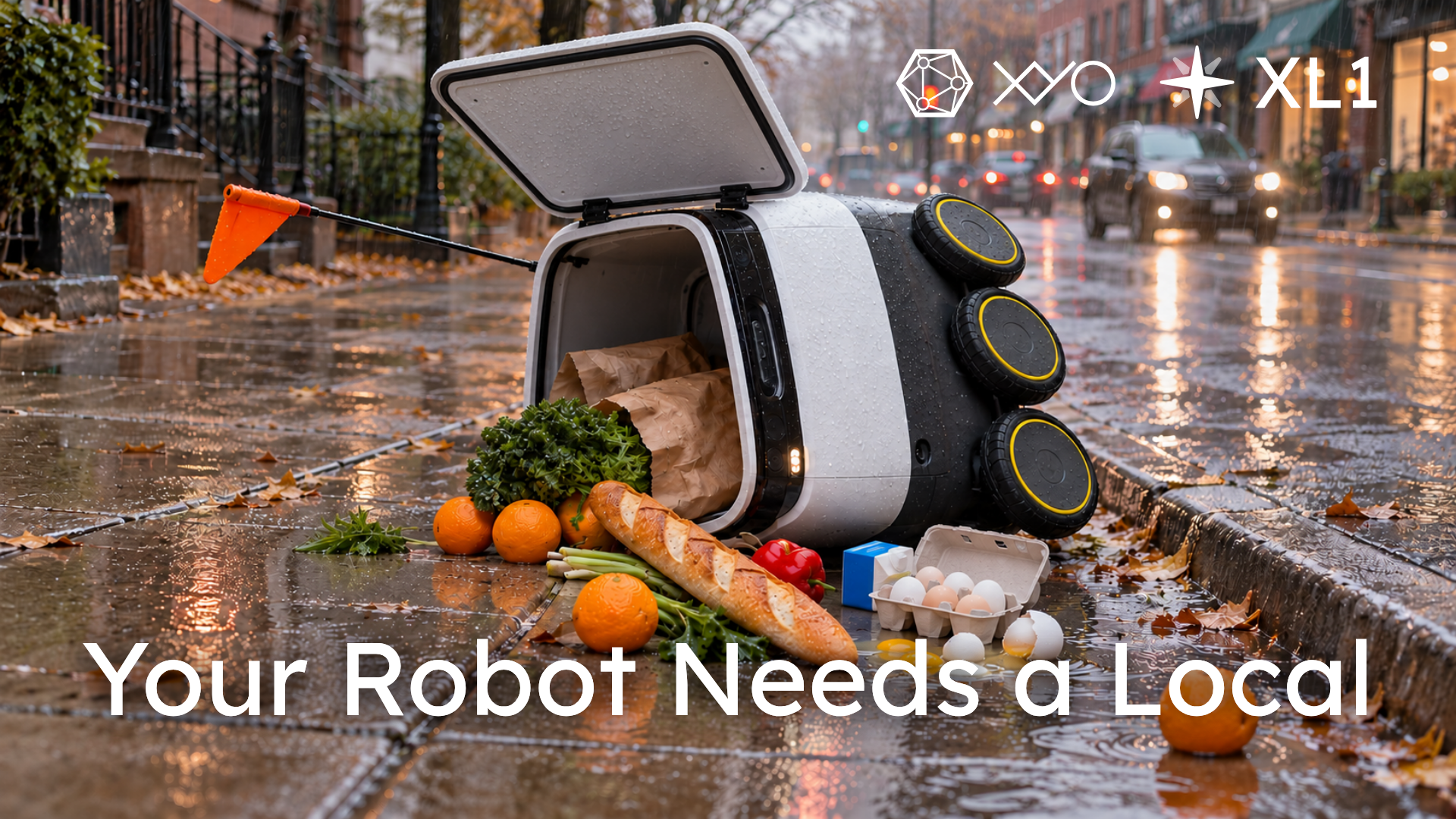
Imagine coming around the corner on a rainy afternoon and finding a delivery robot on its side, with oranges rolling toward the storm drain and a baguette absorbing most of a puddle. Its dest
Imagine coming around the corner on a rainy afternoon and finding a delivery robot on its side, with oranges rolling toward the storm drain and a baguette absorbing most of a puddle. Its destination is half a block away, where someone is watching an arrival estimate that has become increasingly optimistic. A pedestrian sets the machine upright, gathers what can be salvaged, and points it toward the entrance the delivery drivers actually use.
The gap between a planned delivery and an actual sidewalk is easy to appreciate in these delivery robot fail compilations, which offer more examples of deliveries going wrong than anyone waiting for their groceries would like, along with another compilation of robot mishaps. (These videos contain adult language.) The failures illustrate the practical challenge behind the humor: a machine has to cope with the conditions it encounters along the way, even when it has a route to its destination. Local context and timely guidance could help with some of those situations, although the clips alone cannot establish what caused each failure.
We do not know what tipped this imaginary robot over, but anyone familiar with the block could have offered some useful advice before it left. Water collects at that curb whenever it rains, and the smoother crossing is a little farther down. The building's street entrance stays locked during the afternoon, while the side entrance opens onto a ramp. None of this would be especially interesting to someone who delivers groceries there every week, which is precisely why it is interesting to someone building a machine that has never visited.
A great deal of what makes a place navigable lives in the habits of the people who use it. A map can get you to a building without telling you how to get a delivery inside, and an address can remain perfectly accurate while the approach becomes useless. People fill those gaps by remembering previous trips, asking someone nearby, or watching where everyone else goes. A robot has to acquire that context somehow, preferably before the eggs reach the pavement.
Consider a route that passes an elementary school. At ten in the morning, there might be plenty of room to get through. By the afternoon pickup, the same stretch could be crowded with families, with cars queuing near the crossing and very little space for a machine carrying someone's dinner. A route planner that knows the street layout still has to account for how that space gets used.
Weather adds another layer of local experience. Someone who walks the same route every day might know which underpass floods first or where fallen leaves conceal a broken section of pavement. Those details can matter enormously to a small wheeled machine, even when they barely affect the person stepping over them. Useful information depends partly on who, or what, needs to use it.
A machine might correctly identify a door and still need to learn whether it is an appropriate entrance. It might recognize a crowd without knowing that waiting fifteen minutes would make the route easier. Operating successfully in a neighborhood requires information about how the place works over time, including the exceptions that residents learn through experience.
Imagine a neighborhood service where a shopkeeper can update delivery access for the afternoon, or a maintenance worker can flag a ramp that is temporarily closed. A delivery operator could use those updates to adjust its routes, while a business could spend less time retrieving confused machines from the wrong entrance. For someone who already knows the answer, contributing that guidance could take only a few seconds and give the machine context it could not get from an address alone.
Building that service would involve some practical decisions. A temporary closure needs an expiration time so it does not keep diverting deliveries next month. Directions for a robot need to account for its size and ability to handle slopes. A report about a crowded sidewalk should help machines leave room for pedestrians, rather than encourage them to find increasingly creative ways through the crowd.
There is also a reasonable conversation to have about compensation. If someone's regular observations help a commercial delivery service avoid wasted trips, that contribution has value. A useful system would need to make participation easy enough to fit into an ordinary day, while explaining who can use the information and what contributors receive in return. Nobody should need to become an unpaid neighborhood dispatcher just to keep robots away from their front steps.
People would also need control over what gets shared. Publishing delivery hours for a business serves a clear purpose, while exposing the movements of its employees is a very different proposition. A service could focus on access conditions and temporary obstacles without turning individual routines into a product. Those choices would shape whether residents welcomed the system and continued contributing to it.
At XYO, we are interested in what developers can build when applications can work with information from the physical world. The XYO AI SDK is part of that work, and neighborhood knowledge offers a compelling direction to explore. The service described here is a hypothetical application, with a practical question at its center: how could information contributed by people who know a place help machines operate there more successfully?
A builder could start with a single block and a narrow problem, such as helping deliveries find the right entrance. That would create an opportunity to learn which updates people are willing to contribute, how quickly conditions change, and whether the information actually makes deliveries easier. The neighborhood would provide a much better test than an impressive demonstration on an empty sidewalk.
The delivery robot in the rain gives that work a fairly modest purpose. Someone wanted their groceries, and a machine encountered a place it did not understand well enough to finish the trip. If robots are going to become useful neighbors, the people who already live and work around them should have a meaningful role in teaching them how to get along.