Zcash trades above $1,200 after a 37% weekly gain Short sellers absorbed $48 million in liquidations in 24 hours, more than any other asset A Grayscale spot ETF and a Winklevoss-backed treasu
- Zcash trades above $1,200 after a 37% weekly gain
- Short sellers absorbed $48 million in liquidations in 24 hours, more than any other asset
- A Grayscale spot ETF and a Winklevoss-backed treasury firm are pulling ZEC off the open market
- Zcash now doubles Monero’s market cap as the two privacy coins split on exchange access
Zcash (ZEC), the privacy-focused Bitcoin fork launched in 2016, pushed above $1,200 on September 6, extending a run that cleared $1,000 days earlier and has lifted the token roughly 37% in seven days and near 2,300% over the past year. The coin now carries a market value of about $20.04 billion, ranking it the tenth-largest cryptocurrency, ahead of Dogecoin. The latest leg higher forced $48.10 million in liquidations across leveraged positions in a single day, the heaviest of any asset on the board, and most of that pain landed on traders betting the rally would break.
Price $1,189–1,204 24h +15.75% 7d +36.80% Market cap $20.04B
$48M in shorts liquidated in a day, the largest hit on the board
According to data from CoinGlass, ZEC topped the liquidation heatmap with $48.10 million wiped out, ahead of Ethereum’s $45.03 million and well above Bitcoin’s $19.25 million. Most of the ZEC total came from short positions, traders who sold borrowed coins expecting to buy back lower. When price climbs instead, exchanges close those positions by buying ZEC on the open market, and those forced purchases push price up further, triggering the next batch. Derivatives data earlier in the week showed a heavy majority of Binance futures accounts positioned short with funding turning against them, the classic setup for a squeeze.
Liquidations by asset · 24 hours ZEC $48.10M ETH $45.03M BTC $19.25M ARB $14.27M SOL $13.60M
The ETF, Cypherpunk and a shrinking tradable supply
Zcash shares Bitcoin’s economics, including a 21 million hard cap and scheduled halvings, but adds optional privacy through zero-knowledge proofs, or zk-SNARKs, which let a transaction be verified without exposing sender, receiver, or amount. Two institutional anchors turned that pitch into a bid this year. Grayscale converted its Zcash Trust into the ZCSH spot ETF on NYSE Arca on August 25, the first US-listed spot fund for a privacy coin, launching near $304 million and since growing past $414 million. A nearly two-year SEC investigation into the Zcash Foundation closed in January with no enforcement action.
Gemini co-founder Tyler Winklevoss called ZEC “encrypted bitcoin” and, more recently, AI-proof private money. His firm’s Cypherpunk Technologies began accumulating ZEC in November near $245 a coin and targets at least 5% of total supply, more than one million tokens. The ETF and the treasury both buy and hold, thinning the float, which is part of why a $20 billion coin still swings double digits in a day.
RSI at 80 warns the ascending channel is running hot

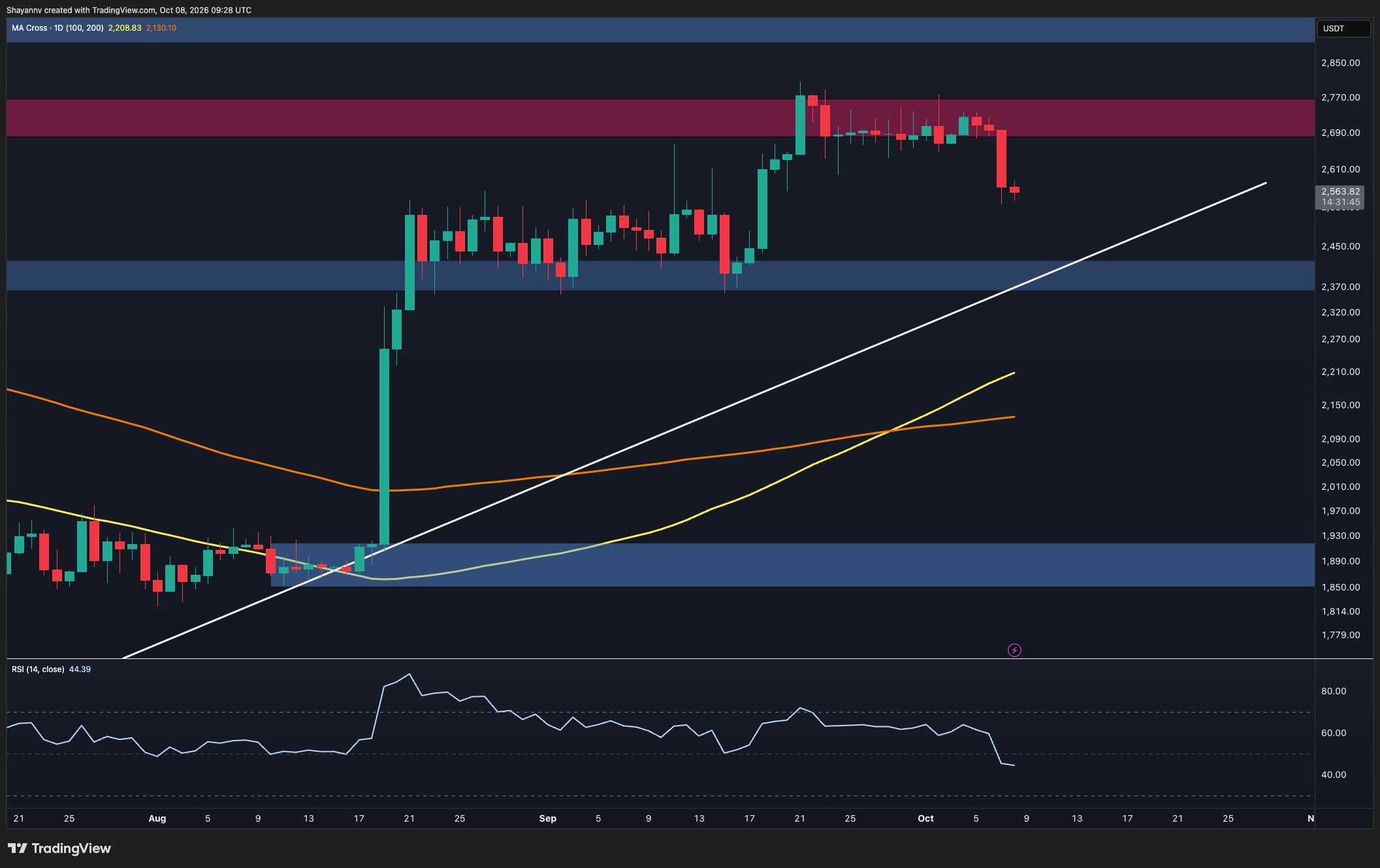
ZEC/USDT 4-hour chart with RSI at 80.64. Source: TradingView.
On the 4-hour chart, ZEC has climbed inside an ascending channel since early September. The 20-period moving average sits at $1,036.88 and the 50-period at $916.89, both far below price, confirming a firmly upward short-term trend. The caution sign is the Relative Strength Index, which measures how far and fast price has moved on a 0 to 100 scale. Readings above 70 are considered overbought; ZEC printed 80.64. That does not force a reversal, but it shows buyers have pushed price up at a pace that rarely holds without cooling. Chart analysts, separate from any formal forecast, flag $700 to $800 as the support that must hold and $1,200 to $1,300 as near-term resistance.
SMA 20 $1,036.88 SMA 50 $916.89 Support $700–800 Resistance $1,200–1,300 RSI (14): 80.64 · overbought territory 03070100
Why Monero gets delisted while Zcash gets an ETF
Monero (XMR) trades at $529.26 with a $9.95 billion market cap, roughly half of Zcash’s, up 6.21% on the week against ZEC’s 37%. The gap comes down to compliance. Monero enforces privacy on every transaction with no transparent option, which makes anti-money-laundering screening impossible and has driven more than 70 exchange delistings through 2025, a UAE delisting due this month, and Kraken’s earlier European exit. Coinbase never listed it. Zcash’s privacy is optional and can be selectively disclosed through viewing keys, so regulated venues list ZEC and still meet reporting duties. Monero’s answer has been to route around exchanges: in late August, the cross-chain protocol THORChain added native XMR swaps, a censorship-resistant workaround rather than an institutional on-ramp.
Zcash (ZEC) Market cap$20.04B (#10)7d change+36.80%PrivacyOptional, selectiveExchangesCoinbase, BinanceSpot ETFYes (ZCSH) Monero (XMR) Market cap$9.95B (#12)7d change+6.21%PrivacyMandatory, always onExchangesWidely delistedSpot ETFNone
Why the flushed short book now shifts the risk onto longs
With the crowded short book largely cleared, the squeeze that powered this leg loses its engine, and price now leans on fresh spot demand and continued ETF inflows to hold up. If those buyers step back while RSI sits this high, the same leverage can unwind the other way, with long liquidations replacing short ones. The deeper question is whether the split with Monero lasts. The optional privacy that won Zcash its institutional lane is exactly what purists reject as a compromise, and an EU rule barring anonymous accounts from July 2027 could yet test how far viewing keys satisfy regulators. Whether shielded usage grows with the price, or the rally stays a supply-and-narrative trade riding an ETF and one loud backer, decides how much of this $20 billion holds once the leverage settles.
The post Zcash Price Hits $1,200 After 37% Weekly Rally appeared first on ETHNews.