In an industry built on transparency and verifiability, newcomers might assume that crypto and blockchains leave very little room for mystery. They’d be completely wrong of course, because th
In an industry built on transparency and verifiability, newcomers might assume that crypto and blockchains leave very little room for mystery.
They’d be completely wrong of course, because the murky world of digital assets is rife with underhanded dealings, unsolved enigmas and fortunes disappearing behind pseudonyms.
From the identity of Bitcoin’s mystery creator to what really happened to a DAI developer on a beach in Puerto Rico, here are 10 crypto mysteries that remain unsolved.
1. Who is Satoshi Nakamoto?
More than 17 years after Bitcoin’s creation, the greatest unsolved crypto mystery persists. We still don’t know who Satoshi Nakamoto is, or even whether Satoshi was one person.
He, she, or they published the Bitcoin white paper in 2008, mined the genesis block in January 2009 and remained active in its early development before disappearing from public view in 2010.
The quest for Satoshi’s identity has since produced an endless parade of possible candidates, from cryptographers and cypherpunks to British academics, early Bitcoin developers and even convicted sex offenders.
The latest serious attempt to solve the mystery came in April 2026, when The New York Times published a lengthy investigation naming British cryptographer Adam Back as its leading candidate.
Related: Satoshi-era Bitcoin wakes after 16 years of dormancy as 600 BTC moves
The Times claimed there were similarities between his writings and Satoshi’s, their shared cryptographic interests, Back’s work on Hashcash — which was cited in the Bitcoin white paper — and a series of other circumstantial clues, all of which Back strenuously denied.
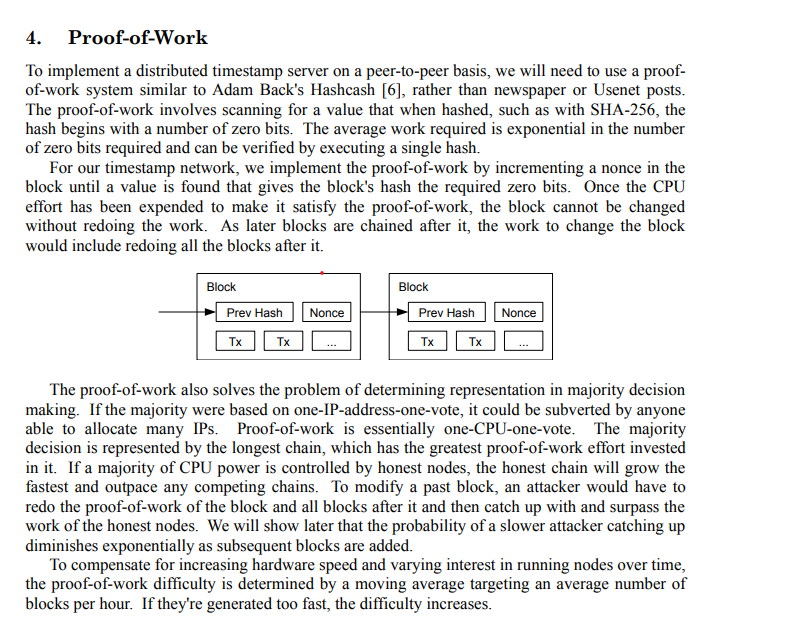
Adam Back’s Hashcash is cited in the Bitcoin Whitepaper. Source: Bitcoin.org
Other suspected candidates over the years have included core developer Peter Todd, cryptographer Hal Finney, Twitter founder Jack Dorsey and others. Self-proclaimed Bitcoin creator Craig Wright is the only major Satoshi candidate to have been formally ruled by a UK court not to be Satoshi.
There were even some bizarre online claims that notorious sex offender Jeffrey Epstein could be Satoshi after a newly released tranche of the Epstein files revealed the sex trafficer had been involved in the early crypto industry, and made a 2014 investment in Back’s Blockstream.
There is no credible evidence that Epstein was Satoshi, , and so the enigma remains: Who is Satoshi Nakamoto and where is he now?
2. Who was the Patoshi miner?
If you thought the Satoshi mystery was strange, try digging into Bitcoin’s earliest blocks like blockchain researcher Sergio Lerner.
In 2013, he discovered a pattern in the way Bitcoin’s earliest blocks were mined and linked it to a single miner he later dubbed “Patoshi.”
Lerner estimated that the miner had accumulated about 1.1 million BTC across 22,000 blocks, which makes the enigmatic figure the largest holder of BTC today, above Coinbase, BlackRock and Strategy.
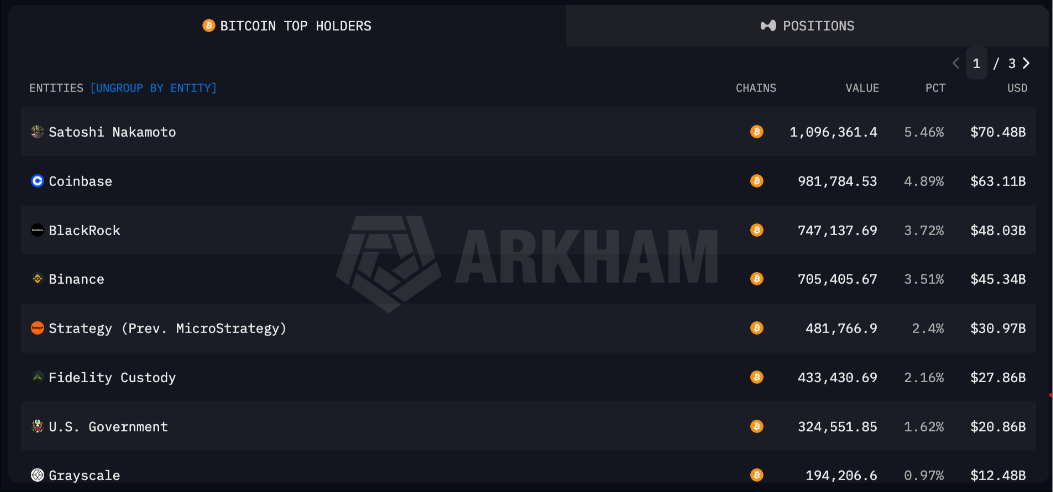
Satoshi Nakamoto is the top Bitcoin holder. Source: Arkham
While Patoshi has never conclusively been proven to be the mysterious Bitcoin creator, the pattern is still one of the strongest pieces of evidence linking a huge stash of early Bitcoin to Satoshi.
So who was Patoshi? Was it Satoshi operating a single machine, another early Bitcoin enthusiast, or something else entirely?
3. What happened to Mt. Gox’s missing Bitcoin?
When Mt. Gox collapsed in February 2014, it claimed that around 850,000 BTC had disappeared — only to later uncover some 200,000 BTC hiding in old-format wallets it previously believed to be empty. To this day, the rest of the coins’ whereabouts remain a mystery.
More than 12 years later, creditors are finally getting some of their money back, but what happened to Mt. Gox’s missing Bitcoin has never been resolved.
Related: Mt. Gox moves $739M in Bitcoin from cold wallets: Arkham
Investigators have traced portions of it, including some coins connected to Russian cybercriminals and the BTC-e exchange. US prosecutors have also alleged that Russian nationals stole and laundered roughly 647,000 BTC from Mt. Gox, yet the full story of the stolen coins has not been completely solved.
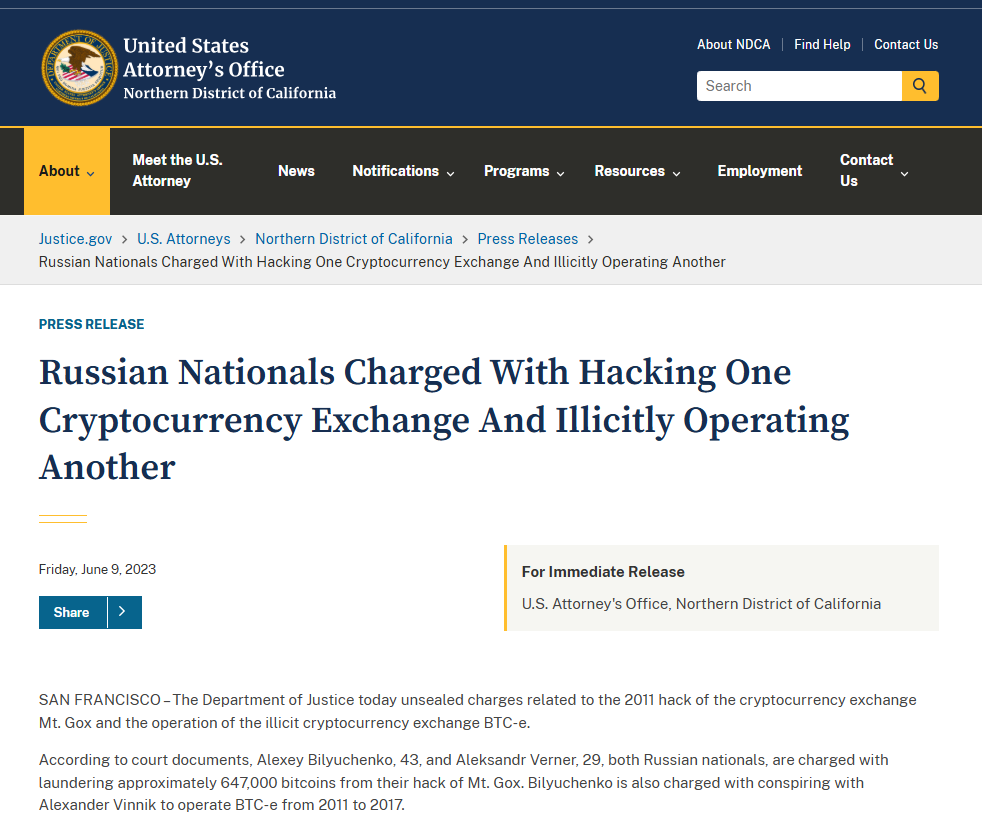
Russian nationals charged with hacking Mt. Gox. Source: DOJ
Who stole them? How long had the theft been happening? How much was taken through hacking versus internal failures? And more importantly, where are all those coins now?
4. What really happened to QuadrigaCX’s missing funds?
Canadian exchange QuadrigaCX shot to the top of crypto’s mystery list in December 2018 after its founder, Gerald Cotten, died suddenly in Jaipur, India.
The exchange was unable to access millions of dollars in cryptocurrency that customers had deposited, and it was popularly believed at the time that Cotten had taken the exchange’s private keys with him to the grave.
An investigation by the Ontario Securities Commission later found that he had actually transferred millions of dollars of client funds to his and his wife’s personal accounts, and had also used client assets to cover his own trading losses and personal expenses.
Was Quadriga a massive fraud that collapsed when its orchestrator died? Did Cotten leave behind wallets nobody has found, or did he fake his death and pocket the funds?
5. Where is the CryptoQueen?
Few crypto mysteries involve a missing person quite as notorious as Ruja Ignatova, AKA the CryptoQueen.
The charismatic Bulgarian founder of OneCoin allegedly helped build one of the world’s biggest crypto scams, with the FBI saying the scheme defrauded victims worldwide of more than $4 billion.
In October 2017, Ignatova flew from Sofia to Athens and then promptly disappeared, never to be found again.
The FBI added Ignatova to its 10 Most Wanted Fugitives list in 2022 and still offers a reward of up to $5 million for information leading to her arrest and conviction. In a 2026 update, the FBI said she remains at large and described her as “well-funded” and “well-connected.”
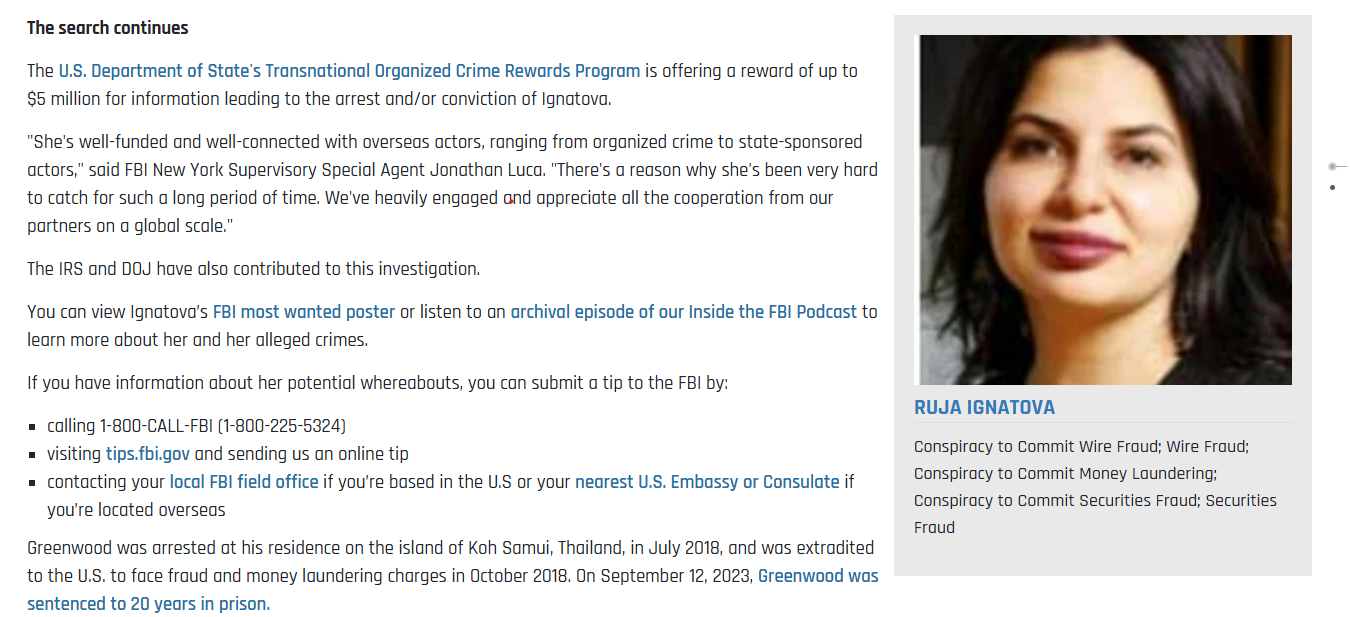
Rula Ignatova is still at large, according to the FBI. Source: FBI
So, is she still doing the crypto conference circuit undercover today, scheming for her next victims? Was she killed, or did she escape with millions of dollars and is living under a new identity with the aid of extensive plastic surgery?
Where is Ruja Ignatova? Maybe she’s sipping Mumbai Mules on a beach somewhere with Gerald Cotten.
6. Will James Howells ever get his lost Bitcoin back?
Back in 2013, Welsh IT worker James Howells accidentally threw away a hard drive containing the keys to what would later become a massive Bitcoin fortune, unwittingly becoming the poster child for how not to self-custody your BTC.
Related: Tips for crypto newbies, vets and skeptics from a Bitcoiner who buried $700M
Howells insists that the infamous hard drive ended up in a massive landfill and spent years trying to recover it, even proposing to excavate part of the landfill with specialist equipment and AI-powered sorting systems to search the waste.
But after years of legal battles and failed attempts to persuade Newport City Council to let him excavate the site, his efforts to recover the drive have been in vain. A High Court judge ruled that he had no realistic prospect of succeeding in January 2025.
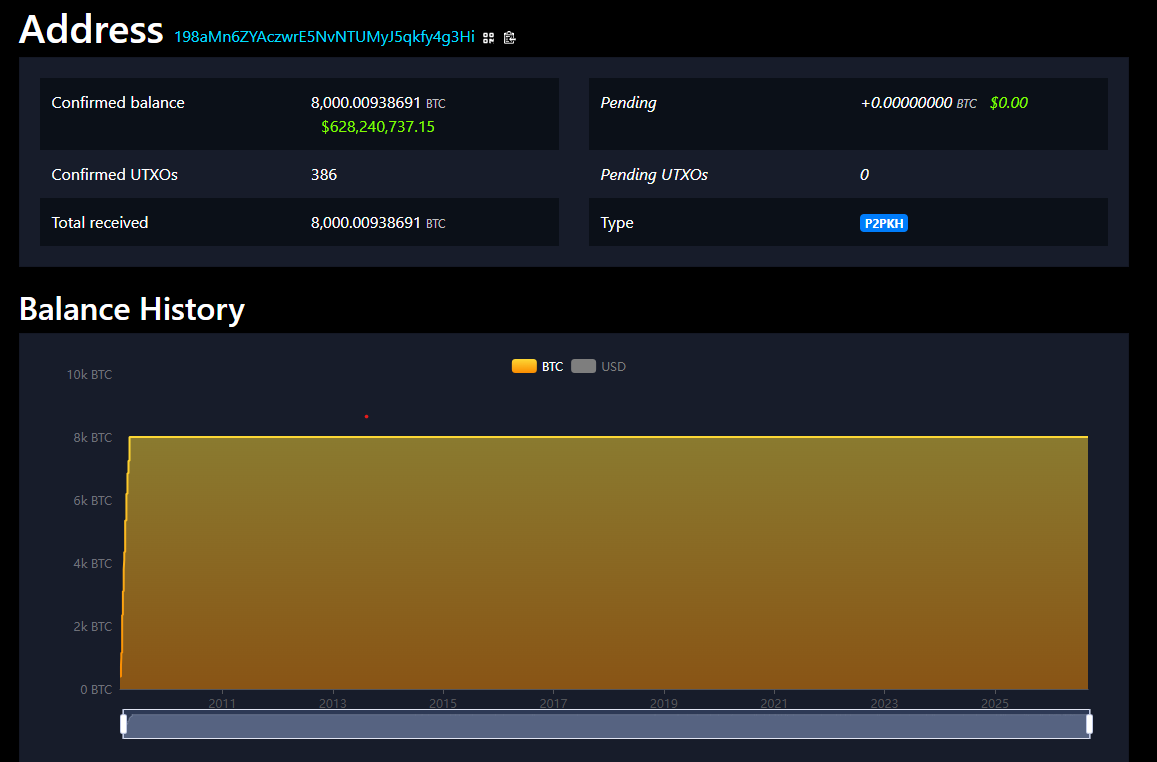
James Howells’ BTC is still on the blockchain. Source: Mempool.space
The Bitcoin itself, however, isn’t gone; it’s still sitting on the blockchain, visible to anyone who cares to look in the natural history museum of self-custody blunders.
7. Who was the DAO hacker?
Remember the 2016 DAO hack that would change Ethereum forever? This epic exploit wasn’t just one of crypto’s biggest early hacks; it helped determine what Ethereum would become.
An attacker exploited a vulnerability in The DAO’s smart contract to drain more than 3.6 million ETH into a child DAO, siphoning over 30% of the DAO’s funds before the attack stopped.
The attacker was never identified, and the aftermath would change crypto history, ultimately splitting Ethereum into two blockchains: the one we all know today and a smaller purist version, Ethereum Classic. In 2022 Laura Shin claimed the attacker was Austrian programmer Toby Hoenisch, but he denied the claims and has never been charged.
The DAO hack raised questions that persist today about whether code is law and blockchain transactions are immutable, or whether they can be rolled back if we don’t like them.
8. Who really stole the $400 million from FTX?
FTX’s collapse was already one of crypto’s biggest disasters when, just hours after the exchange filed for bankruptcy, hundreds of millions of dollars in digital assets began disappearing from its wallets. About $415 million in crypto was ultimately reported stolen.
Of course, the timing immediately raised suspicion, with FTX in chaos, employees trying to secure assets, bankruptcy proceedings beginning and different groups racing to determine who actually controlled the exchange’s wallets.
The US Department of Justice eventually seized hundreds of millions of dollars in assets linked to FTX and investigators have traced parts of the movements, but the identity of the attacker remains an unsolved crypto mystery.
Was it an opportunist outside hacker who happened to strike at the perfect moment? Was it somebody with inside access, or did the swirling chaos around the collapse create an opportunity that someone close to the exchange exploited? To this day, we don’t have an answer.
9. What really happened to Nikolai Mushegian?
Nikolai Mushegian was an early MakerDAO developer and a co-founder of Balancer who helped shape some of DeFi’s first infrastructure.
On Oct. 28, 2022, Mushegian was found dead in the waters off Condado Beach in San Juan, Puerto Rico. Local police said he had been out swimming and was caught by strong ocean currents.
Not everybody buys that version of events, however, since Mushegian had taken to Twitter to warn of his impending assassination just hours earlier.
In a series of disturbing and paranoid messages, he claimed that the CIA, Mossad and “pedo elite” were involved in a sex-trafficking operation in the area and were planning to frame him and kill him.
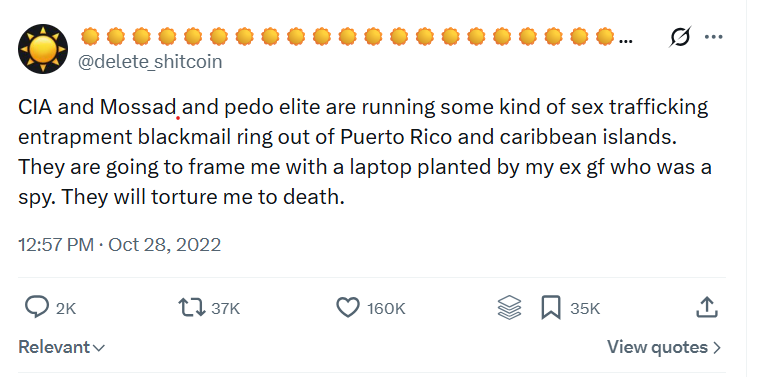
Nikolai Mushegian alerted his followers of his death before it happened. Source: Nikolai Mushegian
The Puerto Rico Justice Department investigated his death for almost a year and determined no criminal involvement, but given his online messages, questions about what happened remain.
Was Mushegian really caught by currents, as authorities reported, or was something more sinister going on in his final hours?
10. Why did someone deliberately burn 107 BTC?
Perhaps one of the weirdest mysteries of all is why anyone would burn a Bitcoin fortune after HODLing it for more than 12 years? Yet that’s exactly what happened in May 2026.
Someone sent 107 BTC, worth about $8.5 million, to a Bitcoin address from which the coins are rendered unspendable, effectively destroying them.
The coins had been acquired around 2014, when Bitcoin was trading below $600, making the timing particularly strange. Why would anyone voluntarily destroy millions of dollars in Bitcoin after holding it through a 12,000% rise in its value?
Stranger still, one of the five wallets suddenly sent about 20 BTC, worth roughly $1 million, to what appeared to be a large crypto custodian in March.
Almost exactly the same amount came back three weeks later, before the Bitcoin was ultimately burned, adding another layer to the mystery.
For an industry still in its teenage years, crypto sure has endured its fair share of intrigue. Be careful next time you decide to self-custody your fortune — you might just end up as one of crypto’s next great mysteries.
Magazine: Is Bitcoin too volatile to risk your retirement on?