With markets pricing in a Federal Reserve rate hold at the upcoming FOMC meeting, the policy decision itself has been largely drained of surprise value. The real market-moving potential now s
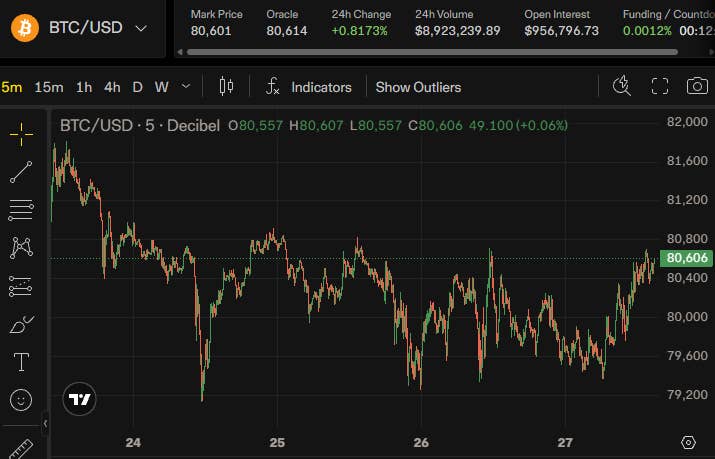
With markets pricing in a Federal Reserve rate hold at the upcoming FOMC meeting, the policy decision itself has been largely drained of surprise value. The real market-moving potential now sits in two internal debates that will shape how traders position in Bitcoin and gold for the sessions that follow.
Why a Priced-In Fed Hold Changes the Market Focus
A priced-in decision means futures markets have already absorbed the most likely outcome. When the vote confirms what participants already expect, assets that moved in anticipation have no new catalyst from the decision alone. The Federal Open Market Committee calendar schedules the statement release and the chair's press conference alongside the rate vote, and it is in that forward guidance where the surprise potential remains. For related coverage, see Gold and Bitcoin Surge Amid Trump-Powell Market Tensions.
Bitcoin has shown sensitivity to this dynamic before. When Fed communication shifts rate-cut expectations even slightly, dollar-denominated assets reprice quickly, and Bitcoin, as a high-volatility macro asset, can move before the traditional market close. Gold responds through the same transmission channel but with different volatility characteristics. Prior episodes of Bitcoin and gold surging amid Trump-Powell market tensions illustrate that the two assets do not always move in lockstep even when reacting to the same Fed signal. For related coverage, see XRP ETF Hits 2026 Weekly Record While Bitcoin and Ethereum Bleed.
Fed Debate No. 1: When Could Rate Cuts Begin?
The first debate inside the FOMC concerns the timing and pace of future easing. Even if the current rate stays unchanged, committee members disagree about when conditions will justify the first cut and how deeply rates should fall once easing begins. That disagreement will surface in the post-meeting statement and in dissenting votes, if any occur. For related coverage, see Ethereum Crypto Shows Early Strength Over Bitcoin: Why Q2 Could Shift Momentum.
A more dovish path, where cuts are signaled as coming sooner or more aggressively, tends to compress expected real yields and weaken the dollar. Both effects support non-yielding assets. Gold, which pays no coupon, becomes comparatively more attractive when real yields fall. Bitcoin benefits from the same dynamic but with a multiplier: it trades as a higher-volatility, liquidity-sensitive asset that can amplify macro moves in either direction. The divergence between Bitcoin and other digital assets in macro-driven sessions underscores that not all crypto positions respond identically to a single Fed signal. For related coverage, see Blockstream Researchers Propose SHRINCS, a Quantum-Resistant Bitcoin Signature Scheme.
A higher-for-longer path pushes in the opposite direction. Rising real yield expectations strengthen the dollar, increase the opportunity cost of holding non-yielding assets, and historically pressure both gold and Bitcoin. In sessions where risk appetite drops alongside rate-hike fears, Bitcoin has sold off faster and deeper than gold, reflecting its different holder base and liquidity profile.
Dissenting votes carry particular weight in this debate. A dissent in favor of a cut signals that dovish pressure exists inside the committee and that future easing is closer than the consensus statement suggests. A dissent in favor of holding longer signals the opposite. The absence of dissent is itself a signal about committee cohesion.
Fed Debate No. 2: Is Inflation Cooling Enough Without Hurting Growth?
The second debate has more complex cross-asset implications. The committee must assess whether inflation is decelerating at a pace that justifies holding policy where it is, or whether it remains sticky enough to argue for extended restriction. Simultaneously, members are watching for signs that employment or growth is softening in ways that would accelerate the case for cuts.
Persistent inflation language in the statement, phrases emphasizing "remaining attentive to upside inflation risks," signals that the committee is not yet comfortable. That framing supports a firm dollar, keeps real yields elevated, and limits near-term upside for both gold and Bitcoin. The interaction between these two debates creates at least three distinct scenarios that macro traders are mapping ahead of the decision.
In a scenario where the statement acknowledges inflation progress and hints at growth softening, the market reads that as the Fed moving closer to cuts. Dollar weakness and falling real yields would follow, providing a tailwind for gold and a potential catalyst for Bitcoin to reclaim levels given up in prior risk-off sessions. In a scenario where the statement doubles down on inflation vigilance with no growth concern acknowledged, rate-sensitive assets face renewed pressure. The third scenario, a mixed read where inflation language stays firm but labor data concerns creep into the assessment, historically generates the sharpest intraday reversals.
Gold tends to stabilize faster in the mixed scenario because institutional holders use it as a portfolio hedge rather than a risk instrument. Bitcoin, which the White House has increasingly referenced in reserve policy discussions, does not yet carry that same institutional stabilizer role in most macro portfolios, meaning its reaction in a mixed-signal environment is harder to predict.
Readers tracking these debates in real time should focus on specific signals rather than the headline rate decision. Watch whether the post-meeting statement adds or removes language about inflation returning "sustainably" to target. Watch the chair's description of the labor market at the press conference. Watch whether any member dissents and in which direction. These are the actual variables, not the vote count on a hold that markets already expect.
For Bitcoin specifically, the network's fundamentals remain independent of the Fed cycle. Difficulty adjustments, miner revenue, and the approaching halving timeline create a supply-side floor that macro rate debates do not erase. In the near term, however, the market will trade the macro signal first, and Fed-driven volatility can be sharp and short-lived. The broad dislocations that pushed assets in opposite directions even as XRP ETF flows hit 2026 weekly records while Bitcoin and Ethereum declined are a reminder that macro-driven sessions can separate assets across the entire digital asset market, not only Bitcoin and gold.
Disclaimer: This article is for informational purposes only and does not constitute financial or investment advice. Cryptocurrency and digital asset markets carry significant risk. Always do your own research before making decisions.
Bitcoininfonews first published the article titled 2 Fed Debates That Could Move Bitcoin and Gold.