3 Altcoins with Steady Growth Rates — ETH, DOT, and XLM
Ethereum powers smart contracts, DApps, and NFT ecosystems through strong developer adoption. Polkadot connects blockchains through parachains, improving interoperability, scalability, and ne
A
AnonymousCryptoCompass newsroom
June 5, 2026
3 min read
NEWS
CryptoCompass editorial visual for altcoins coverage.
Ethereum powers smart contracts, DApps, and NFT ecosystems through strong developer adoption.
Polkadot connects blockchains through parachains, improving interoperability, scalability, and network efficiency.
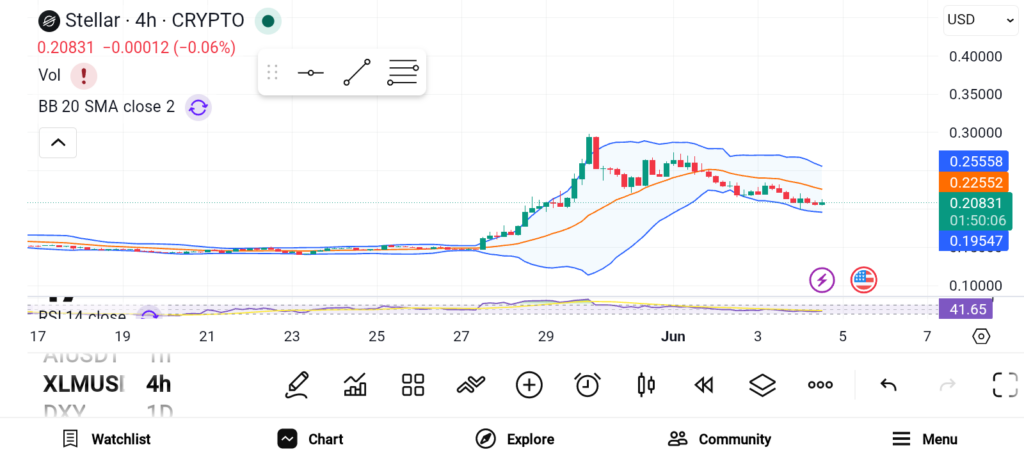
Stellar enables fast cross-border payments with low costs and energy-efficient transactions.
Some cryptocurrencies gain attention through sharp price swings. Others build value through steady development and real-world use. Ethereum, Polkadot, and Stellar belong to that second group. Each project serves a different purpose while showing consistent progress over time. Strong technology, active communities, and practical use cases continue to support long-term growth. For investors seeking established altcoins, these three names remain among the most closely watched projects in the market.
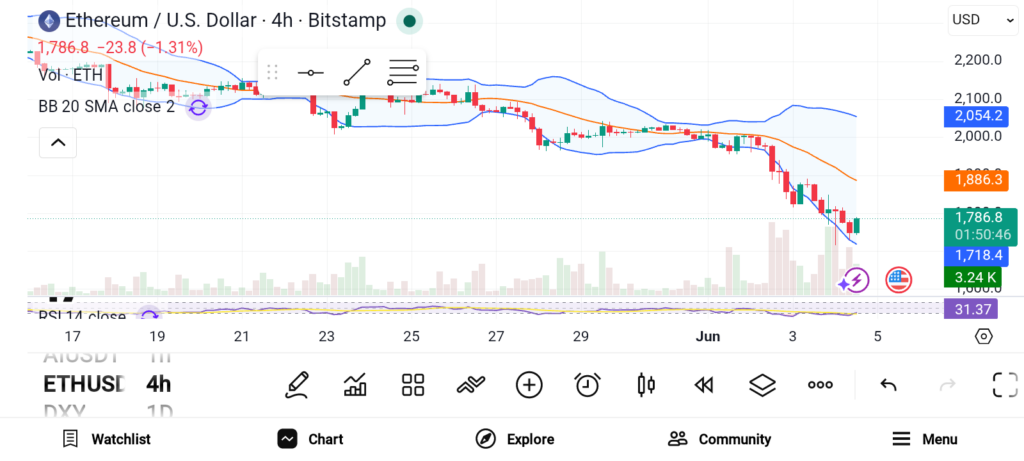
Ethereum (ETH)
Source: Trading View
Ethereum launched in 2015 and quickly became the second-largest cryptocurrency by market value. Unlike Bitcoin, Ethereum focuses on much more than digital payments. The network allows developers to create decentralized applications that run on blockchain technology. A major strength comes from smart contracts. These programs execute automatically when specific conditions are met. No central authority controls the process. This structure reduces reliance on third parties and improves transparency. Developers have used Ethereum to build financial platforms, games, marketplaces, and many other applications. The network also helped popularize non-fungible tokens, commonly known as NFTs. Through the ERC-721 standard, creators gained a reliable framework for launching digital collectibles and other tokenized assets.
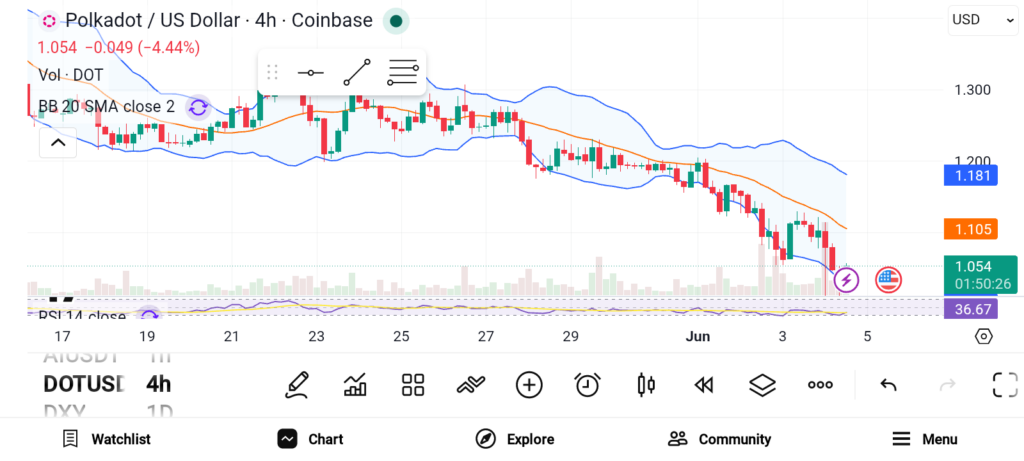
Polkadot (DOT)
Source: Trading View
Polkadot entered the blockchain space in 2016 with a different approach. The project focuses on interoperability and scalability. Many blockchains operate independently, creating barriers between networks. Polkadot aims to solve that challenge. The network uses parachains, which are specialized blockchains connected to a central relay chain. This design allows multiple chains to communicate while sharing security. Developers can customize parachains for specific applications without sacrificing efficiency. Such flexibility gives Polkadot an advantage in a growing blockchain ecosystem. Different projects can build solutions tailored to unique needs while remaining connected to a larger network. Another important development involves Polkaswap, a decentralized exchange designed for trustless trading.
Stellar (XLM)
Source: Trading View
Stellar focuses on fast and affordable cross-border payments. The network connects individuals, businesses, and financial institutions through a system built for efficient money transfers. Unlike many cryptocurrencies, Stellar does not rely on mining to validate transactions. A consensus-based approach helps reduce energy consumption while maintaining network security. Faster transaction processing also improves user experience. The project works alongside existing financial systems rather than competing directly against them. Such compatibility supports broader adoption across different markets. Stellar also continues to expand through projects like StellarX, a decentralized exchange that allows users to trade digital assets. Additional scaling solutions help improve transaction speed and network performance.
Ethereum, Polkadot, and Stellar serve different segments of the blockchain industry. Ethereum leads decentralized application development and NFT innovation. Polkadot improves blockchain interoperability, while Stellar focuses on efficient global payments. Consistent development and practical use cases make all three altcoins worth watching.
Shiba Inu trades at $0.00000521 on Tuesday evening, the equivalent of €0.00000466. The daily reading of $0.00000516 is the lowest since September 18. The entire recovery from the second half
Ledger says hardware wallets sold by Southeast Asian reseller CryptoBilis contained a hidden component built to steal their owners’ recovery phrases. The findings come from Ledger’s Donjon se
A Bitcoin wallet that held 4,582 BTC through every major crash of the past six years moved its entire balance on Monday. The coins, worth about $377 million, were sent in one transaction to f

 Source: Trading View
  Source: Trading View
 Source: Trading View