Bitcoin is testing a major resistance zone as the Kansas City Fed's Jackson Hole Economic Symposium opens under an unusually watched policy agenda, setting up a two-sided reaction for BTC tha
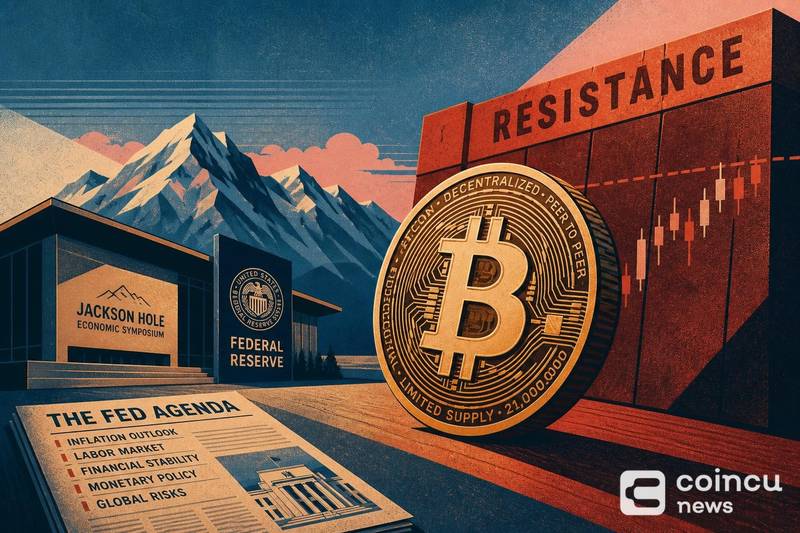
Bitcoin is testing a major resistance zone as the Kansas City Fed's Jackson Hole Economic Symposium opens under an unusually watched policy agenda, setting up a two-sided reaction for BTC that traders are treating as a potential volatility trigger rather than a routine central-banking event.
The setup pairs a specific technical juncture for Bitcoin with a defined macro catalyst, a combination flagged in reporting from Decrypt that framed BTC as approaching resistance just as the symposium got underway. The research supporting this article is thin, so what follows sticks to what the available sources establish and states plainly where the picture is unconfirmed. For related coverage, see North Korea Hackers Move $19.4M in Bitcoin: Worry Now?.
Why the Resistance Level Is the Decision Point
A resistance zone becomes "major" when repeated attempts to trade through it have failed, turning the level into a psychological ceiling where sellers concentrate and momentum stalls. For Bitcoin now, that zone is the article's central question: a clean break above it, held on a daily close, would signal continuation, while another rejection would confirm the ceiling and likely send price back toward prior support. For related coverage, see UK Police Seize $1.4M in Bitcoin Linked to Darknet Markets.
The distinction matters because the two outcomes are not symmetrical for positioning. A breakout invites trend-following capital, whereas a rejection tends to trap late longs and accelerate the move lower, which is why traders watch the level itself rather than any single intraday print. For related coverage, see Bitcoin Miner IREN Shares Fall as AI Conversion Costs Mount.
What Makes This Jackson Hole Different for Bitcoin
The Jackson Hole Economic Symposium is the Kansas City Fed's annual gathering of central bankers and economists, with the 2026 program hosted by the Federal Reserve Bank of Kansas City. Markets treat it as a volatility event because policy signaling from the symposium has historically moved rate expectations, and rate expectations feed directly into risk assets like Bitcoin.
This year the agenda is drawing extra attention because of the speaking lineup, including remarks published by the Federal Reserve from Kevin Warsh dated August 28, 2026. When Bitcoin is pinned at a decisive level, communication risk from the event, rather than any pre-scheduled data release, becomes the variable most likely to force the break one way or the other.
The Bullish and Bearish Paths Into the Event
On the bullish side, a dovish or growth-friendly tone that pushes rate-cut expectations forward would support a breakout continuation, particularly if BTC clears resistance before the event and holds it as the symposium unfolds. Pre-event positioning that leans long only confirms as bullish if price sustains the level after the headlines land.
On the bearish side, a hawkish surprise or a message that repriced cuts further out would favor rejection at resistance, and a failure to hold the zone during the event would suggest the earlier approach was a liquidity grab rather than genuine demand. The cleaner signal comes after the event, when the initial spike or fade has been either confirmed or reversed.
What Traders Are Watching Beyond the Headline
False breakouts are especially common around scheduled macro events, when a headline spike drags price through resistance before reversing, so confirmation, a daily close and follow-through, matters more than the first candle. Momentum and volatility around the reaction window are the practical cues, keeping the focus on Bitcoin itself rather than any downstream altcoin rotation.
For context on how macro and institutional flows have been shaping Bitcoin's tape, spot ETF demand has been a recurring driver, evident even in adjacent markets where Ethereum ETFs nearly matched Bitcoin's daily haul, while broader access continues to widen as Charles Schwab expands crypto trading beyond Bitcoin and Ethereum.
Fundstrat's team, whose commentary is frequently cited around macro-driven BTC setups, has continued to publish its read on the tape via its official account on X. Absent verified price data in the current research, that stream is a watchpoint rather than a confirmed input.
FAQ
What is Jackson Hole and why do crypto traders care? It is the Kansas City Fed's annual economic symposium, and traders care because policy signaling there can shift rate expectations that flow into risk assets including Bitcoin, per the Kansas City Fed's symposium proceedings.
Why does resistance matter more during a Fed event? Because a decisive level plus a scheduled catalyst concentrates the odds of a sharp move, making the break more likely to be genuine, or a trap.
What confirmation should traders look for afterward? A daily close above resistance with follow-through for a breakout, or a rejection that holds below the level, rather than the first reactionary candle.
Disclaimer: This article is for informational purposes only and does not constitute financial or investment advice. Cryptocurrency and digital asset markets carry significant risk. Always do your own research before making decisions.
The post Bitcoin Eyes Resistance as Jackson Hole Opens With Unusual Fed Agenda was initially published on Coincu.