The bitcoin price has just hit $55,000. Ahead of this, Grayscale believes several indicators signal an oversold situation. However, the manager considers that uncertainties related to artific
The bitcoin price has just hit $55,000. Ahead of this, Grayscale believes several indicators signal an oversold situation. However, the manager considers that uncertainties related to artificial intelligence could weigh more on the crypto market in the short term than blockchain fundamentals.
In brief
- Bitcoin has dropped 56% since its October 2025 peak, according to Grayscale.
- The BTC bear market lasts at least 411 days despite oversold signals.
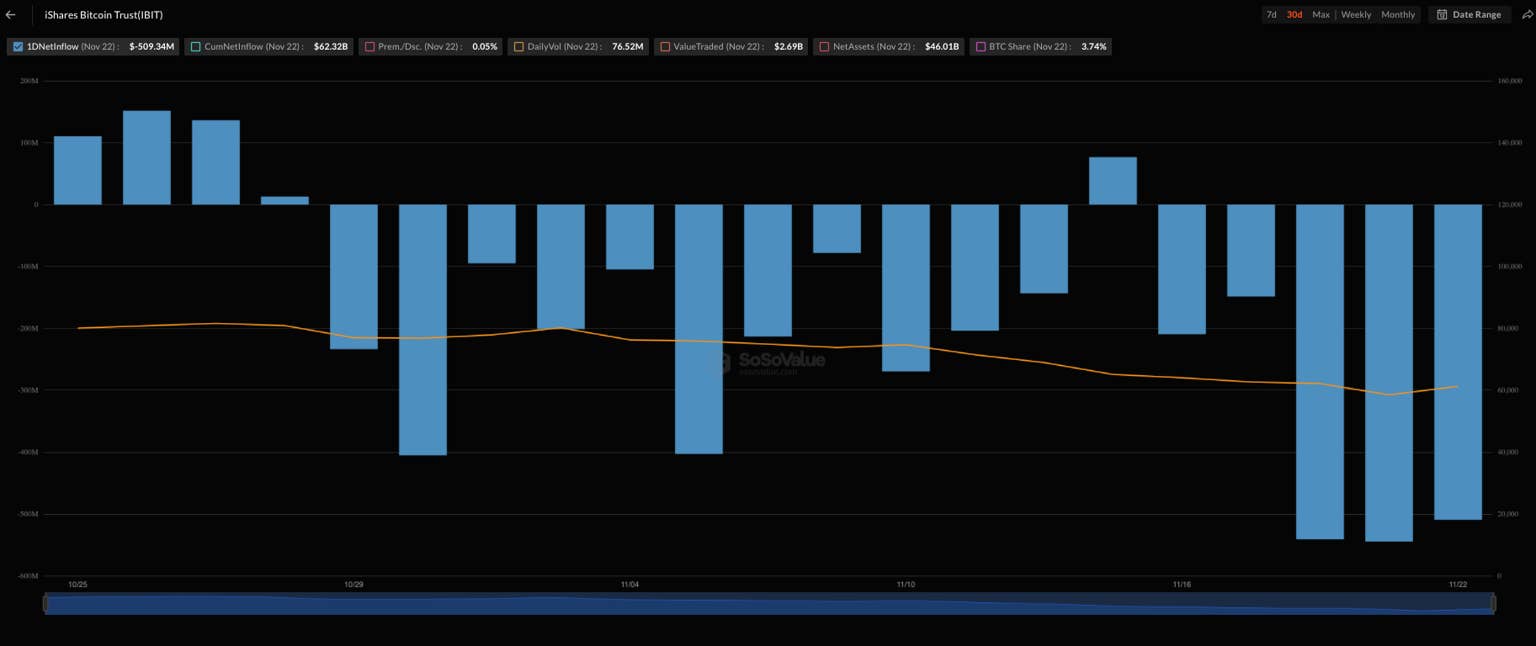
- Crypto ETPs record more than 2 billion dollars in weekly outflows.
- Grayscale believes AI-related risks could slow bitcoin’s rebound.
- Oversold signals do not yet confirm a sustainable crypto market reversal.
Bitcoin: 411 days of bear market, but oversold signals
According to Grayscale, bitcoin is now experiencing a bear market of at least 411 days. In an analysis published on November 23, its head of research Zach Pandl points out that this correction of the BTC price is still the least severe in its historical comparison: a decline of 56% since the peak on October 6, 2025, at $124,824.
Grayscale data:
Indicator
Value
BTC peak
$124,824
Peak date
October 6, 2025
Recent low point
$55,254
Low point date
November 21, 2026
Maximum decline
56%
Bear market duration
Minimum 411 days
Several indicators confirm this reading of a bitcoin market under pressure:
- Exchange Traded Products (ETPs) have recorded over 2 billion dollars in outflows over the past week.
- Stablecoins have also experienced significant withdrawals.
- Open interest on Bitcoin and Ethereum futures has fallen back to its summer levels.
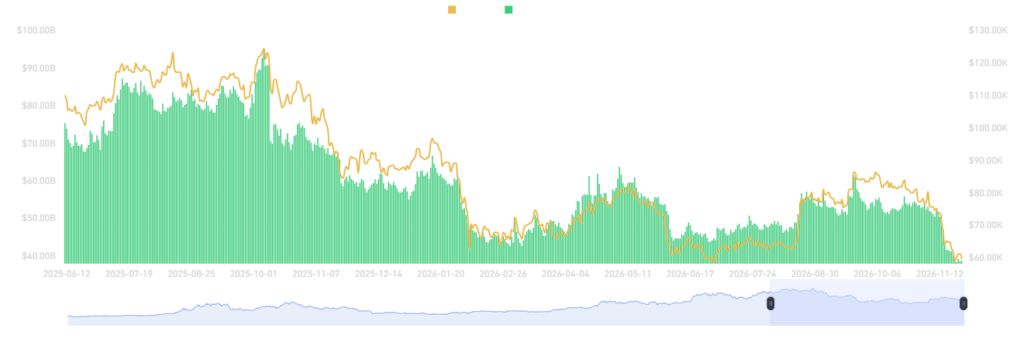 Chart showing the evolution of open interest on Bitcoin futures. Source: CoinGlass
That’s not all! In the options market, investors are paying a high premium for puts. These contracts particularly allow protection against a bitcoin price drop. This setup indicates an increased demand for downside risk coverage.
However, these signals do not guarantee a reversal. They mainly show that speculative positions are contracting and that crypto investors remain cautious.
For Zach Pandl, the fundamentals of public crypto blockchains remain solid. However, he argues that the economic and technological environment could more strongly determine the short-term trajectory of bitcoin.
In this regard, Grayscale identifies several uncertainties related to the artificial intelligence sector. The results of the US midterm elections could notably impact the prospects for building data centers. The developments around Nvidia and Anthropic also fuel questions about investments and valuations in the sector.
Your 1st cryptos with SwissborgThis link uses an affiliate program.
This uncertainty goes beyond just AI-specialized companies. When investors reevaluate the risk associated with technologies and stock markets, digital assets can also undergo arbitrages. Explanation: bitcoin remains sensitive to liquidity conditions and risk appetite.
This dynamic aligns with macroeconomic tensions already observed in the markets. The recent bitcoin moves below $60,000 illustrate the fragility of demand in an environment where investors are also watching:
- interest rates;
- the dollar;
- institutional flows.
Can bitcoin rebound despite these uncertainties?
Grayscale considers current valuations potentially attractive for investors with a medium or long-term horizon. The asset manager actually believes that the fundamentals of public blockchains remain favorable, despite short-term tensions.
However, this reading is not a buy signal. An oversold market can remain under pressure as long as demand does not return and capital flows do not stabilize.
Bitcoin could therefore benefit from a technical rebound, but its sustainability will depend as much on the return of buyers as on the evolution of macroeconomic and AI-related risks. Simply put, the oversold signal alone is not enough to confirm the end of the bear market.