Blast Network Shutdown: What Happened to $2.27B? What Users Must Know Ethereum Layer 2 network Blast is shutting down. The team announced it on X on October 2, 2026. At its peak, the network
Blast Network Shutdown: What Happened to $2.27B? What Users Must Know
Ethereum Layer 2 network Blast is shutting down. The team announced it on X on October 2, 2026. At its peak, the network held about $2.27 billion in total value locked (TVL). Reports citing DeFiLlama now put that figure near $32 million.
So, why could the project not sustain itself? What happens to user funds? And what happens to the BLAST token?
At a Glance
Shutdown Detail
What Readers Need to Know
Reason
Operating costs exceed L2 revenue
Peak TVL
About $2.27 billion
Recent TVL
About $32 million (CoinDesk, citing DeFiLlama)
Announced
October 2, 2026
Normal withdrawal deadline
October 26, 2026
After the deadline
Direct use bridge contracts on Ethereum
Temporary pause
About one week during the Lido unwind
Delay after reopening
24 hours
BLAST price
About $0.00024 (CryptoSlate)
Why Is Blast Shutting Down? The Revenue Problem
The ongoing costs of maintaining the chain exceed the revenue the L2 generates. It added that it sees no credible path to making the chain economically sustainable. The team did not publish detailed revenue or cost figures.
An L2 pays for sequencing, data availability, and infrastructure. Gas fees from real activity are meant to cover those bills. DeFiLlama data cited by shows last month's revenue at about $1,793, against roughly $3.5 million in June 2024.
The TVL Trap: TVL shows how much money sits in a network. Revenue shows how much people pay to use it. Blast drew huge deposits, yet deposits alone did not pay the bills. Billions locked does not mean a profitable chain.
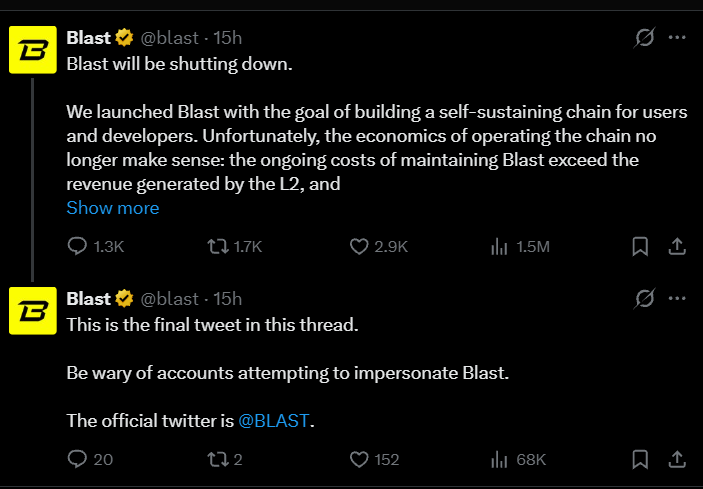
Source: Official X Post
From $2.27B to Millions: How Blast Lost Momentum?
The network was launched by Tieshun "Pacman" Roquerre, the creator of Blur. In November 2023, it disclosed $20 million in funding from Paradigm and Standard Crypto and opened early deposits. Its pitch was simple. ETH earned Lido staking yield, and stablecoins earned MakerDAO rates. A points system hinted at a future airdrop.
Blast Network Mainnet went live in February 2024, and TVL later peaked above $2 billion. The token launched in June 2024. After that, TVL fell steadily. Sources disagree on the latest figure, citing about $32 million and $65 million. Bridged assets are estimated between $51 million and $63.5 million.
The Blast Airdrop Question: Can Incentives Build Long-Term Users?
These crypto airdrop incentives were a major part of the early growth plan. That raises a fair question. Money that arrives for rewards can leave when the rewards end. Users who come for an app tend to return often and pay fees.
Its main draw was passive yield. People who simply deposit and wait create little gas revenue. This does not mean every user was an airdrop hunter. It shows that incentive-driven liquidity does not always turn into steady network demand.
Blast Shutdown: How Can Users Withdraw Their Assets?
Follow these steps, based on the official announcement:
First, withdraw your Lido assets, which takes about one week.
Withdrawals are paused during that time.
Once done, withdrawals resume with a 24-hour delay.
Use the normal interface until October 26, 2026.
Withdraw to Ethereum mainnet, including balances in the PWA.
After October 26, use the Blast bridge contracts on Ethereum directly.
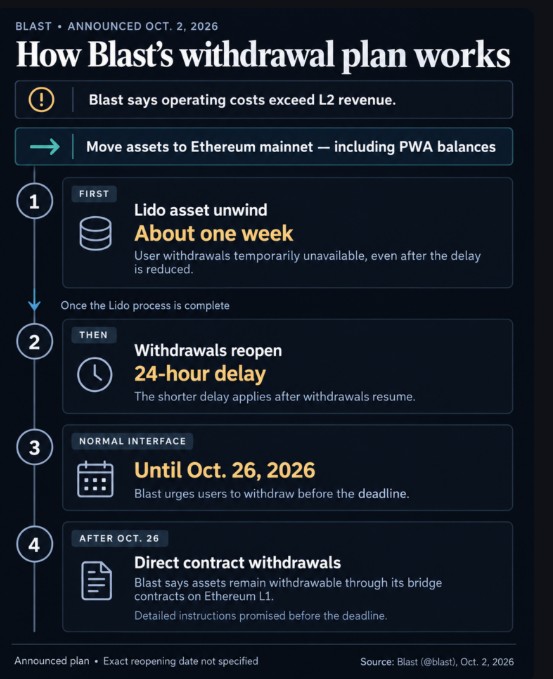
Source: Website
Date
What Happens
Oct. 2, 2026
Shutdown announced
Next 7 days or so
Lido unwind, withdrawals paused
After the unwind
Withdrawals reopen with a 24-hour delay
Oct. 26, 2026
Last day for the normal interface
After Oct. 26
Bridge contract use required
It will publish detailed instructions before the deadline. Beware of impersonator accounts, and only follow guidance from official channels.
What Happens to the Token Price After the Network Shutdown?
BLAST token price fell between 17% and 19% after the news, and now, on 3 Oct 2026 at 6:00 AM UTC, the price fell 45.6%. A network shutdown does not automatically cancel a token. Still, no refund, redemption, or migration plan has been confirmed. The announcement does not set any value. Holders should wait for official updates.
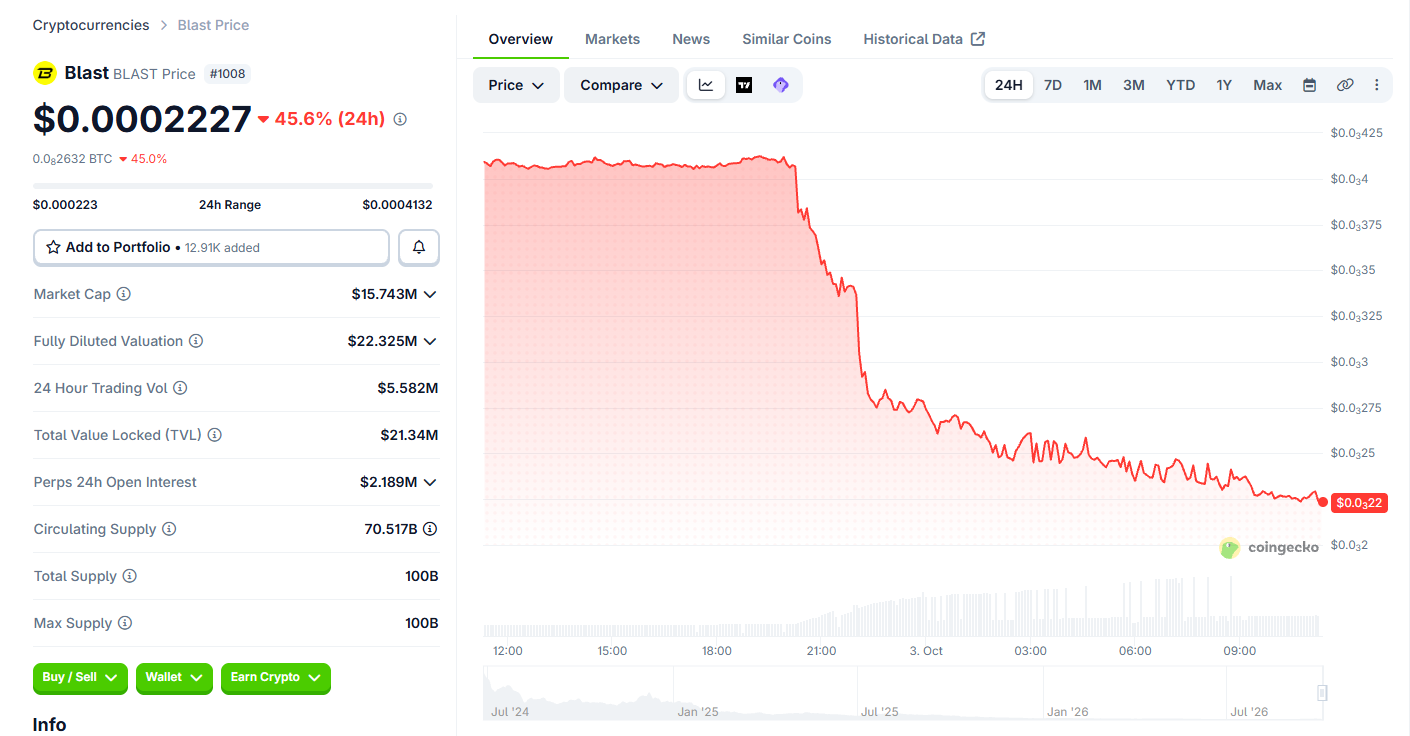
Source: Coingecko Data
What Blast's Shutdown Means for Ethereum L2s
Dozens of L2s now compete on Ethereum. Many share similar EVM tools and rollup designs. Base, Arbitrum, and Optimism took about 80% of 2026 sequencer fee revenue. That is a reported estimate, not an official Ethereum statistic.
With little technical difference, the real question is simple. What keeps users around after incentives end? Apps, transactions, and developers matter more than headline TVL.
The L2 Exit Test: Funds in a bridge contract can stay recoverable even when the website goes offline. But after October 26, many users will face a harder process of direct contract interaction. That shows the gap between technical access and everyday usability, without saying anything about Blast's security.
Blast's Next Problem May Be Bigger Than Withdrawals: What Happens to Its Apps?
Withdrawals are only half the story. The Blast Network shutdown also leaves behind DeFi protocols, NFT platforms, and games built for this chain. It has not said how these apps, their liquidity, or supporting tools like RPC endpoints, explorers, and wallets will be handled.
Smart contracts can sometimes keep running without active development, but with fewer users and market makers, liquidity can thin out quickly. Developers may move to other Ethereum Layer2s. Until Blast app teams confirm plans, users should treat dApp balances as at risk and withdraw before October 26.
Conclusion
The path was clear. Peak TVL shrank from over $2 billion to a much smaller ecosystem, and costs rose above revenue. For crypto news readers and users, October 26 is the key date for the normal interface. Withdraw early, since the Lido unwind will pause exits for about a week.
The shutdown does not prove other L2s will fail. It is a case study in the difference between attracting capital and keeping productive activity. The final shutdown date and the token's treatment remain unresolved.
Disclaimer: Crypto assets are highly volatile. Details about the shutdown and withdrawals can change. Verify all instructions through official and Ethereum sources before moving funds. This article is for information only and is not financial or investment advice. Always do your own research.