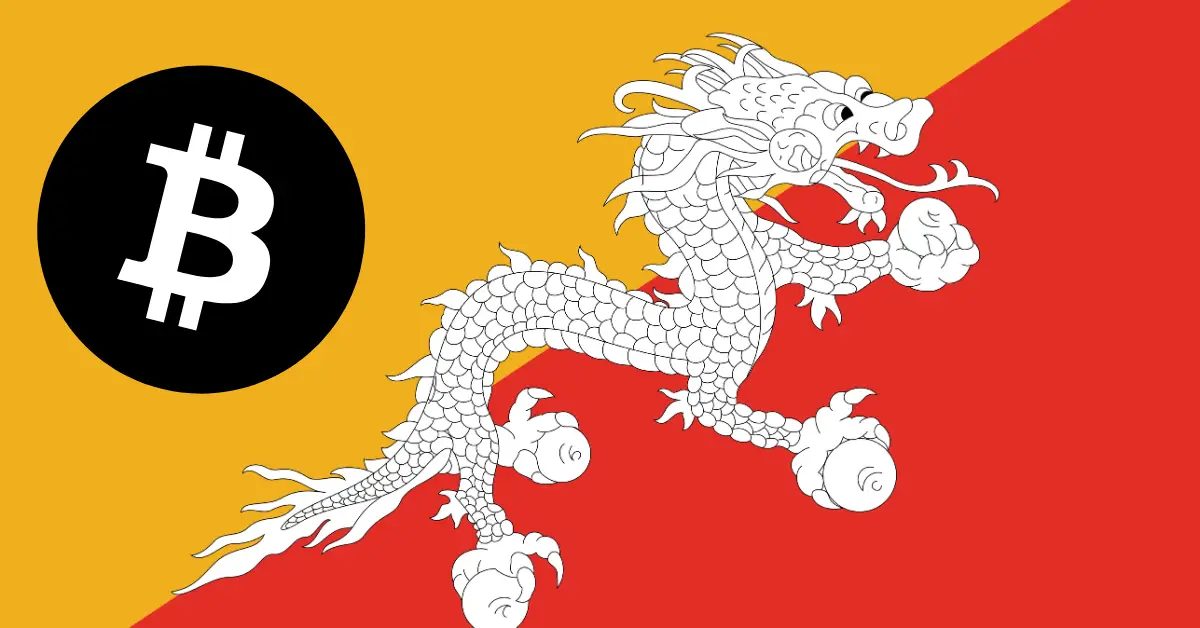
Bhutan has taken a unique approach to crypto. While the government limits retail crypto use through the country’s banking system, it has also become one of the world’s largest state-backed Bi
Bhutan has taken a unique approach to crypto. While the government limits retail crypto use through the country’s banking system, it has also become one of the world’s largest state-backed Bitcoin miners and is using Bitcoin to support its long-term economic plans. A key part of this strategy is Gelephu Mindfulness City (GMC), a special economic zone being developed as a regulated hub for digital asset businesses.
In 2026, this approach was more notable. The Royal Monetary Authority (RMA) continued restricting crypto access for the public, while GMC introduced crypto-friendly policies to attract global companies.
At the same time, Bhutan reduced its Bitcoin holdings to help fund the city’s development. This report covers these major regulatory and market developments throughout 2026.
1. Two Crypto Economies
Bhutan’s regulatory reality cannot be understood as a single national policy — it is two parallel systems operating under one crown.
Mainland Bhutan — supervised by the Royal Monetary Authority (RMA)
- The Royal Monetary Authority (RMA) is Bhutan’s central bank and controls the country’s financial system. It allows crypto businesses to operate only within Gelephu Mindfulness City (GMC), while people across the rest of Bhutan cannot buy crypto through local banks. These rules help protect the country’s currency, the Ngultrum (BTN), which is linked to the Indian Rupee.
Gelephu Mindfulness City (GMC) — the special economic region
- Gelephu Mindfulness City (GMC) is a Special Administrative Region (SAR) in southern Bhutan with its own legal and financial system. It is the only place in Bhutan where crypto mining and exchange businesses can legally operate. In 2026, GMC continued attracting global crypto companies by offering faster licensing, business-friendly regulations, and tax benefits.
2. Regulatory & Legal Structure (Background, Pre-2026)
Bhutan’s crypto journey began in 2019 when the RMA introduced rules for Bitcoin mining with KYC and AML requirements. In 2024, the launch of Gelephu Mindfulness City (GMC) created a legal framework for digital assets. During 2025, Bhutan allowed regulated crypto activities within GMC, introduced AML rules, added BTC, ETH, and BNB as strategic reserves, licensed its first crypto firm Matrixport, launched the TER gold-backed token, and announced a pledge of up to 10,000 BTC to support GMC’s development.
3. Crypto Regulations in 2026: Timeline
In 2026, Bhutan’s Gelephu Mindfulness City (GMC) started building its crypto and digital asset ecosystem.
January 2026
GMC began implementing its first phase of digital asset licensing, outlining eligibility standards for exchanges, custodians, tokenization platforms, and blockchain infrastructure providers.
February 2026
Authorities released updated AML and KYC expectations for firms seeking authorization within GMC, aligning local standards with global best practices.
March 2026
Bhutan expanded discussions with international financial institutions and blockchain firms to establish Gelephu as a regional fintech and tokenization hub.
April 2026
Infrastructure planning accelerated, with proposals covering regulated digital asset exchanges, tokenized investment products, and institutional custody services.
May 2026
GMC introduced consultation papers on tokenized securities, digital asset investment funds, and cross-border digital payments.
June 2026
International interest in GMC continued to grow as several blockchain infrastructure companies explored establishing regional operations under the city’s evolving regulatory framework.
4. Crypto Licencing Policy 2026
In 2026, GMC introduced a faster licensing system for crypto and fintech companies. The new framework combines company registration, regulatory approval, banking access, and business launch into one process, helping firms start operations quickly.
Companies already licensed in places like Singapore, ADGM, and Hong Kong can benefit from this fast-track system. Through DK Bank, approved firms will get access to multi-currency banking, crypto services like BTC-backed lending, asset swaps, and fiat-to-crypto solutions. GMC is also offering tax benefits and building a crypto-friendly environment to attract global digital asset businesses.
5. Parallel Stories: Sovereign Bitcoin Reserve Drawdown (2025–2026)
Bhutan’s Bitcoin holdings have dropped sharply over the past two years. The country held around 13,000 BTC at its peak in late 2024, but by March 2026, that had fallen to about 3,954 BTC, and by mid-May 2026, it was down to roughly 3,119 BTC. In December 2025, the government announced a plan to use up to 10,000 BTC to help fund the development of Gelephu Mindfulness City (GMC), saying the Bitcoin would be used through lending and yield-generating strategies rather than being sold.
However, blockchain data shows large Bitcoin outflows throughout 2026. Most importantly, Bhutan is selling some of its Bitcoin to raise money for GMC infrastructure while also dealing with lower mining rewards after the 2024 Bitcoin halving. Most of these transfers have reportedly been made through over-the-counter (OTC) deals instead of public exchanges, reducing their impact on the market.
6. Institutional & Infrastructure Partnerships (2025–2026) — Adoption
- Bhutan’s crypto ecosystem is being developed through partnerships with local and global digital asset companies, supporting banking, tokenization, Bitcoin management, and blockchain infrastructure.
- It partnered with DK Bank, Bhutan’s first fully digital state-owned bank, to support crypto tourism payments, TER token custody, and future crypto services like BTC-backed lending and swaps for GMC-licensed firms.
- Companies like Matrixport and Matrixdock support digital asset services and tokenization, while Cumberland DRW works with Bhutan on Bitcoin reserve management, stablecoin development, mining, and other blockchain-related projects.
- Bhutan also brought in Nansen for blockchain analytics, Green Digital Ltd. for renewable energy-based blockchain infrastructure, and QCP Capital to handle the government’s Bitcoin reserve transfers through OTC transactions.
7. Tax Treatment
Bhutan does not have a separate crypto tax law yet. Crypto income, trading profits, or mining earnings may fall under existing tax rules depending on government interpretation.
Crypto donations are tax-free and do not attract capital gains tax. A 5% GST started in 2026, but it is a general tax change, not crypto-specific.
GMC offers a different tax system, including 0% corporate tax for eligible businesses, capital gains exemptions, and tax benefits for foreign employees.
8. Key Regulatory Bodies
Royal Monetary Authority (RMA)
Bhutan’s central bank. It regulates crypto-related financial activities, controls banking access to crypto, and sets the country’s main crypto policy approach.
Gelephu Mindfulness City Authority (GMCA)
Manages GMC and oversees legal crypto activities like mining and exchanges. It also issues licenses and sets business, tax, and banking rules within GMC.
Financial Intelligence Department (FID)
Handles anti-money laundering (AML) and counter-terror financing (CFT) rules. It monitors suspicious transactions, including crypto-related activities.
Druk Holding & Investments (DHI)
Bhutan’s state investment company. It manages government-linked Bitcoin mining, custody, and Bitcoin reserve movements.
9. Banking Restrictions
- In Bhutan Crypto buying through banks is banned. RMA-regulated banks cannot help the public convert Ngultrum (BTN) into crypto.
- Since BTN is linked to the Indian Rupee, Bhutan restricts crypto use to prevent foreign currency risks.
- Making it restrictive in nature. Tourists and local merchants do not hold crypto directly; DK Bank and partners handle the transactions.
- In a special rule, crypto companies in Bhutan can operate in GMC through licensed banks, but they must still pass local KYC and AML checks.
- Bhutan allows crypto activities like mining and exchanges inside GMC while keeping the wider banking system protected.
ConclusionBhutan continues to take a balanced approach to crypto. While it has reduced its Bitcoin reserves to fund Gelephu Mindfulness City (GMC) and other national projects, it remains committed to building a regulated digital asset ecosystem.
Rather than promoting retail crypto trading, Bhutan is focusing on long-term growth through blockchain innovation, institutional adoption, and clear regulation.