The Fed raised rates for the first time since 2023 in a unanimous vote. The hike was near-certain going in, so equities held firm and yields eased into the decision. Falling long yields point
- The Fed raised rates for the first time since 2023 in a unanimous vote.
- The hike was near-certain going in, so equities held firm and yields eased into the decision.
- Falling long yields point to a cycle near its ceiling, which usually helps crypto.
- Bitcoin and Ether still slipped, held back by the collapsed CLARITY Act vote.
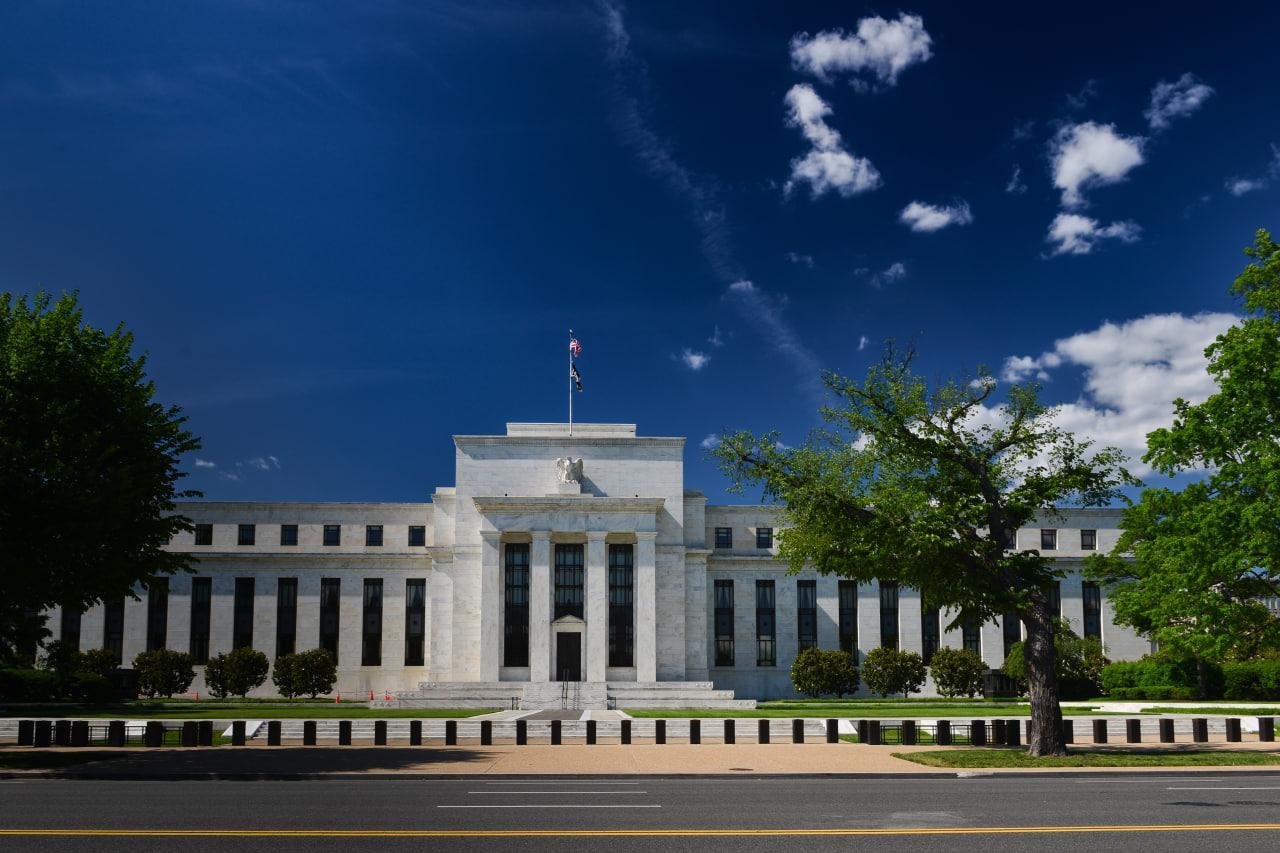
The Federal Open Market Committee, in Kevin Warsh’s first tightening decision as chair, lifted the federal funds target to 3.75-4% on September 16, 2026, its first increase since 2023. The vote was unanimous at 12-0. For crypto the timing is awkward, because the decision arrives a day after the Senate rejected cloture on the CLARITY Act by 49 to 50, stripping the industry of the market-structure framework it had chased for two years. Bitcoin traded near $75,549 and Ether near $2,387 at the time of writing, both lower on the day, while the S&P 500, the Nasdaq 100 and the Russell 2000 all sat in the green.
Warsh delivers a unanimous hike but withholds his own dot
The statement itself was terse. Policymakers described activity as expanding at a solid pace, called inflation elevated, and framed the move as support for a timelier return to the 2 percent goal. The projections carried more information than the decision. Sixteen of the participants pencil in at least one further increase before the year closes, and only two favor holding here.
For 2027 the committee splits, with eight members still seeing rates rise and four expecting the first cuts to begin. Warsh declined to submit his own dot, an unusual step for a sitting chair that leaves the median rate path without the input of the person setting it. The mechanics moved in step with the target range: the interest rate on reserve balances rose to 3.90 percent, the primary credit rate to 4.00 percent, and the standing repo rate to 4.00 percent, all effective the next day.
A near-certain hike got absorbed before the vote
Reading a reaction into the market is premature, because the decision crossed too recently for its answer to show. What the session does reveal is the calm that preceded it. Futures had priced the quarter-point move at roughly 91 to 92 percent, a level of certainty that pulls the adjustment forward into the days before the vote and leaves little to settle afterward. A hold would have been the shock, not the hike. Equities stayed firm into the release and Treasury yields eased along the curve, the two-year at 4.6443, the ten-year at 4.9507 and the thirty-year at 5.3134, the posture of a market that had already made room for the move and was looking past it toward where the cycle tops out. Whether the number itself changes anything now depends far more on Warsh’s guidance than on the 25 basis points.
Falling yields on hike day quietly favor Bitcoin
The bond market matters more to crypto here than the headline rate, and it is sending a constructive signal underneath a bearish one. When the central bank tightens and long yields fall on the same day, traders are signaling the campaign is closer to done than just starting. That distinction runs straight into crypto through the discount rate on risk. Long-dated Treasury yields set the baseline return that every speculative asset has to beat, so a ten-year drifting down from 4.9507 lowers the bar for Bitcoin and eases the opportunity cost of holding an asset that pays no coupon. The thirty-year easing by more than five basis points points the same way. If the market is right that 4 percent sits close to the ceiling, the most punishing stretch for crypto, the one where yields grind higher and pull capital out of risk, is mostly behind us. That is the version of a hike crypto can live with, and with Bitcoin holding around $76,000 and no sharp break after the print, the tape so far agrees.
The CLARITY defeat is the weight the Fed cannot lift
The bond signal should have offered support, yet Bitcoin and Ether stayed red, which points to a driver monetary policy cannot touch. A day earlier the CLARITY Act failed on the Senate floor, and with the November midterms bearing down, that defeat shuts the realistic window for federal market-structure rules this year. Crypto’s seven-day losses of roughly 4 percent were building before Warsh spoke, driven by the regulatory vacuum rather than the rate path. The result is a split screen. Equities answer to the macro tape alone and can rally on a priced-in hike, while crypto answers to the same tape plus a policy overhang that just got heavier. Stocks paid one bill at this decision. Crypto had two.
Alex Kuptsikevich, chief market analyst at FxPro, framed the setup before the release, noting that forward guidance held greater potential to influence volatility than the 25-basis-point rate hike already priced in. The move could be read as more about credibility than restriction, a hike aimed at anchoring long-term yields and defending the Fed’s 2% pledge more than at choking off financial conditions. That fits a market where equities held and yields eased.
Four channels carry a rate decision into a market the Fed never names
The Fed never mentions Bitcoin, and the transmission runs through four channels. Higher policy rates lift the yield on cash and short-dated government paper, which raises the opportunity cost of holding an asset that pays nothing. They tend to strengthen the dollar, which pressures dollar-priced risk assets. They tighten the liquidity that chases speculative bets. And they cool risk appetite, pushing allocators toward defensive positioning. The link has grown tighter as the asset class matured. IMF work found Bitcoin’s correlation with the S&P 500 climbing as institutions entered, while a separate IMF study found that contractionary US monetary-policy shocks tend to depress crypto prices. The danger case is a hawkish Fed arriving while equities sell off with it. This decision is not that case, which is part of why the macro damage stayed contained.
The next inflation print decides whether the friendly signal survives
The decision resolves less than it appears to. With sixteen participants still leaning toward more tightening this year, the pivotal event is the next inflation print, since a hot reading turns one hike into the start of several and reprices the whole curve, which would strip away the friendly yield signal crypto just received. The minutes land on October 7 and will show how close the committee came to open dissent. For crypto the harder problem is structural. With CLARITY shelved, firms fall back on case-by-case guidance from the SEC and the CFTC, and capital waiting on legal certainty may route toward Europe, which has run under its MiCA framework since December 2024. Spot Bitcoin ETF flows now become the variable worth watching most closely, because sustained inflows can absorb the selling that the regulatory overhang keeps generating, and their recent softness is the clearest near-term risk to a floor holding.
The post Fed Makes First Rate Hike Since 2023: What It Means for Crypto appeared first on ETHNews.