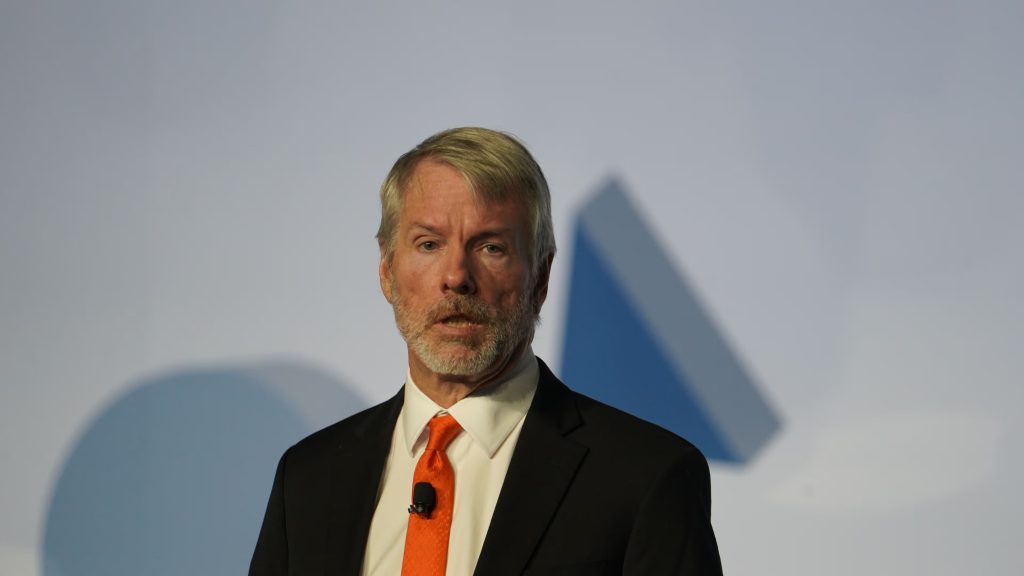
Michael Saylor Announced That the Bitcoin Update He Opposed Is Now Impossible to Pass
Michael Saylor explained that it is mathematically impossible for BIP-110 to reach the 55% volunteer support threshold in the current Bitcoin mining difficulty cycle. According to data shared
A
AnonymousCryptoCompass newsroom
August 1, 2026
2 min read
NEWS
CryptoCompass editorial visual for bitcoin coverage.
Michael Saylor explained that it is mathematically impossible for BIP-110 to reach the 55% volunteer support threshold in the current Bitcoin mining difficulty cycle.
According to data shared by Saylor, a total of 946 blocks were generated up to block number 960,561 during the current difficulty adjustment period. Only 24 of these blocks had the BIP-110 support signal added to the version field in the block header.
Saylor stated that all of the blocks sending signals were produced by DATUM miners who share their rewards through the OCEAN mining pool, and that no support signals came from miners outside of OCEAN.
Saylor stated that due to this situation, BIP-110 would not reach the 55% voluntary support level in the cycle in question, arguing that the current signals could not be considered a broad miner consensus.
BIP-110 is a proposal that aims to make it more difficult to add photos, text, or other types of large data to the Bitcoin network besides money transfers. Simply put, its supporters say, “Bitcoin should only be used for sending money; unnecessary data shouldn’t clutter the network.” Michael Saylor opposes this.
Because, according to him, the Bitcoin network shouldn’t decide which transactions are necessary and which are unnecessary, and the rules shouldn’t be changed at the whim of a few people. Saylor also argues that the high support rates seen don’t reflect real miner support, but rather that the numbers appear higher than they are because some software has automated the signaling process.
AVA token, the native asset of travel booking platform Travala.com, surged as much as 112% intraday on September 17, 2026, climbing from roughly $0.155 to $0.329 after Bithumb opened a Korean
The Federal Open Market Committee voted 12-0 on September 16 to raise the federal-funds target range by 25 basis points to 3.75%–4.00%, marking the Fed's first rate increase since 2023, and c
The Financial Conduct Authority has targeted three London locations as part of an ongoing crackdown on peer-to-peer cryptocurrency trading, adding pressure to unregistered crypto activity ope