The landscape of American entrepreneurship is dotted with college dropouts founding tech startups that went on to become the world's biggest companies. For instance, Bill Gates dropped out of
The landscape of American entrepreneurship is dotted with college dropouts founding tech startups that went on to become the world's biggest companies.
For instance, Bill Gates dropped out of Harvard to co-found Microsoft. Mark Zuckerberg left Harvard after launching Facebook (now known as Meta).
Whereas Steve Jobs left Reed College to co-found Apple, and Jack Dorsey left New York University to co-found Twitter (now called X) and the Bitcoin-centric fintech Block.
All of these companies are among the world's most valued tech powerhouses, cementing the popular myth that most successful companies are built by college dropouts in the U.S.
However, not every such story ends on a successful note.
Related: Cathie Wood sells Meta shares after Zuckerberg's big AI launch
MIT dropout built crypto projects
Tieshun Roquerre, known by his online moniker "Pacman," is a Gen Z engineer who has balanced work with his studies since his teens.
He worked as an engineer at the e-commerce site Teespring and subsequently dropped out of high school. Next, he cofounded StrongIntro, a job-hunting site, and took it through the Y Combinator startup accelerator.
In 2016, he joined the Massachusetts Institute of Technology (MIT) to study mathematics and computer science. But he dropped out in 2018 to build products based on blockchain and crypto technologies.
The blockchain technology, which revolves around building a digital ledger of records agreed upon and stored across several computers, has gained immense popularity due to its rebellion against Big Tech's centralized control.
The most popular use case of the blockchain technology is cryptocurrency. It is a type of digital currency that is minted over a decentralized network of individual contributors (nodes). Unlike fiat currency, it is not issued by a government or a central bank.
Roquerre, drawn to these emerging technologies, started Namebase in 2018. It is a decentralized domain startup built on the Handshake (HNS) blockchain network. He raised $5 million for the project before selling it to Namecheap in 2021.
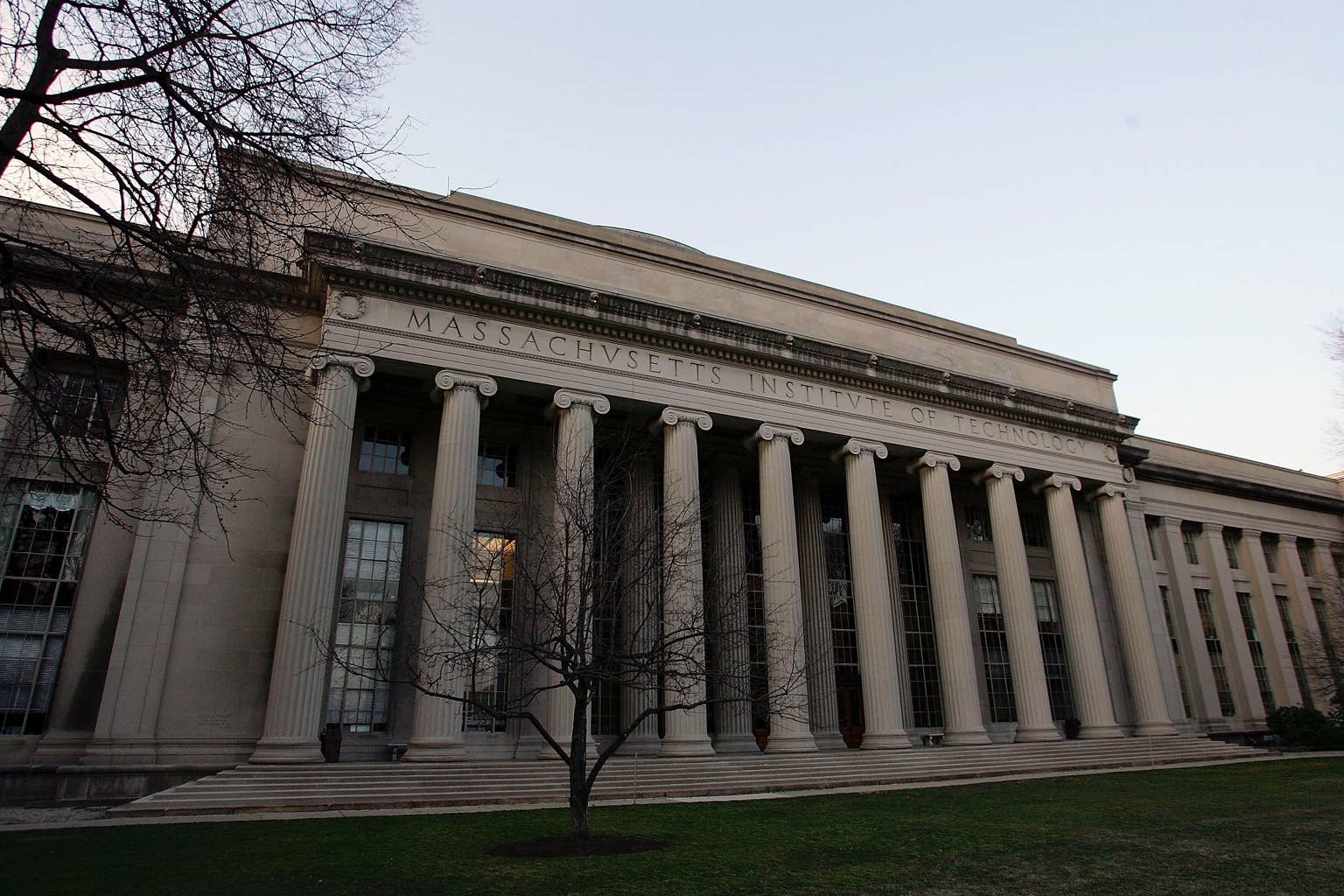
The Maclaurin Building is shown on the campus of the Massachusetts Institute of Technology February 22, 2006 in Cambridge, Massachusetts.
Getty Images
NFT marketplace Blur to shut down
In October 2022, Roquerre co-founded Blur, a marketplace to trade non-fungible tokens (NFTs).
It's a term many have heard of but few understand. In simple words, an NFT is a digital certificate of ownership recorded on a blockchain. An NFT can prove the ownership of a piece of original digital art, a tweet, or a meme.
The NFT market became extremely popular, and people paid millions for a few NFTs. In 2021, the most famous NFT by the American artist Beeple sold for $69.3 million. The same year, Jack Dorsey sold his first tweet as an NFT for over $2.9 million.
But after hitting the peak in 2021-22, the NFT market lost momentum in later years. Blur itself was once the largest marketplace to trade Ethereum NFTs.
But Blur announced on Oct. 12 that it's shutting down its website on Nov. 12. Its NFT lending service, Blend, will also halt new loans the same day next month.
Though the platform didn't specify any reason for the decision, the trading volume has fallen from the peak of $1.43 billion in March 2023 to less than $7 million in March 2026.
Popular on TheStreet Roundtable:
Ethereum layer-2 Blast to shut down
After launching Blur in 2022, Roquerre launched an Ethereum layer-2 blockchain network called Blast in November 2023.
Blast gained popularity in the beginning and attracted a record total value locked (TVL) of $2.19 billion in May 2024, as per DeFiLlama. Its revenue hit a peak of $3.54 million in June 2024.
But the figures dropped quickly because speculative capital found another avenue. The math isn't mathing right now, and Blast's TVL and revenue stood at $24.81 million and $1,793 in September 2026.
Just because there is little trading activity, it doesn't mean a network doesn't have to spend money to keep it alive. For Blast, these costs were more than the revenue. This is why the network announced on Oct. 2 that it's shutting down.
Blast asked its users to withdraw their assets from Blast to the Ethereum mainnet by Oct. 26. Post that deadline, users will have to interact directly with the bridge contracts on Ethereum L1 to withdraw their assets, Blast said.
"We strongly encourage everyone to withdraw their assets to Ethereum mainnet before October 26."
The recent months have proven to be disastrous for Roquerre as two crypto projects he founded have announced shutdowns within a fortnight.
Related: 95-year-old luxury carmaker shuts down iconic project