Michael Saylor rejects BIP 110, which he presents as a threat to Bitcoin neutrality. The proposal aims to limit for one year several transactions containing data unrelated to payment. For Say
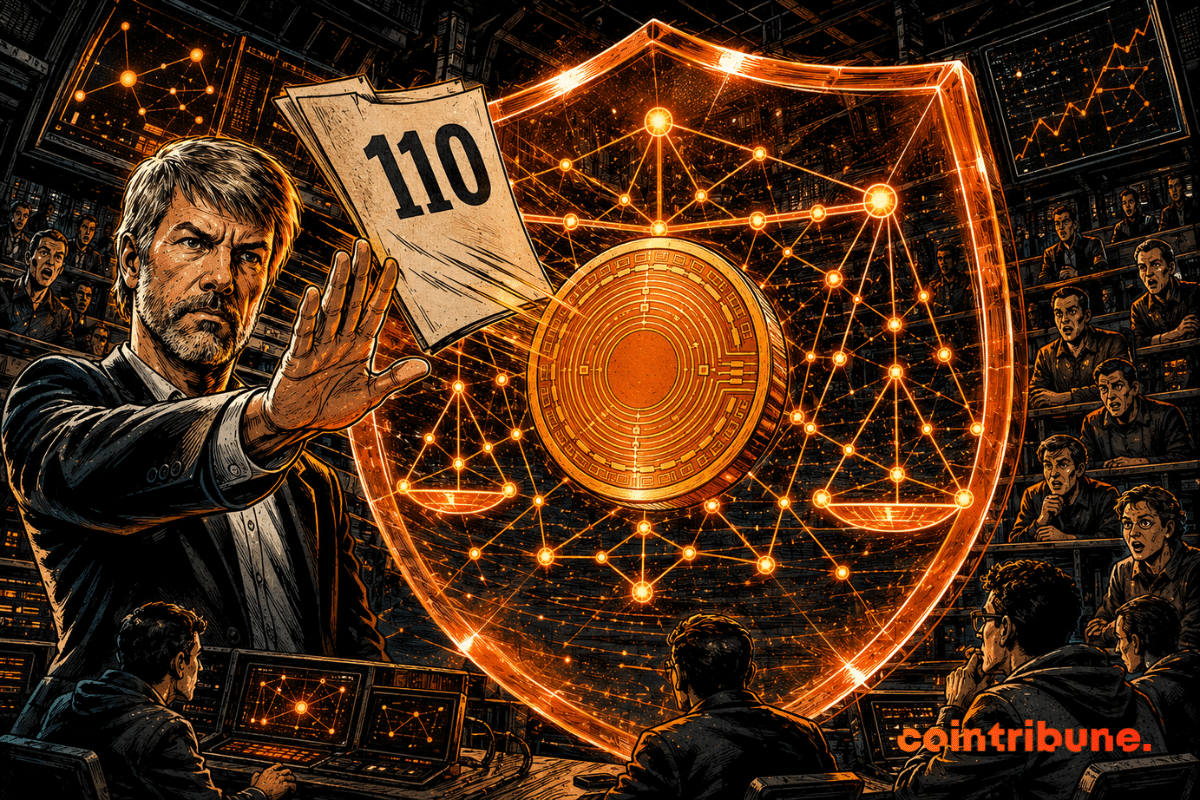
Michael Saylor rejects BIP 110, which he presents as a threat to Bitcoin neutrality. The proposal aims to limit for one year several transactions containing data unrelated to payment. For Saylor, the real danger is not spam. It is the idea that a usage disagreement could modify the consensus rules.
In brief
- Saylor rejects BIP 110 in the name of Bitcoin neutrality.
- The proposal aims to temporarily limit certain data recorded in transactions.
- The debate mainly concerns consensus, miners’ fees, and the risk of precedent.
Bitcoin: Saylor refuses consensus against certain usages
Bitcoin faces a sensitive governance debate. BIP 110 proposes a temporary soft fork to reduce the data recorded in transactions. Michael Saylor believes this technical response would create a precedent more risky than the problem targeted. His essay lists 100 arguments against the proposal. He does not present his opposition as an attack on developers. He even states that he shares some goals, such as less costly nodes and more accessible payments.
The disagreement concerns the method. Saylor refuses that consensus serve to declare some usages acceptable and others undesirable, while these transactions remain valid today. BIP 110 targets usages that exploit block space to record or carry data. Critics see this as a misuse of Bitcoin, designed primarily as a censorship-resistant currency.
The proposal would add seven consensus rules. It would notably limit OP_RETURN to 83 bytes, cap several payloads at 256 bytes, and restrict certain usages related to Taproot and Tapscript. These rules would be temporary. They would last about one year. UTXOs created before activation would be protected to prevent existing funds from becoming impossible to spend.
But Saylor considers this protection incomplete. Some pre-signed flows or complex constructs could be disrupted. According to him, a temporary rule can still have lasting effects on user trust.
Your 1st cryptos with CoinbaseThis link uses an affiliate program.The 55% threshold worries opponents
The most explosive point concerns activation. BIP 110 provides for a signaling threshold of 55% of miners, well below the 95% of classic BIP 9. This difference fuels accusations of forceful passage. Saylor insists on a simple reality: miners are not all of Bitcoin. Holders, nodes, platforms, wallets, and custodians also participate in defining the rules actually applied.
A threshold too low can thus create two incompatible perceptions of the network. Some participants follow the new rule. Others continue with the old rules. This is the classic ground for a chain split. This risk is all the more sensitive as visible support remains weak. If an active minority tries to impose a contested rule, it may not achieve a Bitcoin reform but a minority chain.
Saylor also links this debate to the economic security of the network. As halvings reduce block subsidy, miners depend more on transaction fees. Some contested transactions pay fees. Removing them at the consensus level can reduce part of the demand for block space. This is not neutral for miners’ revenues.
Supporters of BIP 110 respond that node costs and block pollution also threaten decentralization. Their argument is not absurd. A network too heavy can exclude small operators. But Saylor prefers configurable relay and mining policies. These tools already allow some nodes or miners to filter transactions without imposing a universal rule on all Bitcoin.
Bitcoin neutrality becomes the real issue
The debate goes beyond inscriptions, OP_RETURN, or Taproot. It touches on Bitcoin neutrality. Who decides that a transaction pays for a legitimate use? Who rules between payment, storage, privacy, stablecoins, or future applications?
Saylor fears a slippery slope. If consensus begins to ban usages deemed non-monetary, other battles will follow. Privacy tools, settlement solutions, or financial applications could become the next targets. The community remains divided. Some defend BIP 110 as a hygiene measure. Others see it as an overly aggressive remedy, capable of harming the patient it claims to treat.
This debate confirms above all one thing: Bitcoin changes with difficulty, and that is part of its strength. A consensus modification must obtain very broad support, not just a technical majority. Saylor therefore defends a conservative line: preserve the base layer, let the fee market play its role, and prevent a fork proposal from turning a usage disagreement into a governance crisis.