SBI Holdings and the Solana Foundation have announced a partnership aimed at expanding onchain finance, combining one of Japan's largest financial conglomerates with one of the most active La
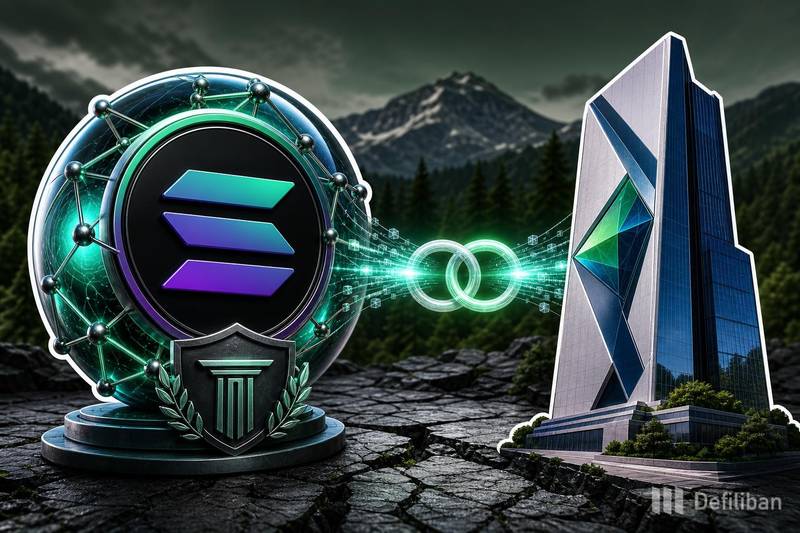
SBI Holdings and the Solana Foundation have announced a partnership aimed at expanding onchain finance, combining one of Japan's largest financial conglomerates with one of the most active Layer 1 blockchain ecosystems.
The collaboration, reported by FX News Group, centers on building onchain financial market infrastructure originating from Japan. SBI Holdings, a Tokyo-based financial services group with operations spanning securities, banking, and asset management, is positioning itself as a bridge between traditional finance and blockchain-native systems. For related coverage, see EF Protocol Support dissolution: What Ethereum Foundation team shutdown means.
What the partnership sets out to achieve
According to an official announcement from SBI Group, the stated objective is to expand onchain finance. While the announcement does not detail specific products or launch timelines, the framing around "onchain finance" rather than a single token or application suggests the partnership targets infrastructure-level development. For related coverage, see Ethereum Foundation Says AI Finds Real Bugs but Human Judgment Still Leads.
The Solana Foundation, which oversees ecosystem growth for the Solana blockchain, brings a network known for high throughput and low transaction costs. SBI Holdings contributes regulatory relationships and institutional distribution channels across Japan and broader Asia. For related coverage, see Binance Monthly BTC Futures Volume Reaches $1.6 Trillion, Highest This Year.
This is not SBI's first foray into blockchain. The company has previously invested in digital asset ventures and operated crypto-adjacent financial services through its subsidiary SBI VC Trade. The Solana Foundation partnership extends that trajectory into protocol-level collaboration.
How a TradFi-blockchain tie-up could support adoption
Partnerships between established financial institutions and blockchain foundations have historically served as catalysts for onchain adoption. They provide the regulatory credibility and user base that purely crypto-native projects often lack, while giving traditional firms access to programmable settlement and tokenization infrastructure.
For the Solana ecosystem, the tie-up could open pathways into Japanese institutional capital. Japan's Financial Services Agency has maintained a relatively structured regulatory framework for digital assets, which may make it a more predictable environment for onchain finance experiments than jurisdictions still debating classification rules.
The partnership's focus on building from Japan is notable. While much of the institutional blockchain activity in 2025 and 2026 has centered on U.S.-based ETF products and European MiCA compliance, Japan has quietly maintained one of the world's most active licensed crypto markets. A dedicated push to build onchain financial infrastructure there could complement, rather than compete with, Western institutional adoption efforts.
Where this fits in the broader institutional crypto narrative
The announcement arrives during a period of increasing institutional engagement with blockchain-based financial infrastructure. Coinbase Ventures led crypto VC deal count in the first half of 2026, reflecting sustained institutional appetite for blockchain investments across the sector.
What distinguishes the SBI-Solana partnership from typical venture investments is its focus on financial market infrastructure rather than a single application or token. The "onchain finance" framing points toward tokenized securities, onchain settlement, or institutional-grade DeFi products, though none of these have been confirmed as specific deliverables.
For Solana, which has faced scrutiny over ecosystem security incidents in the past, a high-profile institutional partnership may help reinforce the network's positioning as a serious infrastructure layer for regulated financial activity.
No specific timeline, product roadmap, or investment figures have been disclosed. The partnership's impact will ultimately depend on what concrete infrastructure emerges from the collaboration and whether it attracts meaningful transaction volume from Japan's institutional market.
Disclaimer: This article is for informational purposes only and does not constitute financial or investment advice. Cryptocurrency and digital asset markets carry significant risk. Always do your own research before making decisions.
Read original article on defiliban.io