Bitcoin1 min read
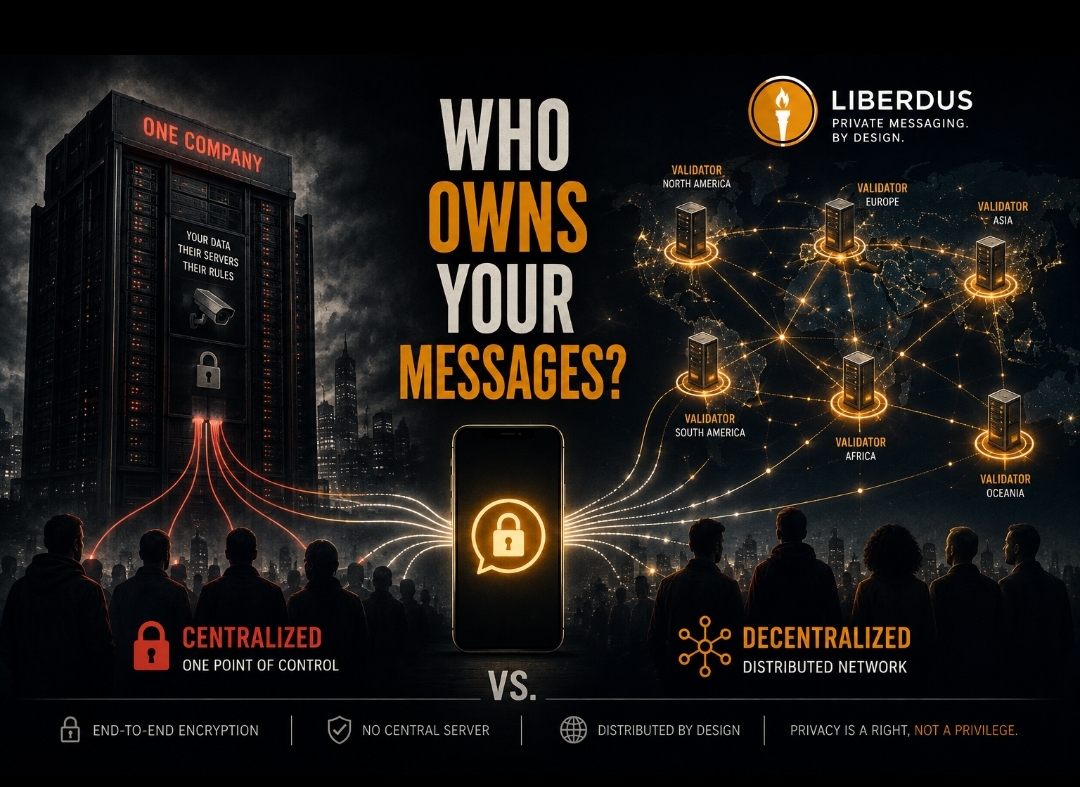
WHO OWNS YOUR MESSAGES?
We often talk about private messaging as if encryption is the entire story. It isn't. When you use a centralized messenger, you trust more than its encryption. You trust the company operating
South Korea’s opposition People Power Party has moved to delay the country’s 22% cryptocurrency investment tax by three years to Jan. 1, 2030, days after the government kept the levy on track
South Korea’s opposition People Power Party has moved to delay the country’s 22% cryptocurrency investment tax by three years to Jan. 1, 2030, days after the government kept the levy on track to start in 2027.
SummaryAccording to South Korean broadcaster MBN, People Power Party lawmaker Jeong Seong-guk plans to introduce an amendment to the Income Tax Act that would move the implementation date from Jan. 1, 2027, to Jan. 1, 2030.
Jeong said the additional three years would give lawmakers and authorities time to review the virtual asset tax system and related rules before investors become liable for the tax. He argued that setting a later implementation date would give taxpayers more certainty and reduce confusion while the framework is being reconsidered.
The proposal creates another route for the opposition to challenge the tax after People Power Party lawmakers separately introduced legislation seeking to abolish it altogether.
Under the current Income Tax Act, income earned by transferring or lending cryptocurrencies, including Bitcoin and Ethereum, will be classified as other income beginning Jan. 1, 2027. Annual gains above 2.5 million won will face a combined rate of 22%, consisting of a 20% national income tax and 2% local income tax.
Jeong’s amendment would leave the tax provisions in place but postpone when they become effective, giving lawmakers three additional years to reconsider how cryptocurrency investment income should be treated.
The proposal comes less than a week after South Korea’s Ministry of Economy and Finance confirmed that the government intends to proceed with the existing 2027 deadline.
On Aug. 3, the ministry finalized its 2026 tax reform proposal without adding another postponement for virtual asset taxation. The package still requires approval from the National Assembly, where lawmakers can amend the tax provisions or change their implementation date.
Jeong said cryptocurrency taxation should begin only after rules protecting investors and the infrastructure needed for fair taxation have been sufficiently established.
Rather than introducing a tax simply because a statutory deadline has arrived, Jeong said the government and National Assembly should first create a system that taxpayers can accept. He also called for enough time to complete the ongoing review of the virtual asset tax framework and limit disruption when the rules eventually take effect.
You might also like: Upbit parent Dunamu to custody seized crypto for South Korean police
South Korea has already delayed the levy three times.
Lawmakers originally approved the cryptocurrency income tax provisions in 2020, with implementation scheduled for January 2022. The start date was subsequently moved to 2023, then 2025 and finally 2027 as authorities worked on reporting requirements and administrative systems.
The latest government position is that much of the required infrastructure is now ready.
During a National Assembly Finance and Economic Planning Committee meeting on July 29, Finance Minister Koo Yun-cheol said the government planned to introduce the tax according to the existing schedule and consider improvements after gaining experience with its operation.
Under the framework scheduled for 2027, the 2.5 million won annual exemption would be deducted before the 22% rate is applied.
The Ministry of Economy and Finance illustrated the calculation in its 2026 tax proposal using an investor who earns 5 million won from Bitcoin trading in a year. After deducting the 2.5 million won allowance, the remaining 2.5 million won would generate a tax bill of 550,000 won.
Investors earning taxable cryptocurrency income during 2027 would report it for the first time in May 2028.
Government preparations have also included systems intended to give tax authorities more information about trading outside South Korea. Under the Organisation for Economic Co-operation and Development’s Crypto-Asset Reporting Framework, South Korean authorities expect to begin receiving overseas cryptocurrency transaction information from participating jurisdictions next year.
The government has said 48 jurisdictions, including Japan, Germany and France, are participating in the reporting arrangement, which is expected to provide tax authorities with additional information on assets and transactions held through foreign platforms.
South Korea’s National Tax Service has separately established a digital asset unit as authorities prepare guidance for implementing the tax.
While Jeong is pursuing a three-year postponement, another People Power Party proposal would remove the cryptocurrency income tax provision from the Income Tax Act entirely.
People Power Party lawmaker Song Eon-seok introduced the amendment on March 19. The bill would delete Article 21, Paragraph 1, Item 27 of the Income Tax Act, which covers income generated from transferring or lending virtual assets.
The proposal has been tabled before the National Assembly’s Finance and Economic Planning Committee and could proceed to a subcommittee for further consideration.
People Power Party lawmakers have argued that the current framework creates unequal tax treatment between cryptocurrency and stock investors. South Korea abolished its planned financial investment income tax for ordinary investors, leaving most retail gains from stock transactions outside the comparable tax regime.
The opposition has used that difference to argue against imposing a 22% levy on cryptocurrency gains.
During the July 29 committee hearing, People Power Party lawmaker Kim Sang-hoon also questioned the absence of provisions allowing cryptocurrency investors to carry trading losses forward.
Kim warned that the structure could encourage investors to move trading from domestic platforms such as Upbit, Bithumb, Coinone and Korbit to overseas centralized exchanges, decentralized finance services or peer-to-peer markets.
Responding to the committee, Koo said treating virtual asset gains under South Korea’s capital gains tax framework would require a review of the country’s financial taxation system. The finance minister said changes could be considered after authorities gained experience operating the cryptocurrency tax.
The government and ruling Democratic Party have continued to support implementing the levy, making passage of the opposition’s repeal proposal uncertain. MBN reported that the government and ruling party are expected to argue for maintaining taxation when the repeal bill reaches detailed committee discussions.
Jeong’s delay amendment therefore provides the opposition with a separate legislative option that would retain the tax in law while preventing it from taking effect next year.
The dispute over taxation is unfolding while South Korean regulators and lawmakers are working on a new regulatory framework for the cryptocurrency sector.
In late July, the Financial Services Commission told the National Assembly that it was preparing a consolidated Digital Asset Basic Act with the ruling Democratic Party.
The planned legislation would combine work surrounding 10 digital asset and stablecoin proposals already pending before lawmakers. The framework is expected to address stablecoin issuance and circulation, exchange requirements, disclosures, internal controls and trading-system resilience.
Several provisions remain under discussion, including whether issuers of won-backed stablecoins should be controlled by bank-led consortiums and whether ownership restrictions should apply to major cryptocurrency exchanges.
The Bank of Korea has supported a leading role for banks in won-backed stablecoin issuance because of potential implications for monetary and financial stability, while some lawmakers and industry participants have supported allowing qualified non-bank companies to issue tokens under licensing and reserve requirements.
Jeong has separately introduced legislation involving institutional access to cryptocurrencies. MBN reported that he previously became the first lawmaker in the 22nd National Assembly to propose a bill allowing institutional cryptocurrency investment through spot exchange-traded funds that could include assets such as Bitcoin and Ethereum.
His latest amendment would change only the implementation timetable for cryptocurrency income taxation, moving the statutory start date from Jan. 1, 2027, to Jan. 1, 2030, while the separate Song Eon-seok proposal would remove the relevant income tax provision altogether.
Read more: Cysic surges 223% weekly as Upbit adds CYS markets