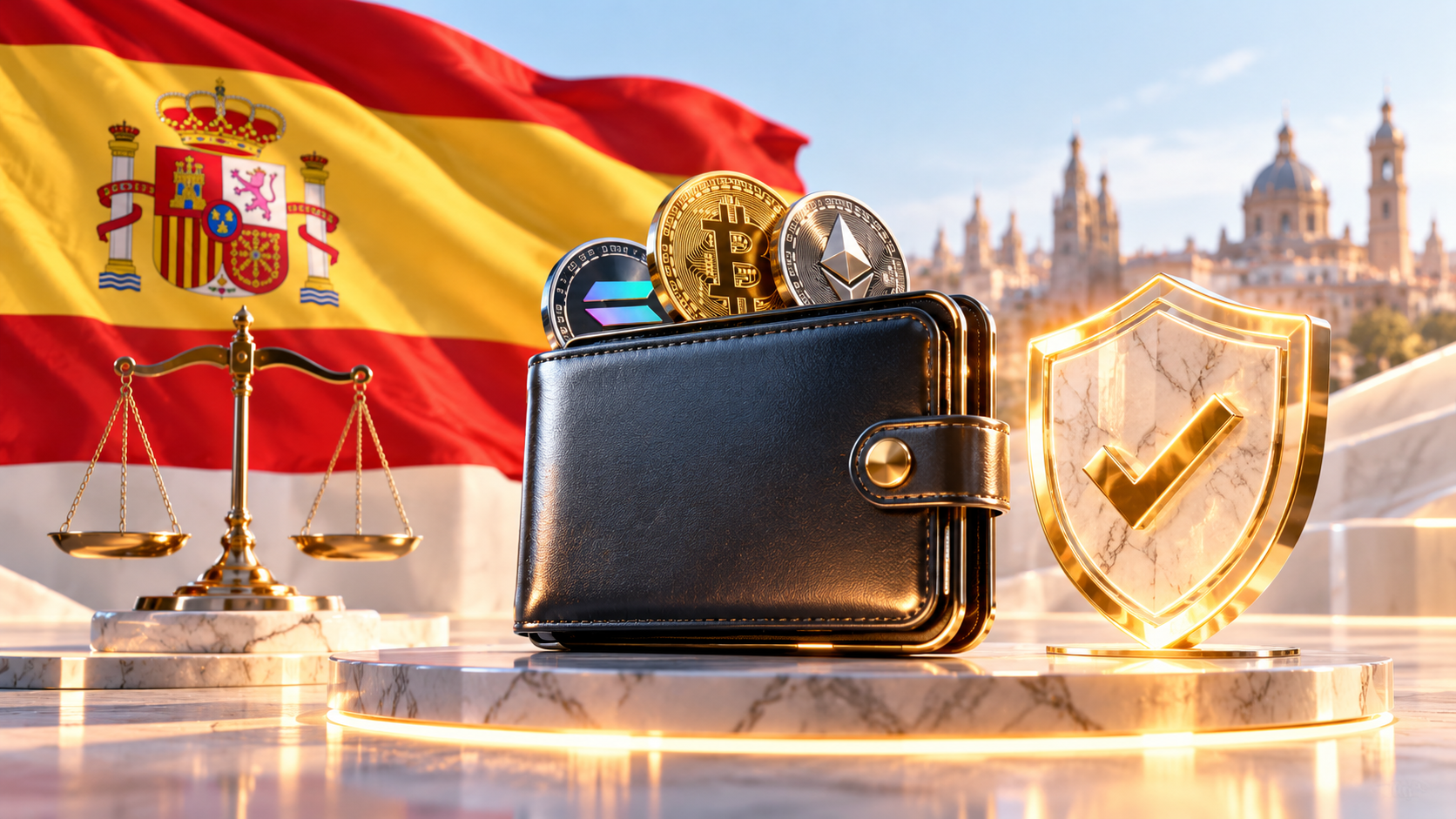
Crypto held in wallets where the owner controls the private keys does not fall under Spain’s Modelo 721 foreign-asset reporting requirement, drawing a clear tax-reporting line between self-cu
Crypto held in wallets where the owner controls the private keys does not fall under Spain’s Modelo 721 foreign-asset reporting requirement, drawing a clear tax-reporting line between self-custody and assets controlled by foreign custodians.
The exemption applies whether the assets sit in a hot wallet or cold wallet. What determines the reporting obligation is who controls the private keys, not whether the wallet connects to the internet or what type of device stores the credentials.
Crypto only enters the Modelo 721 framework when a third party safeguards the private keys on the user’s behalf and that custodian is located outside Spain. Foreign-custodied holdings become reportable when the combined euro value of the relevant virtual currencies exceeds €50,000 at December 31. Once that combined threshold is exceeded, all qualifying foreign-held virtual currencies must be included.
Private-Key Control Determines Modelo 721 Treatment
A user holding Bitcoin, Ether or other crypto in a non-custodial wallet therefore does not add those balances to the €50,000 Modelo 721 calculation. The same treatment can apply to both software and hardware wallets as long as no outside provider controls the keys.
That contrasts with regulatory approaches emerging elsewhere around transfers between centralized platforms and self-hosted addresses. Brazil recently imposed self-custody reporting when qualifying transfers of at least $10,000 cross between regulated institutions and user-controlled wallets.
Thailand has taken a different route through its Travel Rule, requiring licensed crypto businesses to verify ownership or control when customers transfer assets to or from self-hosted wallets. Neither framework bans self-custody, but both place additional compliance requirements at the point where private wallets interact with regulated intermediaries.
Spain’s Modelo 721 treatment instead focuses on whether crypto is actually held abroad through a custodian. A wallet controlled directly by its owner does not meet that custody condition.
Self-Custody Does Not Remove Other Crypto Taxes
The Modelo 721 exemption does not make self-custodied crypto tax-exempt.
Selling crypto for euros can still create a capital gain or loss based on the difference between acquisition and disposal value. Swapping one cryptocurrency for another can also create a taxable gain or loss under Spain’s IRPF rules.
Crypto also remains part of Spain’s wealth-tax framework where the taxpayer is otherwise subject to the tax. Holdings are valued in euros at December 31, with virtual currencies treated as assets with economic value.
The distinction therefore applies specifically to the foreign-asset disclosure obligation: direct control of the private keys keeps self-custodied crypto outside Modelo 721, while taxable disposals and applicable wealth-tax obligations remain unchanged.
The post Spain Exempts Self-Custody Crypto From Foreign Asset Reporting appeared first on Crypto Adventure.