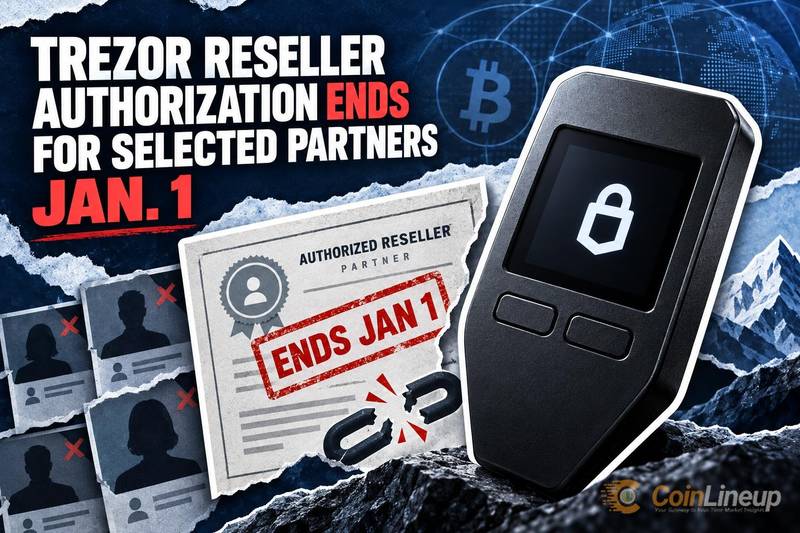
Trezor, the hardware crypto wallet maker, has announced that selected resellers will lose their authorized status starting January 1, 2027. The change affects only certain resellers, not the
Trezor, the hardware crypto wallet maker, has announced that selected resellers will lose their authorized status starting January 1, 2027. The change affects only certain resellers, not the entire network of Trezor retail partners.
What Trezor announced about selected reseller authorization
Trezor said that a group of selected resellers will no longer hold authorized status once the January 1, 2027 date arrives. The announcement draws a clear line between resellers that will retain authorization and those that will not, though Trezor has not publicly named the specific partners affected. For related coverage, see KULR Sells 333 BTC for $21.5M, Repays Coinbase Loan, Ends Mining.
The effective date gives resellers and buyers several months to seek clarification and make decisions before the change takes effect. What happens to a reseller's authorization after that date, such as whether they may continue selling Trezor devices through other channels, has not been specified in the available information about the announcement. For related coverage, see SEC Revises Quorum Rule, Raising Questions for Crypto Rules.
This development comes in a period of heightened attention to hardware wallet supply chains. CryptoSlate reported on reseller scrutiny in the Trezor ecosystem amid broader concerns about the integrity of hardware wallet distribution channels. A previous data incident also put Trezor's reseller network under scrutiny; a breach at logistics firm ShipMonk exposed personal data belonging to 13,689 Trezor buyers, including delivery addresses.
What the Jan. 1, 2027 authorization change means
Losing authorized reseller status does not automatically mean a retailer must stop selling Trezor products. Authorization, however, typically determines whether a seller can offer manufacturer-backed warranties, official support, and genuine product guarantees to customers. Those details have not been confirmed for this specific change. For related coverage, see ENS Seeks DAO Approval to Launch ENSv2 on Ethereum.
The announcement does not specify what triggered the decision for the selected resellers, nor does it confirm how many partners are affected. Buyers purchasing from any reseller should verify that the seller still holds current authorization, especially for purchases made close to or after January 1, 2027. For related coverage, see FSB Warns Cross-Border Stablecoins Face Bank-Run Risks.
What buyers and resellers should check before January 2027
If you buy a hardware wallet, where you buy it matters. Trezor devices purchased through unauthorized channels carry a higher risk of tampering or counterfeiting, since the supply chain is harder to verify.
Buyers should confirm a seller's authorization status directly through Trezor's official website before completing any purchase, particularly as the effective date approaches. Do not rely on a reseller's own claims of authorization without cross-checking against Trezor's official list.
Resellers affected by the change should review any direct communication from Trezor and seek clarification from the company ahead of the January 1, 2027 deadline. Any questions about which resellers are included, what the loss of authorization means for existing stock, or how to appeal the decision should be directed to Trezor directly, since the available announcement does not address those specifics.
For anyone considering their first hardware wallet purchase, buying directly from Trezor's official store remains the most straightforward way to avoid uncertainty about a reseller's status entirely.
Additional source references: source document 1.
Disclaimer: This article is for informational purposes only and does not constitute financial or investment advice. Cryptocurrency and digital asset markets carry significant risk. Always do your own research before making decisions.
Read original article on coinlineup.com