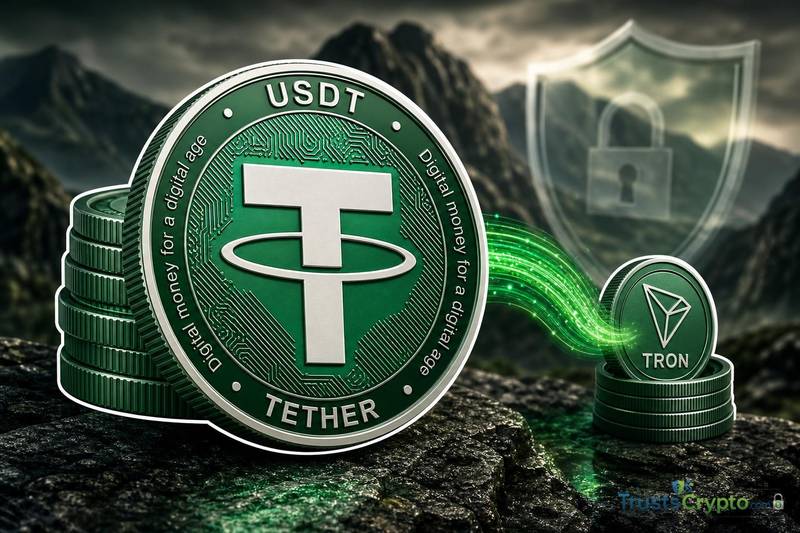
USDT circulating supply on Tron has surpassed $90 billion, marking a significant milestone for the largest stablecoin on one of its most actively used networks. The figure underscores the gro
USDT circulating supply on Tron has surpassed $90 billion, marking a significant milestone for the largest stablecoin on one of its most actively used networks. The figure underscores the growing role Tron plays in stablecoin transfers and broader crypto market liquidity.
What the $90 Billion USDT-on-Tron Milestone Means
The milestone places Tron among the leading networks for USDT issuance. Circulating supply refers to the total number of tokens that have been minted and are available for use on a given blockchain, as distinct from price or trading volume metrics. For related coverage, see USDC Treasury Mints 699.3 Million USDC: Supply Impact and Market Focus.
Why Circulating Supply Matters
Unlike price movements, circulating supply reflects issuance activity and demand for dollar-denominated tokens on a specific chain. A rising supply figure on Tron suggests that users and institutions continue to choose the network for holding and transferring USDT. For related coverage, see Aave Stable Vaults Launch: Predictable Yield.
Crossing $90 billion signals the scale of stablecoin activity flowing through Tron. Supply data tracked by aggregators such as CoinGecko shows Tron consistently ranking as a top destination for USDT issuance.
Why Tron Has Become a Core Network for USDT
Tron's adoption as a stablecoin transfer layer stems from practical network characteristics rather than speculative interest. Users gravitate toward chains that minimize friction when moving dollar-linked tokens between wallets, exchanges, and payment platforms.
Low Transaction Costs
Tron's fee structure makes it one of the cheapest networks for transferring USDT. For users sending stablecoins frequently, whether for trading, remittances, or settlement, low per-transaction costs add up to meaningful savings over time.
Fast Settlement
Transactions on Tron typically confirm within seconds. Combined with low fees, this speed has made Tron a practical default for users who need to move stablecoins quickly between platforms.
Broad Exchange and Wallet Support
Most major centralized exchanges support USDT deposits and withdrawals on Tron, often listing TRC-20 USDT as a default transfer option. This widespread integration reinforces the network effect driving supply growth.
Previous disruptions to this flow, such as when Tether USDT Tron network withdrawals were temporarily suspended, have highlighted how dependent the ecosystem has become on Tron-based transfers.
How Rising USDT Supply on Tron Can Affect the Crypto Market
Stablecoin supply growth is widely interpreted as a liquidity signal within crypto markets. More USDT available on a heavily used network means more capital is positioned for deployment into trading, lending, or on-chain activity.
The Liquidity Angle
When stablecoin supply expands on networks with deep exchange integration, it can indicate that participants are preparing capital for market activity. This does not guarantee upward price movement for other assets, but it reflects heightened demand for dollar-linked liquidity.
Similar dynamics have played out with other stablecoins. The USDC Treasury recently minted 699.3 million USDC, signaling parallel demand across stablecoin issuers.
Trading and Sentiment
Traders often monitor stablecoin supply as an indirect gauge of market sentiment. A growing USDT supply on Tron suggests that capital is entering or remaining within the crypto ecosystem rather than being redeemed for fiat, though this interpretation carries limitations.
Supply growth alone does not confirm active usage. Tokens can be minted and held without being actively traded, making it important to distinguish between issued supply and actual transaction volume.
Risks and Questions Behind the Growth
While the milestone is notable, it raises questions that readers should consider before drawing broad conclusions.
Network Concentration
Heavy reliance on a single network for stablecoin activity creates dependency risks. If Tron experienced sustained downtime, congestion, or governance disputes, a large share of USDT liquidity could be temporarily disrupted.
Regulatory Scrutiny
Stablecoins remain a focal point for regulators globally. The evolving regulatory landscape, including recent developments such as Sony's conditional OCC approval for a stablecoin-focused trust bank, continues to shape how issuers and networks operate.
Supply vs. Usage
A rising circulating supply does not automatically mean proportional growth in on-chain transactions. Some portion of issued USDT may sit idle in wallets or be held as reserves rather than actively circulating through transfers and trades.
FAQ: USDT on Tron After Surpassing $90 Billion
What does circulating supply mean for USDT on Tron?
Circulating supply refers to the total amount of USDT tokens that have been minted and are available on the Tron blockchain. It measures issuance, not price, and reflects how much dollar-linked value has been deployed on the network.
Why is Tron so widely used for USDT transfers?
Tron offers low transaction fees, fast confirmation times, and broad support across exchanges and wallets. These characteristics make it a practical choice for users who transfer stablecoins frequently.
Is rising USDT supply on Tron automatically bullish for crypto?
Not necessarily. While growing stablecoin supply is often interpreted as a positive liquidity signal, it does not guarantee price increases for other crypto assets. Supply growth reflects demand for dollar-linked tokens but does not indicate the direction of future market moves.
Where can I track USDT supply across blockchains?
Platforms like CoinGecko and DeFiLlama provide real-time stablecoin supply data broken down by blockchain, allowing users to compare issuance across networks including Tron, Ethereum, and others.
Disclaimer: This article is for informational purposes only and does not constitute financial or investment advice. Cryptocurrency and digital asset markets carry significant risk. Always do your own research before making any investment decisions.
Read original article on trustscrypto.com