Wintermute will spend $1 billion over five years building AI and high-frequency trading infrastructure, funded entirely from retained earnings. Bitcoin miners including Riot Platforms, Core S
- Wintermute will spend $1 billion over five years building AI and high-frequency trading infrastructure, funded entirely from retained earnings.
- Bitcoin miners including Riot Platforms, Core Scientific and MARA Holdings have signed AI compute deals worth tens of billions of dollars combined.
- Crypto-to-AI data center contracts now exceed $135 billion industry-wide.
- Institutional flows now account for 72% of spot crypto trading, pushing market makers toward traditional finance.
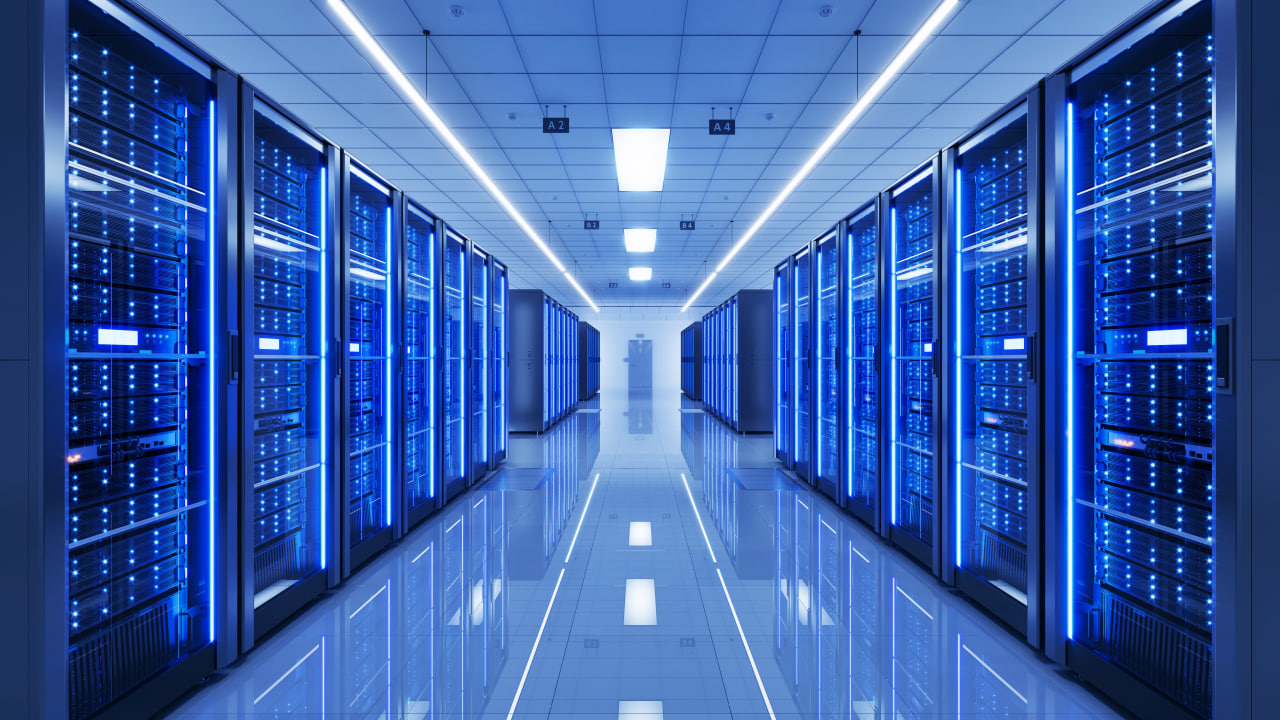
Wintermute Trading Ltd., one of the largest digital asset market makers, will invest $1 billion over the next five years into high-frequency trading and AI data center infrastructure, according to CEO Evgeny Gaevoy. The firm is financing the buildout entirely through retained earnings, avoiding debt or outside equity, and the move places it alongside a broader wave of crypto companies redirecting capital toward computing power rather than digital asset trading alone.
Wintermute’s Trading Volumes Fell 33% – That’s Why AI Became the Backup Plan
Average daily crypto trading volume at Wintermute fell from $15 billion in 2025 to $10 billion in 2026 as the market worked through a prolonged downturn. That decline sits at the center of the firm’s reasoning. Volatile, cyclical trading revenue does not fund a multi-decade infrastructure strategy on its own, so Wintermute is using profits built during better years, including a $582 million haul in 2021, to diversify into markets that do not swing as violently.
Gaevoy has said the goal extends past shaving microseconds off trade execution. The infrastructure exists to train and retrain large quantitative models continuously, which requires the kind of raw computing power, storage and custom networking that AI labs demand rather than the lighter technical footprint crypto trading has historically needed.
Non-crypto markets currently generate just 10% of Wintermute’s revenue. The firm wants that figure above 50% by the end of 2027, and the data center spending underpins expansion into equities, equity options, commodities, foreign exchange and event contracts. Its U.S. affiliate has already registered as a broker-dealer, and a prediction markets desk launched earlier in 2026 to capture growing volume in election and event betting.
Riot’s Anthropic Deal Turned Idle Mining Capacity Into $9.8 Billion
Wintermute’s pivot is notable, but it is smaller in scale than what is happening among Bitcoin miners, who control the two resources the AI industry is short on: gigawatt-level grid connections and physical data center real estate. Several have moved to convert that infrastructure directly into AI hosting revenue.
MINER → AI PARTNER Riot Platforms $9.1B 20-year Anthropic compute deal
Separate agreement with AMD brings contracted campus revenue to $9.8 billion.
BANKRUPTCY → BUILDOUT Core Scientific $1B J.P. Morgan equipment facility
Long-term leasing agreement with CoreWeave anchors its AI-density pivot.
BITCOIN → POWER SITES MARA Holdings $1.5B Bitcoin treasury sold to fund pivot
Partnered with Starwood Capital to convert energy-rich sites into AI data centers.
FRESH CAPITAL Keel Infrastructure $458M Funding round for AI buildout
Repositioning its power portfolio away from pure mining toward AI hosting.
Riot’s arrangement with Anthropic stands out for its duration and structure. Rather than simply hosting servers, Riot is acting as a primary colocation and infrastructure partner, a role that ties its revenue to long-term AI compute demand instead of Bitcoin’s mining difficulty and price cycles. MARA took the most direct route, liquidating a sizable chunk of its Bitcoin holdings specifically to bankroll its shift toward AI-ready power sites.
CoreWeave Already Proved the Mining-to-AI Pivot Works
The clearest template for this transition already exists. CoreWeave began in 2017 as an Ethereum mining operation before its founders recognized that the enterprise-grade GPUs they owned for mining were more valuable rented out for AI workloads. That early decision turned CoreWeave into one of the industry’s largest neocloud providers, with an AI compute backlog now exceeding $100 billion.
HIVE Digital Technologies followed a similar logic on a smaller scale, converting its Swedish and Icelandic mining facilities into high-performance computing sites capable of running AI workloads alongside digital asset mining.
The Fixed Costs That Could Turn This Bet Into a Liability
The shift carries real financial risk alongside the opportunity. Building physical data centers locks companies into fixed costs that mining rigs never required. XTX Markets, led by Alex Gerko, set an early precedent outside the mining sector by committing €1 billion to five data centers in Finland built solely to run its machine learning systems, and Jane Street has moved to self-finance private data centers rather than rely on cloud providers, signaling that even traditional quant firms see owned infrastructure as a competitive necessity rather than an option.
That calculation cuts both ways. Proprietary compute capacity protects firms from being priced out by cloud vendors as AI demand grows, but it also exposes them to losses if trading or compute demand contracts. For Bitcoin miners specifically, the pivot introduces a paradox: the same institutional adoption driving 72% of spot crypto flows, up from 59% a year earlier, is also what is pulling infrastructure and capital away from mining toward AI hosting. Whether that trade-off pays off will depend less on Bitcoin’s price than on how long AI compute demand keeps outpacing supply. Jump Trading’s recent deployment of DDN QLC SSD storage and Redpanda data architecture across its research desks suggests even firms that keep crypto and traditional trading separate are treating AI infrastructure as a shared cost of staying competitive.
The post Wintermute Bets $1B on AI, Signaling Crypto’s Data Center Rush appeared first on ETHNews.