Key takeaways Zcash (ZEC) lost 20.8 percent in 24 hours according to CoinGecko and traded at around $687 at 4:48 a.m. CET on November 21. That is the lowest price since August 21, 2026, and Z
Key takeaways
- Zcash (ZEC) lost 20.8 percent in 24 hours according to CoinGecko and traded at around $687 at 4:48 a.m. CET on November 21.
- That is the lowest price since August 21, 2026, and ZEC now sits a good 58 percent below its high for the year of around $1,653 at the end of September.
- The coinholder vote on 50,000 ZEC from the Zcash Community Grants treasury runs until November 30 at 11:59 p.m. UTC.
The Zcash price fell below $700 overnight into Saturday. Down 20.8 percent in 24 hours, ZEC is the weakest of the 25 largest cryptocurrencies, based on CoinGecko data at 4:48 a.m. CET. The drop is more than twice as steep as that of the wider market. No Zcash-specific trigger had been reported by that point; the slide is part of a broad sell-off that pushed bitcoin to its lowest level since September 2024.
Only on Friday morning we reported the slide to $843 (Zcash price below $850). Since then ZEC has shed a further $150 or so. According to CoinGecko, the 24-hour range runs from $865 to just under $700.
Zcash price in numbers: how far ZEC has fallen in the sell-off
The data at 4:48 a.m. CET, all figures from CoinGecko:
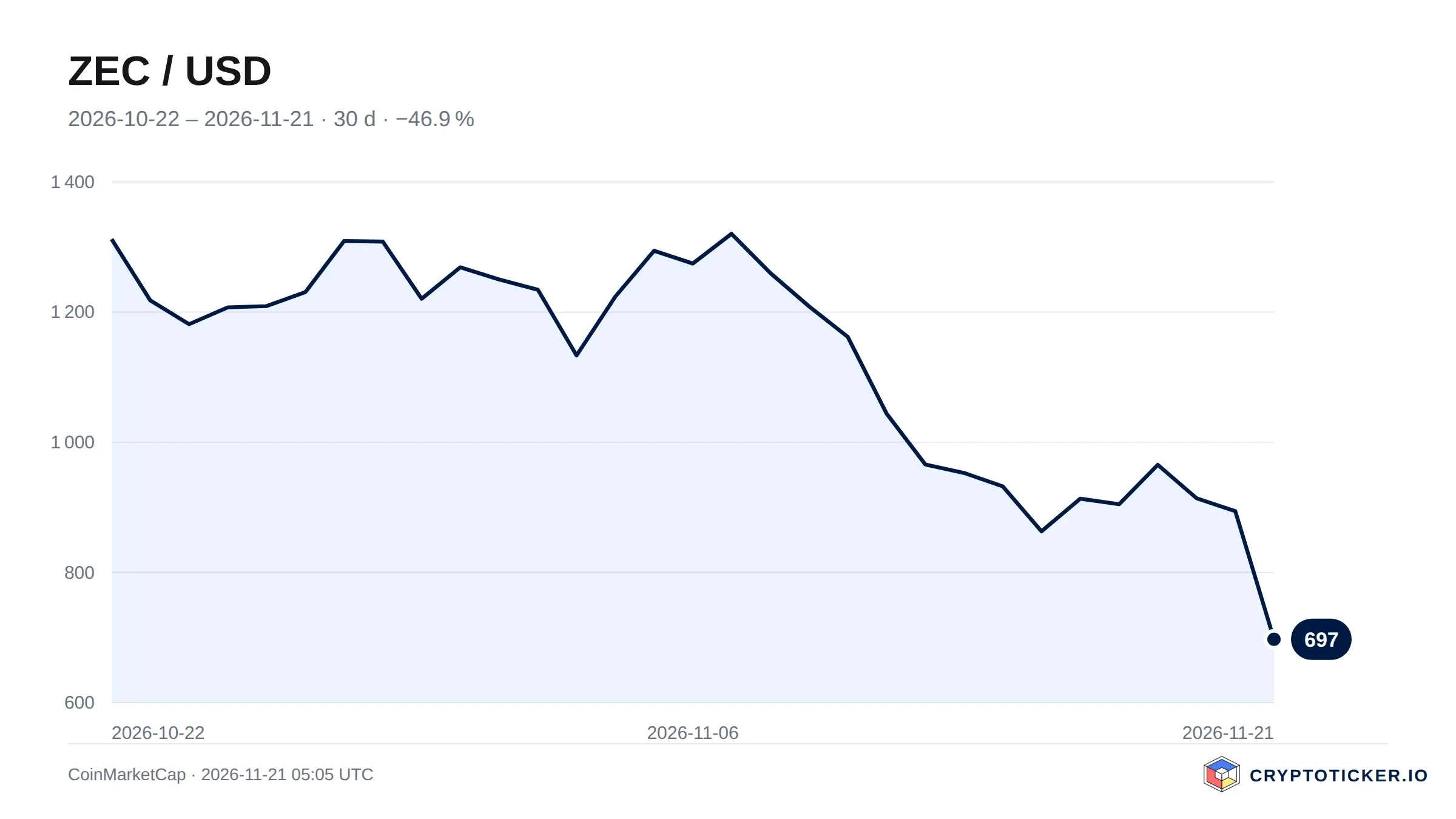
The Zcash price in US dollars over the past 30 days, daily closing prices and current price. Source: CoinMarketCap, as of November 21, 2026, 6:05 a.m. CET
- Price: around $687, daily high $865
- Change: down 20.8 percent in 24 hours, down 26.5 percent in seven days, down 47.3 percent in 30 days
- Market capitalisation: around $11.7 billion, rank 11
- Trading volume: around $1.24 billion in 24 hours
- Distance to the all-time high of $3,192 from October 2016: minus 78.5 percent
Over twelve months ZEC is still up 4.3 percent despite the slump. That shows how steep the rally was until the end of September: on September 27 the daily close stood at around $1,653, according to CoinGecko's history. Since that peak Zcash has lost more than half its value, and the gap widens with every weak week. Trading volume of $1.24 billion equals a good tenth of market capitalisation. Turnover on that scale points to forced selling and hectic repositioning rather than a calm unwinding of positions.
Bitcoin at a two-year low: why the whole crypto market is falling
The pressure comes from the market as a whole. Bitcoin briefly fell to $57,716 on November 20, its lowest level since September 2024, according to Crypto Briefing. The outlet cites liquidated leveraged long positions, continued outflows from US spot ETFs, weak technology stocks, a stronger dollar and uncertainty over the Federal Reserve's course. On November 19 alone, net outflows from US bitcoin ETFs reached $582 million, and around $2 billion in long positions were forcibly closed in the 24 hours before the slide.
At 4:48 a.m. CET bitcoin traded at $56,799 according to CoinGecko, down 8.6 percent in 24 hours. Ether lost 10.3 percent to $1,568, and the total market capitalisation of all cryptocurrencies shrank by 9.7 percent to just under $2.0 trillion. The Fear and Greed Index from alternative.me stands at 12 points, in "Extreme Fear" territory. For an overview of all the major coins, see our running analysis of today's crypto crash.
Zcash vote and Grayscale outflows: what else is weighing on ZEC
Why is ZEC falling so much harder than bitcoin? Two factors that have hung over the price for weeks amplify the move.
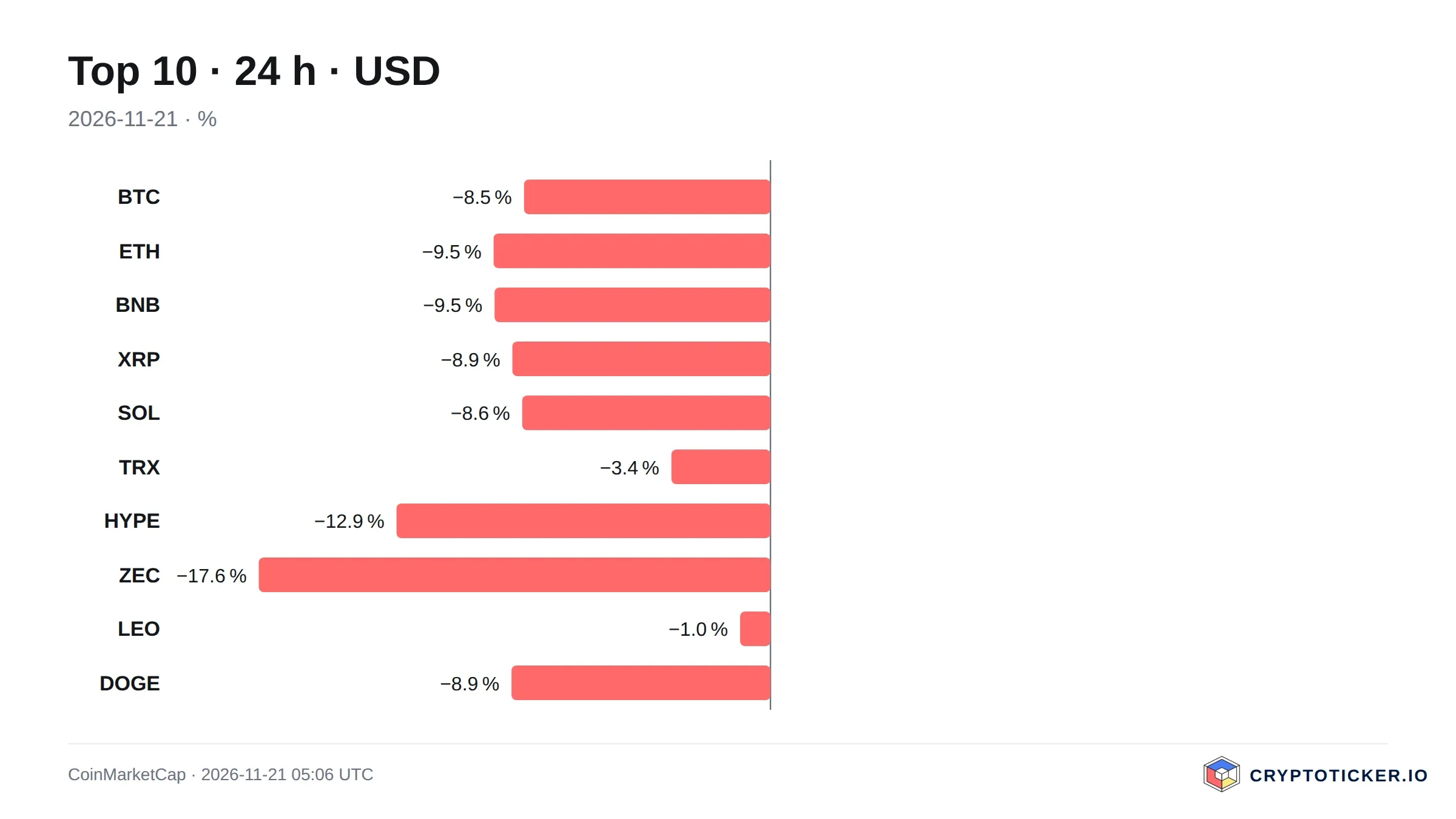
The ten largest crypto assets excluding stablecoins, price change over the past 24 hours in percent. Source: CoinMarketCap, as of November 21, 2026, 6:06 a.m. CET
Coinholder vote on 50,000 ZEC runs until November 30
Since November 16, Zcash holders have been voting on whether to withdraw 50,000 ZEC from the treasury of Zcash Community Grants (ZCG). ZCG is the body that has so far received a fixed share of the block reward to fund development. According to Crypto Briefing, the proposal by co-founders Sean Bowe and Zooko Wilcox, together with Jason McGee, would move the 50,000 ZEC into the Network Sustainability Mechanism, a reserve paid out to miners over time. The automatic 8 percent share of the block reward would in future flow into a locked pot called the "Future Dev and Legal Defense Fund". ZCG holds around 91,453 ZEC according to the report, so the transfer amounts to a good 55 percent of that.
As we reported on November 12 (Zcash vote from November 16), the polls close on November 30 at 11:59 p.m. UTC. Shielded Labs stresses that these are polls, not binding decisions; the result will nonetheless help determine whether the NU 7.1 upgrade arrives in this form. Uncertainty about how development will be funded is, for some investors, a reason to cut positions ahead of the result.
Outflows from the Grayscale ZCSH fund
Grayscale's exchange-traded Zcash fund, ticker ZCSH, lost a net $52.8 million between November 2 and November 17, according to Farside Investors data cited by KuCoin News. Between November 9 and November 13 alone, investors withdrew $30.8 million. When money leaves the fund, the issuer has to sell ZEC or cannot buy new coins, and that demand is missing from the market. More recent flow figures for the days of the slump were not available at the time of writing.
Zcash price after the slump: the levels that matter now
On the downside, the first reference is the area around $570. That is where the daily close stood on August 21, 2026, according to CoinGecko, the last day on which ZEC traded lower than today. Below that, this year's data would offer hardly any zone where buyers have recently stepped in.
On the upside, ZEC first has to reclaim $700. Above that lies the zone of $843 to $865, Friday morning's level and the high of the past 24 hours. Only a return above $900 would largely undo this week's slide. These are reference levels from the price data, not a forecast; with the Fear and Greed Index at 12, rebounds can be just as violent as the drop itself.
Trading with leverage in this environment carries a particular risk. A liquidation is the automatic closure of a leveraged position by the exchange as soon as the posted collateral no longer covers the loss. With moves of 20 percent in a day, leverage of five is enough. How fees, collateral and liquidation rules differ between derivatives platforms is shown in our perp DEX comparison. If you trade without leverage and want to compare exchange fees for ZEC, you will find them in our exchange comparison.
Zcash below $700: the decision on the ZCG treasury comes by November 30
The Zcash slump is mainly a consequence of the broad sell-off that pushed bitcoin below $57,000 and the Fear and Greed Index down to 12 points. That ZEC is falling more than twice as hard as the market fits a coin that rose sharply until the end of September and has since been weighed down by fund outflows and an open question of principle about development funding. The next fixed date is the close of the coinholder vote on November 30. What sets Zcash apart technically is explained in our article What is Zcash?.
(As of November 21, 2026. This article is not investment advice. Prices and fee structures change; check the terms with the provider before you buy.)