



3 years on, Nigeria’s 5G network coverage is stuck at 3%
 2024
2024
 2024
2024
 ARTHUR
 READ
READ
 JMS
JMS
According to the latest data by the Nigerian Communications Commission (NCC), only 3% of the internet subscriber population in Nigeria, a little over 4 million users, use the ultra-fast 5G network, despite significant overall investment by telecoms service providers.
The NCC data further showed that 4G has overtaken 2G as the dominant technology in the country, with 44.96 per cent; 2G is second with 43.53 per cent and 3G, 9.32 per cent.
Conversely, a recent GSMA report indicates that the number of 5G connections globally surpassed 1.5 billion at the end of 2023, making it the fastest-growing mobile broadband technology to date. The milestone took 3G 10 years to reach, and 4G more than five years.
It projects that the continent will have more than 340 million 5G connections, representing one-fifth of all mobile links. Together, 4G and 5G will account for nearly two-thirds of the continent’s total connections. GSMA also estimates that 5G alone will contribute 26 billion dollars to Africa’s economy by the end of the decade, with major benefits for retail, manufacturing, and agriculture.
Since Vodacom and MTN launched the first major 5G networks in South Africa in 2020, the technology has slowly expanded across Africa.
Specifically, Nigeria has licensed three operators to launch 5G services. As of today, only MTN and Airtel have rolled out services. Mafab Communications has failed to roll out its service or deploy a single network mast despite hosting a public launch event in January 2023.
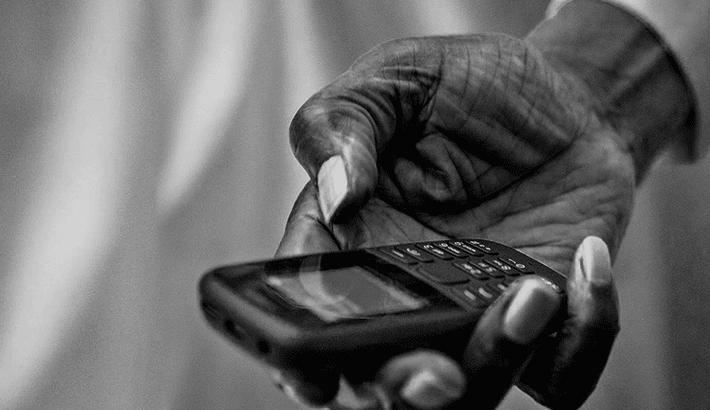
According to Mr Mcebisi, at the heart of the device problem is the question of cost.
“It is one thing to lay the cables and provide connectivity. It is another to have enough subscribers who have the required devices to use the service. What we have observed in Nigeria, Ghana, and other countries is that many users do not have 5G compatible devices to provide us a complimentary financial return”, he explained.
Read more here: MTN Chairman highlights smartphone cost, vandalism as causes of low 5G penetration across Africa
For consumers in Africa, 5G network uptake will be a function of device affordability. For one, 5G-enabled smartphones are increasingly available in most African countries around the 150-dollar range. Yet, the prices must drop below the 50-dollar level, like the 4G-enabled phones, for mass adoption to be guaranteed.
A GSMA report corroborated the fact that affordability is a major disincentive that could deter customers from adopting of 5G. While device costs are falling, they’re still priced at a significant premium over 2G, 3G, and 4G devices.
Building on this momentum, at MWC Kigali 2025, the GSMA and leading African operators launched a continent-wide initiative proposing minimum specifications for affordable 4G smartphones and called on governments to remove taxes and duties on devices priced below $100.
Eliminating these costs could reduce handset prices by up to 50 per cent, expanding access for the three billion people across Africa who still lack meaningful connectivity.
Infrastructure and service cost hindering 5G
High operating costs are another critical challenge. Almost all network equipment is produced by a small circle of Western producers. Hence, acquisition is costly, and telcos are vulnerable to currency fluctuations.
In addition, network deployment requires dense fibre optic backhaul, expensive tower upgrades, and massive power consumption.
According to the Nigerian Communications Commission (NCC), industry-wide expenses surged by 50.92% in 2023 alone. This was driven by pricier diesel, rising security costs, and expensive imported equipment. The naira’s depreciation by over 220% between 2021 and 2024 has only deepened the financial strain.
This has been significantly aggravated by the cost of vandalism.

Bloomberg reports that repairs and revenue losses from damaged cables cost Nigerian telecom players about N27bn ($23m) in 2023. MTN alone reported that it relocated 2,500 kilometres (1,553 miles) of vulnerable fibre cables between 2022 and 2023, spending over N11bn.
That sum is sufficient to build over 870 kilometres of new fibre lines in uncovered areas.
Going forward
For Nigeria’s 5G aspirations to align, device affordability must improve, with local and global manufacturers offering low-cost 5G smartphones suited to the African market.
Secondly, telecoms service providers must deepen their infrastructure sharing arrangements to help operators cut costs by co-using towers, fibre networks, and power facilities.
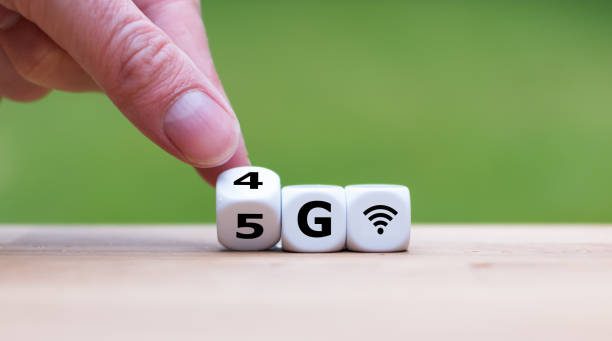
New connectivity models, including satellite solutions like Starlink, are extending reach to remote areas, but these alone cannot close the gap. But real progress depends on affordable devices, relevant local services and digital skills, ensuring that coverage translates into participation.
