



Aave’s $200M Bad Debt Crisis: The Cross-Chain Bridge Exploit That Exposed DeFi’s Fragility
 AAVE
AAVE
 SHIFT
SHIFT
 DEFI
DEFI
 WHEN
XRP
WHEN
XRP
We’ve been watching the numbers, and the fallout is still unfolding.
Over the weekend, attackers took advantage of Kelp DAO’s rsETH cross-chain bridge on LayerZero, draining around $292 million in unbacked rsETH tokens. Early reports link the exploit to North Korea’s Lazarus Group. This wasn’t a hack of Aave’s code, but rather a complex infrastructure attack that used compromised RPC nodes and a misconfigured 1-of-1 DVN. The stolen rsETH was quickly deposited into Aave V3 and V4 as collateral, then used to borrow about $200 million in real WETH, which left the protocol with a large amount of bad debt. Aave responded by freezing the affected rsETH markets to contain the damage.
The Current Trend: Panic Withdrawals and Contagion
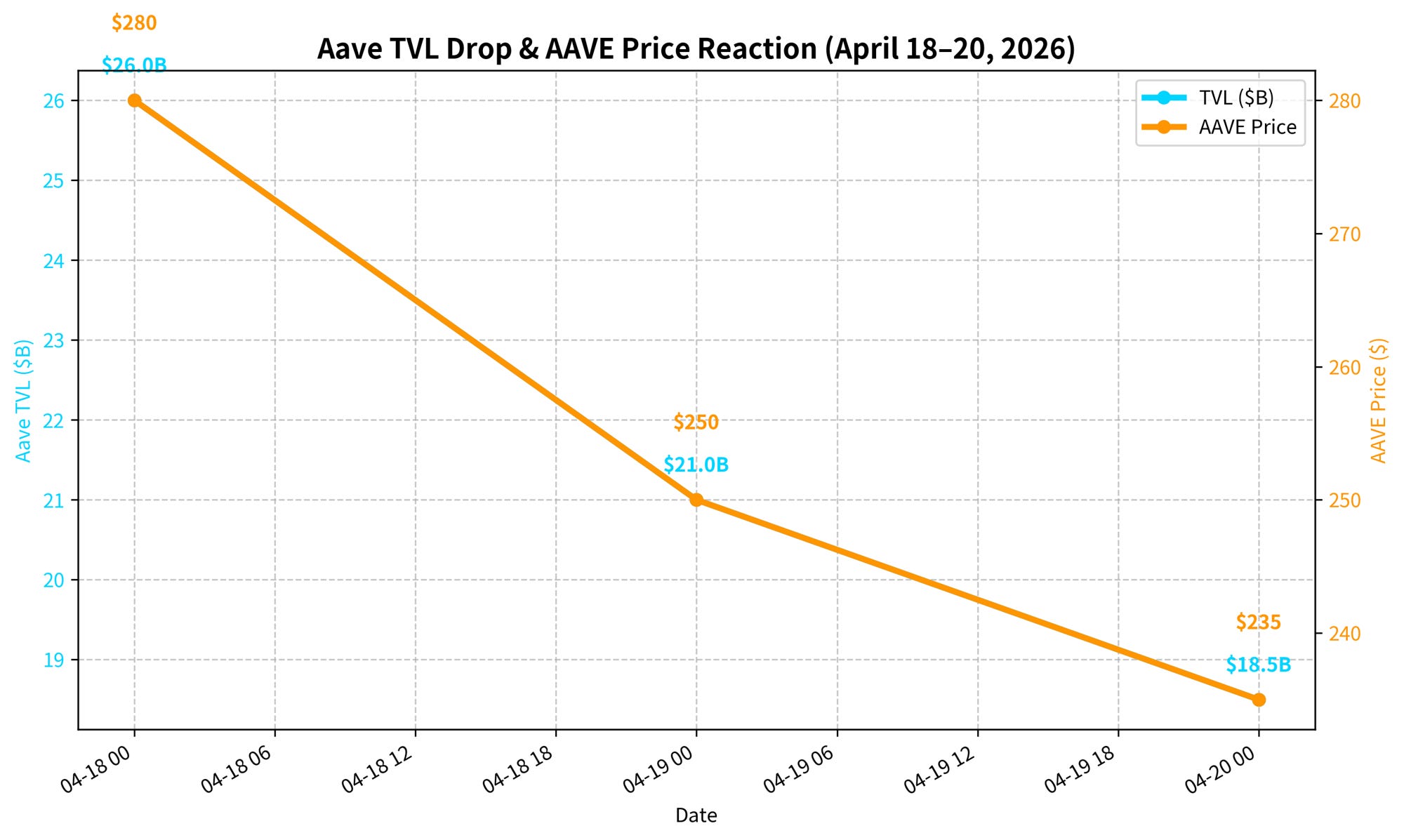
The impact was immediate and severe. Aave’s TVL plunged by more than $8 billion in 2 days as depositors raced to withdraw their funds. As market confidence quickly waned, the AAVE token lost about 16% of its value. This was not an isolated event. It was a direct result of cross-chain bridge risk affecting one of DeFi’s biggest lending protocols.
This is the kind of cross-chain weakness we’ve been warning about in Barron Market Edge.

BTCC 10% Deposit Bonus! ➜ https://bit.ly/PBNBTCC
The Bigger Picture: Why Unified Liquidity Matters More Than Ever
In our recent article on Hyperliquid, we explained how on-chain perpetuals and unified liquidity are outperforming traditional finance by offering speed, self-custody, and round-the-clock access without middlemen. Incidents like this weekend’s bridge exploit painfully illustrate that story.
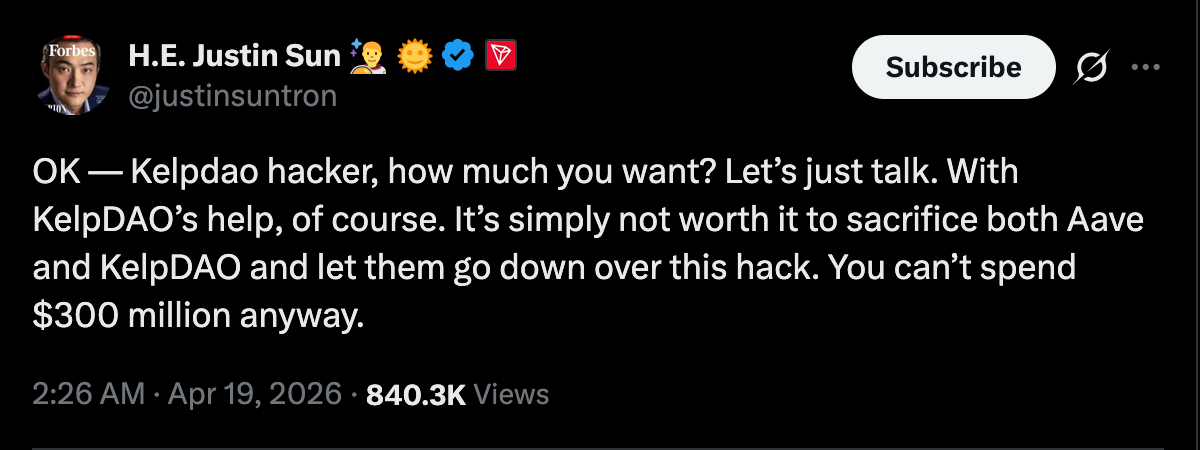
Bridges are the weakest link in DeFi. When one external dependency fails, it can flood the entire ecosystem with bad debt and trigger cascading withdrawals. Justin Sun responded to the gravity of the situation in real time, publicly pleading with the hackers on X.
Strategy: Positioning for the On-Chain Shift
Choose native, unified liquidity protocols rather than those that rely on bridges.
Should you choose to keep using proven lending and perpetual platforms like Hyperliquid, Aave, and Morpho, but watch bridge risk closely.
Use self-custody tools and spread your collateral across multiple providers to avoid single points of failure.
The Verdict: Cross-Chain Risk Is Still the Biggest Threat
Bottom line: This was a painful reminder. Even the strongest protocols aren’t immune when infrastructure fails. On-chain finance is still developing, and events like this show why unified liquidity and reducing bridge exposure are essential.
For Paul and Hugo’s full technical breakdown of the attack from today’s episode, watch here:
Stay tuned — we’ll keep tracking how Aave and the broader DeFi ecosystem respond.
Earn up to 6% back in XRP when you spend
Activate your card now ➜ https://uphold.sjv.io/PBN
