



Bank of England Interest Rates Forecast: ING Predicts Stunning Hold Through 2026
 BANK
BANK
 CORE
CORE
 2026
2026
 IMX
IMX
 STABLE
BitcoinWorld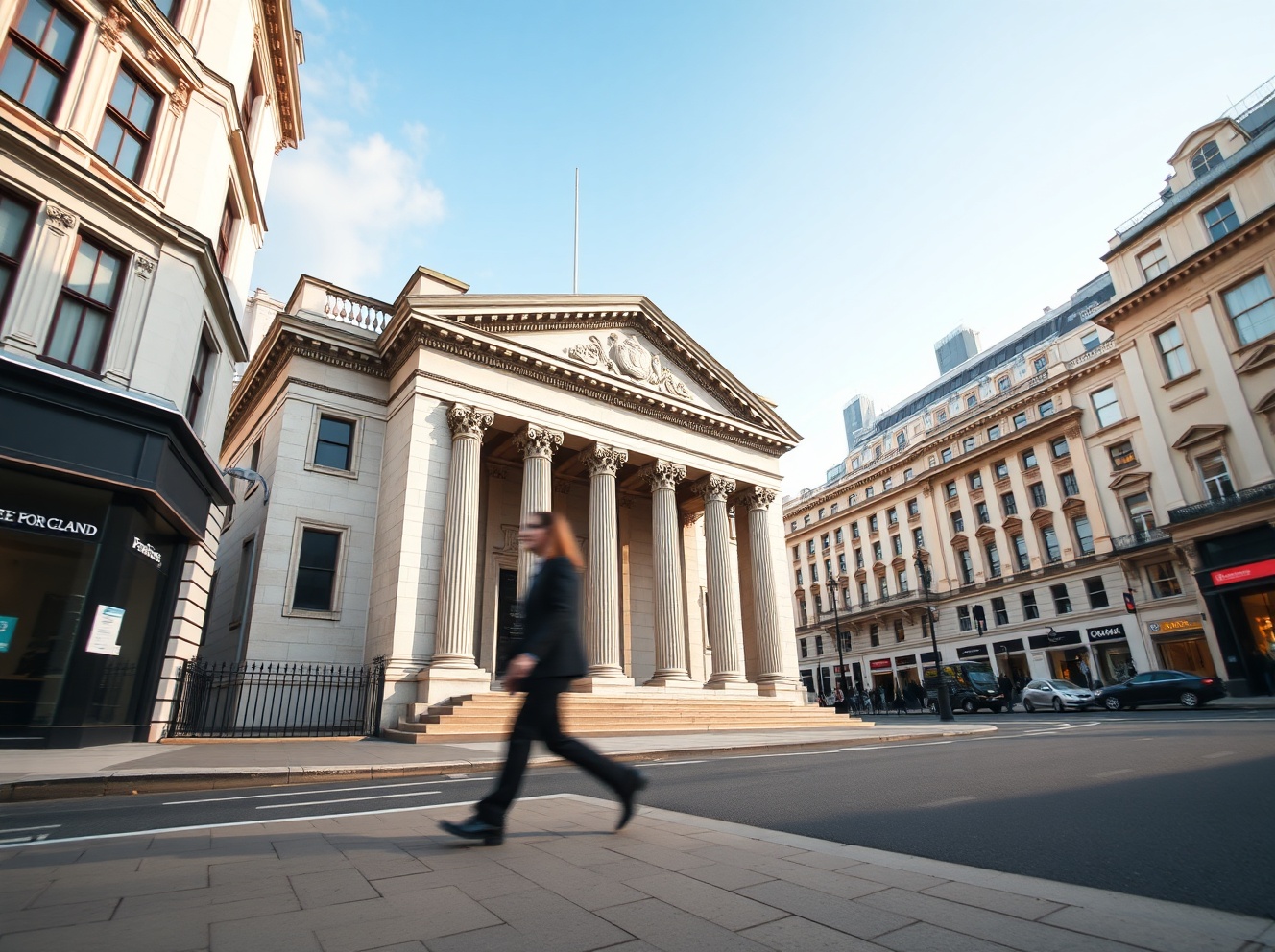
Bank of England Interest Rates Forecast: ING Predicts Stunning Hold Through 2026
LONDON, March 2025 – Financial markets received a significant forecast this week as ING, the Dutch multinational banking group, projected that the Bank of England’s base interest rate will remain unchanged at its current level through the entirety of 2026. This extended period of monetary policy stability marks a pivotal shift from the aggressive hiking cycle that characterized the early 2020s. Consequently, this outlook carries profound implications for mortgages, business investment, and the broader UK economic landscape.
Bank of England Interest Rates: The ING Forecast in Detail
ING’s analysis, led by its global head of macro research, presents a detailed timeline for UK monetary policy. The bank’s economists anticipate the Monetary Policy Committee (MPC) will maintain the Bank Rate at 4.25% for an unprecedented duration. This forecast hinges on a delicate balance between persistent, albeit moderating, inflationary pressures and subdued economic growth projections. Furthermore, the analysis considers lagged effects from previous rate increases, which continue to filter through the economy. The UK’s unique structural challenges, including labor market tightness and productivity gaps, also underpin this cautious stance.
To understand the context, we must examine the recent historical path. The Bank of England began raising rates from a historic low of 0.1% in December 2021 to combat surging post-pandemic inflation. After a series of consecutive hikes, the rate peaked at its current level. ING’s model now suggests the next move will be a cut, but not until 2027. This extended plateau represents a new phase of monetary policy normalization.
Comparative Global Monetary Policy
ING’s forecast places the UK on a distinct trajectory compared to other major central banks. For instance, the analysis contrasts the BoE’s expected path with that of the US Federal Reserve and the European Central Bank. While other banks might pivot to easing sooner, the UK’s specific inflation drivers—particularly in services and wage growth—warrant a more patient approach. This divergence could influence currency markets and international capital flows into UK assets.
Analyzing the Core Drivers Behind the Rate Hold
Several interconnected factors support ING’s projection of a prolonged rate hold. Firstly, services sector inflation remains stubbornly high, often cited by MPC members as a key metric. Secondly, wage growth, while cooling, continues to run above levels consistent with the Bank’s 2% inflation target. Thirdly, the housing market shows signs of stabilization at current mortgage rates, reducing urgency for intervention. Finally, fiscal policy uncertainty ahead of potential government changes adds another layer of complexity for the independent MPC.
The following table summarizes the key economic indicators shaping the forecast:
| Indicator | Current Trend | Impact on Policy |
|---|---|---|
| CPI Inflation | Gradual decline toward target | Supports hold, but vigilance on services |
| Core Inflation | Sticky, above headline rate | Primary reason for delayed cuts |
| Wage Growth (Regular Pay) | Moderating but elevated | Prevents premature easing |
| GDP Growth | Subdued, near stagnation | Limits scope for further hikes |
| Unemployment Rate | Gradual uptick expected | Will eventually ease wage pressures |
Moreover, the transmission mechanism of monetary policy operates with a lag. Rate increases from 2022-2024 are still working their way through the economy, affecting business loan repayments and household budgets. The full dampening effect on demand may not be fully realized for several more quarters.
Real-World Impacts on Consumers and Businesses
This forecast translates into tangible outcomes for the UK public and commercial sector. For homeowners, it means mortgage rates for new fixed-term deals are likely to stabilize around current levels, providing certainty for financial planning. However, approximately 1.5 million households will still face significant payment shocks as they roll off cheaper fixed-rate mortgages onto today’s higher rates during the hold period. For savers, the era of meaningful returns on cash deposits may extend, albeit gradually eroding as inflation falls.
For businesses, the implications are multifaceted:
- Investment Decisions: Stable financing costs allow for longer-term capital expenditure planning.
- Corporate Borrowing: Loan servicing costs remain elevated, pressuring margins in competitive sectors.
- Currency Effects: A steady rate may support the Pound, affecting exporters and importers differently.
- Hiring Plans: The tight labor market may slowly ease, moderating wage inflation pressures.
Expert Perspectives and Market Consensus
ING’s view sits within a spectrum of City forecasts. While some investment banks pencil in a single cut in late 2025 or 2026, ING’s through-2026 hold is among the more cautious. This analysis references the bank’s previous accurate calls on the terminal rate, lending credibility to its current projection. Market-implied rates, derived from SONIA swaps, currently price a less aggressive hold, suggesting potential volatility if ING’s view gains broader acceptance. The Bank of England’s own forward guidance, emphasizing data dependency, leaves all scenarios on the table.
Historical Context and the Path to Normalization
The projected hold period must be viewed against the historical backdrop of the last fifteen years. Following the Global Financial Crisis, the Bank Rate spent over a decade below 1%. The post-2021 hiking cycle was the fastest in decades. Therefore, a multi-year hold at around 4-4.5% represents a new equilibrium—a “new normal”—rather than a temporary pause. This level is closer to the estimated neutral rate, where policy neither stimulates nor restricts the economy. Achieving this stability is a central goal of the MPC after a period of extreme volatility.
Risks to the forecast are balanced but significant. Upside risks include:
- A resurgence in global energy prices.
- Persistent domestic wage-price spirals.
- Expansionary fiscal policy after a general election.
Downside risks involve:
- A sharper-than-expected economic downturn.
- A faster collapse in inflation driven by global disinflation.
- Financial stability events requiring a policy response.
Conclusion
ING’s forecast for Bank of England interest rates to remain on hold through 2026 outlines a critical juncture for UK monetary policy. It signals a prolonged period of stability after the turbulence of recent years, with the Monetary Policy Committee prioritizing the complete eradication of inflationary pressures over stimulating growth. This path reflects a cautious, data-dependent approach tailored to the UK’s specific economic challenges. For households, businesses, and investors, this projection provides a crucial framework for strategic financial decisions in the coming years, emphasizing adaptation to a higher-rate environment. The accuracy of this Bank of England interest rates forecast will ultimately be determined by the evolving interplay of inflation, wage growth, and economic activity.
FAQs
Q1: What is the main reason ING forecasts the Bank of England will hold rates until 2026?
ING’s analysis primarily cites persistent core and services inflation, coupled with wage growth that remains above levels consistent with the 2% target. These domestic price pressures require a prolonged restrictive policy stance to ensure inflation is fully subdued.
Q2: How does this forecast compare to expectations for the US Federal Reserve?
ING expects a policy divergence, with the Bank of England holding rates longer than the Fed. The UK faces more entrenched domestic inflation in services and wages, whereas US inflation has shown broader-based moderation, potentially allowing for earlier rate cuts.
Q3: What does a prolonged rate hold mean for UK mortgage holders?
For those on variable-rate or tracker mortgages, payments will stay at current elevated levels. For homeowners seeking new fixed-rate deals, rates are likely to stabilize, providing planning certainty. However, millions rolling off older, cheaper fixes will still face significant payment increases during the hold period.
Q4: Could a recession force the Bank of England to cut rates sooner?
Yes, a deep or prolonged recession would be a material downside risk to ING’s forecast. The MPC’s mandate balances inflation with supporting growth and employment. A severe downturn could prompt a reassessment, but the Bank would likely require clear evidence that inflation is durably defeated before pivoting.
Q5: What are the implications for the British Pound (GBP)?
A longer hold period, especially if other central banks cut sooner, could provide relative support for the Pound by maintaining higher yield differentials. However, currency markets also factor in growth prospects, so subdued UK economic performance could offset this support.
This post Bank of England Interest Rates Forecast: ING Predicts Stunning Hold Through 2026 first appeared on BitcoinWorld.
