



Bitcoin Supercycle? Record-Low Retail Demand Meets $18B ETF Flows
 ETF
ETF
 ETF
BTC
ETF
BTC
 WHEN
WHEN
 WOULD
WOULD
Bitcoin's onchain retail activity has dropped to a multi-year low, yet spot Bitcoin ETFs now hold roughly $135 billion in assets, creating one of the sharpest demand divergences the market has seen. Whether this split signals an approaching supercycle or a fragile rally propped up by a single buyer class is the question dividing analysts heading into Q2 2026.
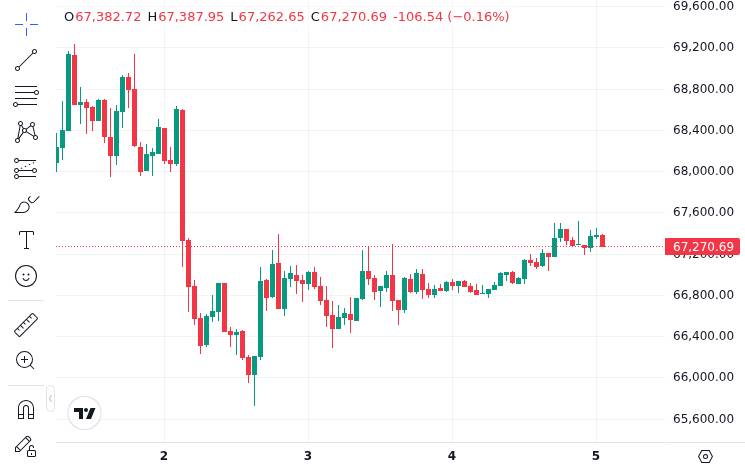
Bitcoin traded at $67,297 at press time, up 0.69% over the prior 24 hours, with a market cap of $1.35 trillion. BTC dominance stood at 56.21% against a total crypto market cap of roughly $2.4 trillion.
The Fear & Greed Index sat at 11, deep in "Extreme Fear" territory, even as ETF-driven accumulation continued in the background.
WHAT TO KNOW
- ETF demand is absorbing a large share of available Bitcoin supply. Spot Bitcoin ETFs attracted more than $18.9 billion in net inflows in under a year, and ETF shareholders collectively hold about $135 billion in BTC.
- Retail traders are still not participating at levels usually seen in euphoric cycle peaks. Small-wallet onchain activity is at a multi-year low, suggesting individual speculators have not returned in force.
Why $18B in ETF flows matters when retail demand is at multi-year lows
A Cointelegraph feature published April 4 laid out the core tension: onchain retail activity looks sleepy, with small-wallet transactions at a multi-year low, while spot Bitcoin ETF shareholders collectively own about $135 billion in BTC. The retail demand that once drove cycle peaks appears to have migrated offchain into regulated wrappers.
Binance Research data, reported by BeInCrypto, showed Bitcoin ETFs had attracted more than $18.9 billion in net inflows in less than a year of trading. Retail investors still accounted for roughly 80% of ETF demand at the time, and ETFs averaged 26.4% of BTC spot trading volume. Those figures date to October 2024, meaning the structural shift was already underway well before the current cycle stage.
The distinction matters. A market driven by institutional ETF allocation behaves differently from one powered by retail speculation on exchanges. Investment advisers accounted for nearly half of the $21 billion reported through 13F filings, while hedge funds held about $6.9 billion of spot BTC ETF shares, according to the same Cointelegraph report.
CoinShares' Q1 2025 13F analysis put professional investors' reported U.S. Bitcoin ETF holdings at $21.2 billion against $92.3 billion of total U.S. Bitcoin ETF AUM. Since 13F filings only capture managers with more than $100 million under management, most ETF ownership still sits outside mandatory professional disclosures, reinforcing the idea that smaller buyers are active through ETFs even if they have left onchain venues.
River's February 2026 adoption report added another layer: individuals sold 696,000 BTC in 2025, while businesses, funds, ETFs, and governments bought nearly 1 million BTC. More than 2,000 U.S. advisory firms were allocated to Bitcoin ETFs, pointing to a broadening base of professional demand that has no precedent in prior cycles.
Andre Dragosch, cited by Cointelegraph, put it bluntly.
"Retail has been the major distributor of Bitcoin in 2025 so far."
Andre Dragosch, via Cointelegraph
That framing is central to the supercycle question. Retail sold, institutions bought, and the price held. If the pattern continues, the supply dynamics could tighten further before retail re-engages.
Does this setup support the Bitcoin supercycle thesis?
A supercycle, in plain terms, is a market cycle that skips the typical 70-80% drawdown between peaks. Instead of a full boom-bust reset, demand remains strong enough after the initial surge that prices consolidate at higher levels and continue upward without a deep bear phase.
The bullish interpretation of the current data is straightforward: persistent ETF inflows are tightening available supply before retail has even arrived. With 696,000 BTC changing hands from individuals to institutions in 2025 alone, the transfer of coins from weak hands to longer-duration holders could compress the float in a way previous cycles never experienced. If retail eventually returns, similar to what happened during the periods when major crypto milestones triggered mainstream attention, the supply side may not be able to absorb the demand shock.
The cautious reading is equally valid. A rally concentrated in one demand channel, ETFs, lacks the broad-based participation that historically sustains multi-year uptrends. If ETF flows slow or reverse while retail remains absent, the bid could thin quickly. The Extreme Fear reading on the sentiment index, despite ETF accumulation, suggests the broader market is not convinced the current structure is durable.
There is also a timing problem with the narrative. The $18.9 billion inflow figure and 80% retail-demand share come from an October 2024 Binance Research snapshot, while the low-retail-activity observation is from April 2026. Combining data points separated by 18 months into a single thesis requires caution, as ETF market structure has evolved significantly in that window. The true question is whether institutional demand alone, without visible retail conviction, can sustain the next phase of the cycle.
What would confirm or weaken the supercycle narrative next
Three signals will determine whether the supercycle thesis gains or loses credibility in the coming months.
ETF flow persistence. If weekly inflows remain positive through Q2 2026 and advisory firm allocations continue expanding beyond the 2,000+ already committed, the structural demand argument strengthens. A sustained period of net outflows, by contrast, would suggest institutions are trimming rather than building, which could be reminiscent of the kind of sudden confidence shocks that hit crypto markets when narratives shift.
Retail re-engagement. Onchain small-wallet activity, exchange sign-ups, and Google search trends for Bitcoin-related terms are the leading indicators. A visible pickup in retail participation would signal the cycle is broadening beyond ETF buyers. Without it, the rally relies on a narrower base than any prior bull market peak.
Demand broadening. The strongest version of the supercycle case requires demand to expand across multiple channels: ETFs, direct custody, brokerage accounts, and potentially sovereign or government-level policy decisions that legitimize further allocation. A setup where only one channel drives price is inherently more fragile than one supported by several.
Confirmation depends on follow-through, not narrative. The data so far shows a genuine structural shift in who holds Bitcoin and how they access it, but whether that shift is enough to override the historical cycle pattern remains unproven.
Disclaimer: This article is for informational purposes only and does not constitute financial or investment advice. Cryptocurrency and digital asset markets carry significant risk. Always do your own research before making decisions.
Bitcoininfonews first published the article titled Bitcoin Supercycle? Record-Low Retail Demand Meets $18B ETF Flows.
