







Bitmine ETH Staking Tops $508M, Arkham Shows
 SEC
SEC
 DEFI
DEFI
 ARKM
ARKM
 READ
READ
 WOULD
WOULD
Blockchain intelligence firm Arkham has flagged wallet data suggesting that Tom Lee's Bitmine holds roughly $508 million in staked Ether, a position that would represent more than 10% of total staked ETH supply on the Ethereum network.
What Arkham's Wallet Data Says About Bitmine's ETH Stake
The staking figure surfaced through Arkham-tracked on-chain wallet data linking Bitmine-associated addresses to a large concentration of staked Ether. The claim places Bitmine's staked holdings at approximately $508 million, a scale that would make the company one of the single largest institutional stakers on Ethereum.
It is important to distinguish between ETH held on corporate treasury wallets and ETH actively deposited into Ethereum's proof-of-stake validator contracts. The $508 million figure refers specifically to staked positions, not liquid holdings, meaning those tokens are locked and earning validator rewards rather than sitting idle.
Bitmine, a publicly traded company, has filed disclosures with the U.S. Securities and Exchange Commission. An SEC exhibit filing provides corporate context for the firm, though it does not independently confirm the staking math cited by Arkham.
A separate Crypto Briefing report has also covered the staked Ether holdings claim. However, the reporting remains only partially verified. The on-chain wallet attributions come from Arkham's proprietary entity-labeling system, and independent confirmation of the full staked position has not been published by Bitmine itself at the time of writing.
Why a Double-Digit Share of Staked ETH Matters
If accurate, a single entity controlling more than 10% of all staked ETH raises questions about validator concentration on the network. Ethereum's proof-of-stake security model assumes a distributed set of validators, and a concentrated stake of this size could influence block proposal frequency and attestation patterns.
Staking concentration also has liquidity implications. Large locked positions reduce circulating supply, which can amplify price volatility during periods of high demand or redemption pressure. This matters for the broader DeFi ecosystem built on Ethereum, where staked ETH derivatives serve as collateral across lending and payment infrastructure platforms.
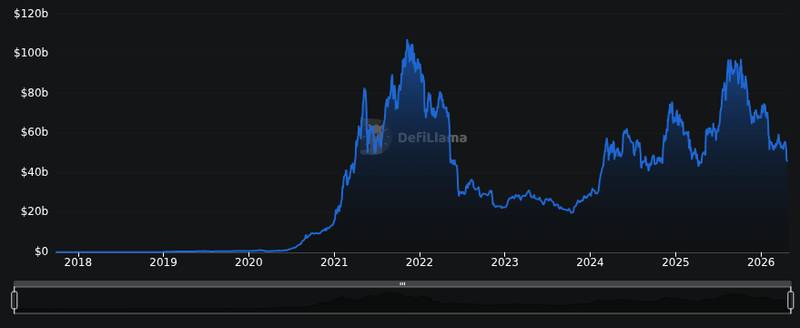
For institutional observers, a position of this scale frames ETH as a viable treasury asset with yield characteristics. Companies choosing to stake rather than simply hold signals confidence in Ethereum's long-term staking economics, a dynamic that has drawn attention alongside recent Bitcoin spot ETF inflow trends and shifting corporate approaches to crypto payment segments.
From an infrastructure perspective, Ethereum's staking layer underpins not only financial applications but also emerging on-chain compute and AI-linked protocols that rely on the network's settlement guarantees. A confirmed stake of this magnitude would make Bitmine a significant stakeholder in the security and economics of that broader ecosystem.
Until Bitmine independently discloses its full staking position through regulatory filings or public statements, the Arkham-sourced data remains the primary evidence for the reported 10%-plus share of staked supply.
Disclaimer: This article is for informational purposes only and does not constitute financial or investment advice. Cryptocurrency and digital asset markets carry significant risk. Always do your own research before making decisions.
Read original article on aicryptocore.com