



BoC Macklem Speech: Governor Outlines Economic Outlook After Holding Rates Steady
 BANK
BANK
 FTR
FTR
 IMX
IMX
 HIGHER
BitcoinWorld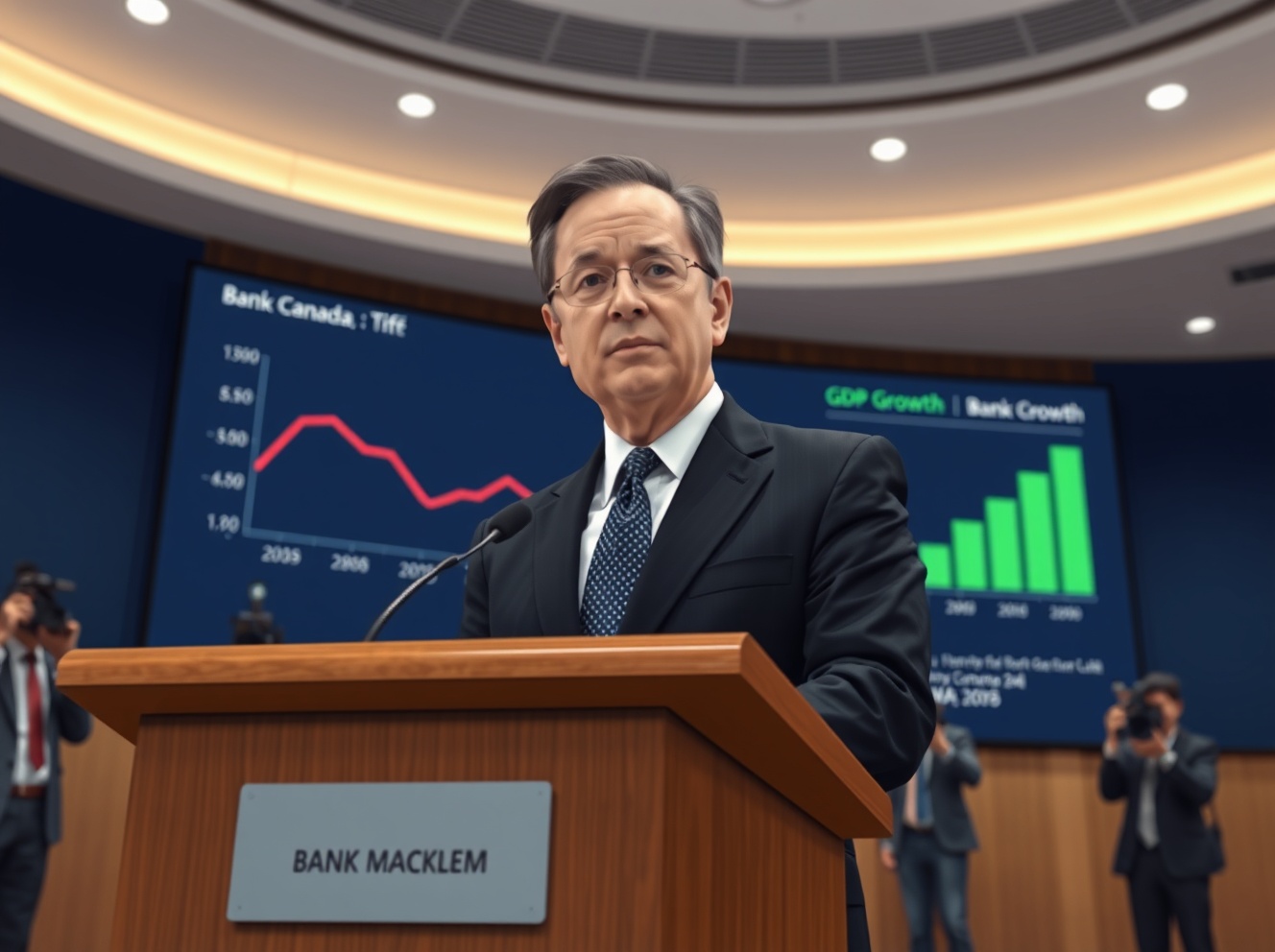
BoC Macklem Speech: Governor Outlines Economic Outlook After Holding Rates Steady
Bank of Canada Governor Tiff Macklem delivered a closely watched speech on the economic outlook Wednesday, just hours after the central bank announced its decision to hold the benchmark interest rate steady at 5.0%. In his address to the Canadian Chamber of Commerce in Ottawa, Macklem provided crucial insights into the Bank’s thinking, emphasizing that while inflation remains too high, the economy is now in a period of necessary rebalancing. The BoC Macklem speech marks a pivotal moment for markets, as investors parse every word for clues about the future path of monetary policy.
BoC Macklem Speech: Key Takeaways on the Rate Decision
Governor Macklem began by reaffirming the Bank’s decision to maintain the overnight rate at 5.0%, a move widely expected by economists. He stated that the governing council judged that monetary policy is working to cool the economy and bring demand and supply back into balance. The BoC Macklem speech highlighted that the Bank needs to see a sustained easing in underlying inflation before considering any rate cuts. This cautious stance signals that the central bank is not yet ready to declare victory over price pressures.
Macklem noted that the Canadian economy has slowed significantly, with growth stalling in the second quarter. He pointed to weakening consumer spending and a softening housing market as evidence that higher borrowing costs are taking effect. However, he warned that the path back to the 2% inflation target will be gradual and uneven. The governor’s tone was measured but firm, reinforcing the Bank’s commitment to restoring price stability. For market participants, the message was clear: rate cuts are not imminent.
Understanding the Bank of Canada Rate Decision in Context
The Bank of Canada rate decision to hold rates steady comes after a series of aggressive hikes that brought the policy rate from near zero to its highest level in over two decades. This tightening cycle was designed to combat inflation, which peaked at 8.1% in June 2022. While headline inflation has fallen to 3.3%, core measures remain stubbornly above target. The BoC Macklem speech addressed this directly, explaining that shelter costs and services inflation are proving particularly sticky.
Economists widely view the hold as a prudent pause. By keeping rates unchanged, the Bank can assess the lagged effects of past hikes without risking further economic damage. The Canadian economy faces headwinds from a global slowdown, elevated household debt, and a cooling labor market. Macklem acknowledged these risks, stating that the Bank is balancing the risk of doing too little against the risk of doing too much. This careful calibration is central to the Canadian inflation outlook.
The Canadian Inflation Outlook: What Macklem Said
In the BoC Macklem speech, the governor dedicated significant time to the inflation outlook. He emphasized that while the headline number has come down, the Bank’s preferred core inflation measures remain around 3.5% to 4%. He pointed to three key drivers: shelter costs, which are rising due to high mortgage interest costs and rent; services inflation, which is being fueled by strong wage growth; and global food prices, which remain volatile.
Macklem stated that the Bank expects inflation to hover around 3% for the next year before gradually declining to 2% by late 2025. He cautioned that this timeline could shift if geopolitical tensions escalate or if the economy proves more resilient than expected. The governor also highlighted the importance of inflation expectations, noting that businesses and consumers must continue to believe that the Bank will bring prices under control. This forward guidance is a critical tool in shaping economic behavior.
Market Reaction and Expert Analysis of the Macklem Speech Analysis
Financial markets reacted calmly to the BoC Macklem speech, with the Canadian dollar weakening slightly against the US dollar. Bond yields edged lower as traders priced in a lower probability of a rate hike at the next meeting. Analysts from major banks described the speech as balanced but dovish-leaning, as Macklem refrained from explicitly threatening further tightening. However, they cautioned that the door remains open for additional hikes if inflation surprises to the upside.
Experts highlighted several key phrases from the Macklem speech analysis. When Macklem said the Bank is “prepared to increase the policy rate further if needed,” markets took note. But his emphasis on the economy being in “excess supply” suggested that the balance of risks is shifting. Many economists now expect the Bank to hold rates through the first half of 2024, with the first cut potentially arriving in the summer. This timeline aligns with the Canadian inflation outlook and the Bank’s own projections.
The speech also touched on the global context. Macklem noted that the US Federal Reserve’s recent hawkish stance has implications for Canada, as a stronger US dollar and higher US rates can put downward pressure on the Canadian dollar and import inflation. He also mentioned the slowdown in China and the ongoing war in Ukraine as sources of uncertainty. This global perspective underscores the interconnected nature of monetary policy in a world of integrated capital markets.
Timeline of the Bank of Canada’s Tightening Cycle
To understand the BoC Macklem speech, it helps to review the timeline of rate hikes. The Bank began raising rates in March 2022 with a 25-basis-point increase. It then accelerated the pace, delivering four consecutive 75-basis-point hikes and one 50-basis-point hike. After a brief pause in early 2023, the Bank resumed tightening in June and July, adding another 50 basis points. The current rate of 5.0% represents the highest level since 2001.
- March 2022: First rate hike, 0.25% to 0.50%
- July 2022: Peak hike of 1.00%, rate reaches 2.50%
- January 2023: Conditional pause announced
- June 2023: Hikes resume, rate hits 4.75%
- July 2023: Final hike to 5.0%
- September 2023: Rate held at 5.0%
This aggressive tightening has had a profound impact on the Canadian economy. Mortgage rates have soared, home prices have fallen, and consumer confidence has weakened. The BoC Macklem speech acknowledged these effects, stating that the full impact of past rate increases has yet to be felt. This lag effect is a key reason why the Bank chose to hold rates steady.
Impact on Households and Businesses from the BoC Monetary Policy
The BoC monetary policy decisions directly affect Canadian households and businesses. For homeowners with variable-rate mortgages, the hold provides a temporary reprieve from further payment increases. However, those renewing fixed-rate mortgages face significantly higher rates than they did two years ago. Macklem addressed this in his speech, noting that the Bank is monitoring the impact of higher rates on household debt levels.
For businesses, the BoC Macklem speech offered little comfort. Higher borrowing costs are squeezing margins and delaying investment decisions. Small and medium-sized enterprises, in particular, are feeling the pinch as they face higher input costs and slower demand. The governor encouraged businesses to continue passing on cost increases cautiously, warning that excessive price hikes could fuel inflation further. This balancing act is at the heart of the Bank’s challenge.
The labor market remains a bright spot, with unemployment at historic lows. However, Macklem noted that job vacancies are declining and wage growth is moderating. He said the Bank expects the labor market to soften further as the economy slows. This is a necessary part of the rebalancing process, as it helps to cool wage-driven inflation. The governor emphasized that a soft landing—where inflation falls without a sharp recession—remains the Bank’s base case.
Comparing the BoC’s Approach to Other Central Banks
The BoC Macklem speech also invited comparisons with other major central banks. The Federal Reserve, the European Central Bank, and the Bank of England have all pursued similar tightening cycles. However, the Bank of Canada was among the first to pause, reflecting the unique vulnerabilities of the Canadian economy. Canada’s high household debt levels make it more sensitive to interest rate changes, giving the Bank less room to keep rates high for an extended period.
Macklem did not directly comment on other central banks, but his speech implicitly acknowledged the divergence. While the Fed has signaled that rates may stay higher for longer, the BoC’s outlook suggests a slightly earlier pivot. This divergence could affect the Canadian dollar and trade dynamics. Exporters may benefit from a weaker loonie, but importers will face higher costs. The BoC monetary policy must navigate these crosscurrents carefully.
Conclusion: What the BoC Macklem Speech Means for the Future
Governor Macklem’s speech provided a clear and sobering assessment of the Canadian economic outlook. The Bank of Canada rate decision to hold rates steady reflects a cautious approach, but the door remains open to further hikes if inflation proves persistent. The BoC Macklem speech underscored the Bank’s determination to bring inflation back to target, even if it means a period of slow growth. For Canadians, the message is that higher rates are here to stay for the foreseeable future.
The BoC Macklem speech also highlighted the importance of patience. The governor urged Canadians to remain confident in the Bank’s ability to manage the economy. He reiterated that the Bank’s decisions are data-dependent and that the governing council will continue to assess incoming information. As the economy navigates this challenging period, the BoC monetary policy will remain the single most important factor shaping the financial landscape. The focus now shifts to the next rate decision in October, where markets will look for further clarity on the path ahead.
FAQs
Q1: Why did the Bank of Canada hold rates unchanged?
A: The Bank held rates at 5.0% to assess the lagged effects of past hikes. Governor Macklem stated that monetary policy is working to cool the economy, and the Bank needs to see sustained easing in core inflation before considering cuts.
Q2: What did Governor Macklem say about the inflation outlook?
A: Macklem said inflation is expected to hover around 3% for the next year before gradually declining to 2% by late 2025. He noted that shelter costs and services inflation remain sticky, and the path will be uneven.
Q3: When will the Bank of Canada start cutting rates?
A: Most economists expect the first rate cut in mid-2024, assuming inflation continues to moderate. Macklem did not provide a specific timeline but emphasized that cuts are not imminent.
Q4: How does the BoC’s approach compare to the US Federal Reserve?
A: The BoC paused earlier than the Fed, reflecting Canada’s higher household debt sensitivity. The Fed has signaled rates may stay higher for longer, creating potential divergence in currency and trade dynamics.
Q5: What is the impact of higher rates on Canadian households?
A: Higher rates have increased mortgage payments, slowed the housing market, and reduced consumer spending. The hold provides temporary relief for variable-rate borrowers, but fixed-rate renewals remain costly.
Q6: What are the key risks to the Bank’s outlook?
A: Key risks include persistent core inflation, geopolitical tensions, a stronger US dollar, a slowdown in China, and the lagged effects of past rate hikes on the economy.
This post BoC Macklem Speech: Governor Outlines Economic Outlook After Holding Rates Steady first appeared on BitcoinWorld.
