



Cerebras IPO: The Bold AI Chip Startup’s High-Stakes Challenge to Nvidia’s Dominance
 AI
AI
 CHIP
CHIP
 CT
CT
 BOLD
BOLD
 CHIP
CHIP
BitcoinWorld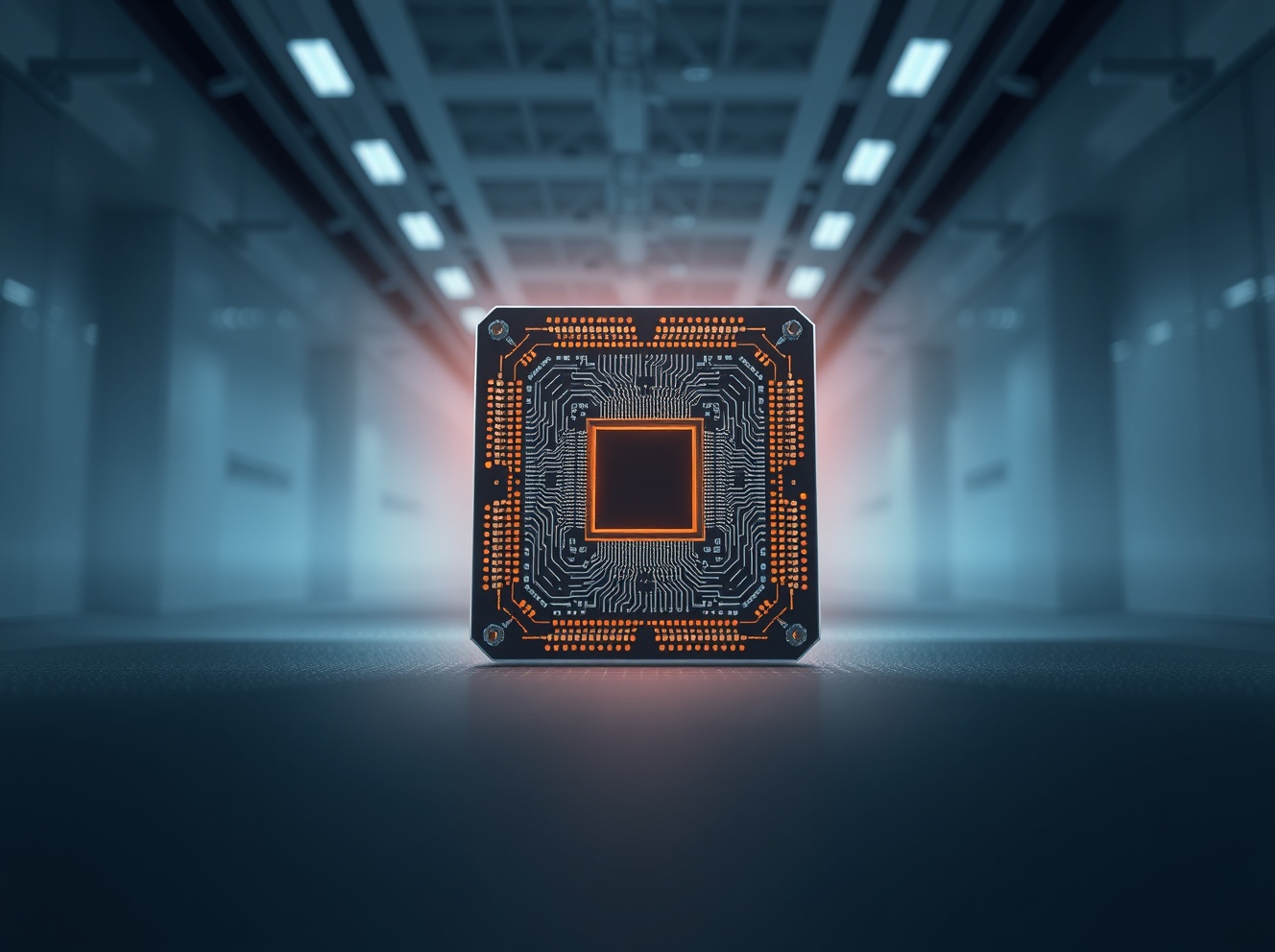
Cerebras IPO: The Bold AI Chip Startup’s High-Stakes Challenge to Nvidia’s Dominance
In a move signaling a seismic shift in the artificial intelligence hardware landscape, Cerebras Systems has officially filed for an initial public offering. The AI chip startup, based in San Francisco, California, and led by CEO Andrew Feldman, aims to go public in mid-May 2025. This filing follows a year of significant strategic deals and financial maneuvers that have positioned Cerebras as a direct and formidable challenger to industry titan Nvidia. The company’s journey to this point, marked by a delayed 2024 attempt and subsequent major partnerships, underscores the intense competition and high stakes in the race to power the next generation of AI.
Cerebras IPO Marks a Critical Juncture for AI Hardware
Cerebras Systems’ decision to file for an IPO represents a pivotal moment for the specialized AI semiconductor sector. The company, renowned for building the world’s largest computer chip, the Wafer Scale Engine (WSE), has consistently pursued a path of radical hardware design. Consequently, this public offering is not merely a financial event but a validation of its alternative architectural approach to accelerating AI workloads. The filing reveals robust financials for 2025, with the company reporting $510 million in revenue. However, a deeper look shows a net income of $237.8 million, which excludes certain one-time items. On a non-GAAP basis, which is a common metric in tech, Cerebras reported a net loss of $75.7 million, highlighting the capital-intensive nature of semiconductor manufacturing and R&D.
The company’s valuation trajectory provides crucial context. Last year, Cerebras secured a massive $1.1 billion Series G funding round, which catapulted its valuation to $8.1 billion. This pre-IPO valuation reflects immense investor confidence in its technology and market potential. Importantly, the current IPO filing does not specify a target raise amount, leaving market watchers to speculate on the final public valuation. A company spokesperson confirmed to the Wall Street Journal that the offering is planned for mid-May, setting the stage for a closely watched market debut.
Overcoming Hurdles: From Delayed Filing to Strategic Deals
The path to this IPO filing was not straightforward. Cerebras initially filed to go public in 2024, but the process encountered a significant regulatory delay. A federal review of an investment from Abu Dhabi-based technology conglomerate G42 prompted the company to ultimately withdraw its previous filing. This setback, however, did not derail its ambitions. Instead, Cerebras used the intervening period to solidify its commercial footing through landmark agreements that have fundamentally altered its market position.
Two deals, in particular, stand out as transformative. First, Cerebras announced a major agreement with Amazon Web Services (AWS). This partnership will integrate Cerebras’ powerful CS-3 systems, powered by the latest WSE-3 chip, into Amazon’s global cloud data centers. For AWS customers, this provides direct access to Cerebras’ hardware for training massive AI models, offering an alternative to Nvidia’s GPUs. Second, and perhaps more consequentially, Cerebras secured a deal with leading AI research lab OpenAI. Reports value this agreement at over $10 billion, though specifics on the structure remain confidential.
A Direct Challenge to the Incumbent
CEO Andrew Feldman framed the OpenAI deal as a direct competitive victory. In a recent interview, he stated, “Obviously, [Nvidia] didn’t want to lose the fast inference business at OpenAI, and we took that from them.” This bold claim underscores the core narrative of Cerebras’ IPO: it is a challenger successfully carving out territory in a market long dominated by a single player. The “inference” phase Feldman references is when a trained AI model makes predictions or generates content, a critical and growing segment as AI applications proliferate. By claiming this business from Nvidia at a flagship customer like OpenAI, Cerebras demonstrates tangible performance and cost advantages for specific, demanding workloads.
The table below summarizes Cerebras’ key recent milestones leading to the IPO:
| Milestone | Detail | Significance |
|---|---|---|
| Series G Funding | $1.1B at $8.1B valuation (2024) | Established high pre-IPO valuation and investor confidence. |
| AWS Partnership | Integration into cloud data centers | Provided scalable commercial channel and enterprise credibility. |
| OpenAI Deal | Reportedly >$10B | Landmark customer win, validating technology for cutting-edge AI inference. |
| 2025 Financials | $510M revenue, $237.8M net income (GAAP) | Demonstrated revenue growth and path to profitability for IPO filing. |
The Broader Impact on the AI Semiconductor Ecosystem
Cerebras’ public offering arrives amid a global surge in demand for AI-optimized computing power. Furthermore, geopolitical tensions and supply chain concerns have spurred a desire for diversification beyond the established market leader. As a result, investors and enterprise customers are actively seeking viable alternatives. Cerebras, with its unique wafer-scale architecture, represents one of the most technologically distinct paths. Its chips are not merely iterations on the GPU design but a complete rethinking of how to interconnect processors for massive parallel computation.
This IPO will serve as a critical litmus test for the market’s appetite for such specialized hardware companies. A successful debut could unlock further capital for Cerebras to scale production, invest in next-generation chip designs, and compete more aggressively on price and availability. Conversely, it could also encourage other AI chip startups, like SambaNova Systems, Graphcore, and Groq, to consider their own public market strategies. The offering’s performance will be scrutinized not just for Cerebras’ future, but as a bellwether for the entire challenger segment in AI semiconductors.
Conclusion
The Cerebras IPO filing is a landmark event that crystallizes the evolving dynamics of the AI hardware industry. By securing pivotal partnerships with AWS and OpenAI, the company has moved from a promising startup to a credible commercial threat to Nvidia. Its financial performance, technological differentiation, and bold leadership narrative under Andrew Feldman create a compelling story for public market investors. As the mid-May offering date approaches, the financial world will watch closely to see if this AI chip startup can translate its technical achievements and strategic deals into a successful and sustainable public company, thereby reshaping the competitive landscape for the silicon that powers artificial intelligence.
FAQs
Q1: What is Cerebras Systems known for?
Cerebras Systems is an AI chip startup famous for designing the Wafer Scale Engine (WSE), the world’s largest computer chip. It builds complete systems optimized for training and running large artificial intelligence models.
Q2: Why was Cerebras’ previous IPO attempt in 2024 delayed?
The 2024 filing was delayed due to a federal review of an investment from Abu Dhabi-based G42. The company ultimately withdrew that filing before proceeding with the current 2025 attempt.
Q3: What are the key deals Cerebras secured before this IPO?
The two most significant deals are a partnership with Amazon Web Services to offer its chips in AWS data centers, and a multi-billion dollar agreement with OpenAI to provide hardware for AI inference workloads.
Q4: How does Cerebras’ technology differ from Nvidia’s GPUs?
Instead of using many small GPUs connected together, Cerebras builds a single, giant processor the size of an entire silicon wafer. This design aims to reduce communication bottlenecks and improve efficiency for very large AI models.
Q5: When is the Cerebras IPO expected to take place?
According to a company spokesperson cited by the Wall Street Journal, the initial public offering is planned for mid-May 2025.
This post Cerebras IPO: The Bold AI Chip Startup’s High-Stakes Challenge to Nvidia’s Dominance first appeared on BitcoinWorld.
