



Crypto News Today: Bitcoin Holds Steady BUT Ethereum Gears Up for Glamsterdam
ETH
 DRIFT
DRIFT
 FUSAKA
BTC
FUSAKA
BTC
 APRIL
APRIL
The first week of April 2026 has been a study in contrasts. While the broader financial markets grapple with macroeconomic shifts, the digital asset sector is doubling down on technical evolution. We are seeing a move away from the "meme-coin" cycles of the past toward institutional-grade infrastructure and significant protocol overhauls.
Crypto News Today: Market Highlights
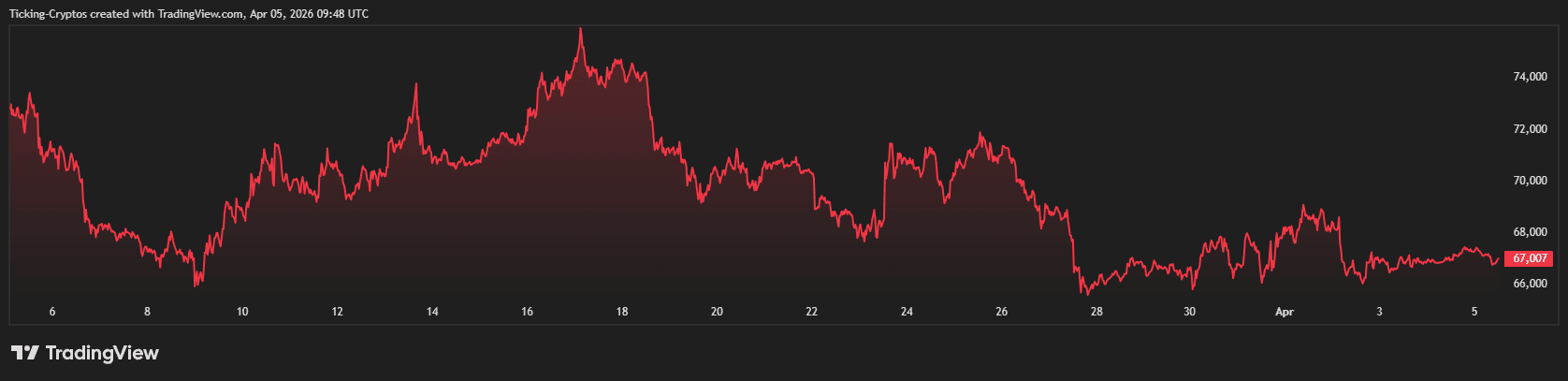
The crypto market today is defined by Bitcoin’s price stability near the $67,000 mark and massive anticipation for Ethereum’s Glamsterdam upgrade. Simultaneously, a significant exploit on the Solana-based Drift Protocol has served as a stark reminder of the security risks still inherent in decentralized finance (DeFi).
Market Snapshot: Bitcoin’s Quiet Resilience
Despite a slight 0.42% dip in the last 24 hours, Bitcoin ($BTC) continues to act as a stabilizing force for the entire ecosystem. Trading at approximately $67,000, the asset has shrugged off recent geopolitical volatility.
- Institutional Inflow: Recent reports from Goldman Sachs suggest that institutional "dip-buying" is keeping the floor high.
- Price Tracking: You can monitor live movements on our Bitcoin Ticker.
Ethereum Roadmap: The Glamsterdam Era
The biggest story in the developer community is the finalized scope for Ethereum’s Glamsterdam upgrade. Scheduled for the first half of 2026, this hard fork is expected to be a "game-changer" for scalability.
What is the Glamsterdam Upgrade?
Glamsterdam is the next major evolution of the Ethereum mainnet following the Fusaka update of late 2025. Its primary goals are:
- Gas Fee Reduction: A projected 78.6% reduction in fees for smart contract calls.
- Parallel Processing: Introducing the ability to process multiple transactions simultaneously.
- Throughput: Increasing the gas limit per block from 60 million to 200 million.
This upgrade is essential for $Ethereum to remain competitive against high-speed chains like Solana.
The Solana Hack: Drift Protocol Exploit
While Ethereum builds, $Solana has hit a major speed bump. On April 1, 2026, the Drift Protocol—the network's largest perpetual futures exchange—was drained of $286 million.
"The breach was not a simple code bug, but a sophisticated six-month social engineering operation by highly resourced actors." — Drift Protocol Preliminary Report.
The attackers reportedly posed as a quantitative trading firm to gain the trust of the protocol's security council. This event has reignited discussions on the necessity of hardware wallets for all DeFi participants.
Regulatory Milestone: Coinbase Nabs OCC Approval
In a massive win for US-based crypto, Coinbase has received conditional approval from the Office of the Comptroller of the Currency (OCC) for a national trust charter.
This does not make Coinbase a traditional commercial bank, but it provides federal regulatory uniformity for its custody business. This moves Coinbase into the same regulatory conversation as legacy giants like JPMorgan, further bridging the gap between "crypto" and "finance."
