



Dow Jones Futures Plunge: Stark Volatility Returns as Iran Tensions Escalate
 BASED
BASED
 INDUSTRIAL
 IMX
IMX
 STRK
STRK
 MRDN
MRDN
BitcoinWorld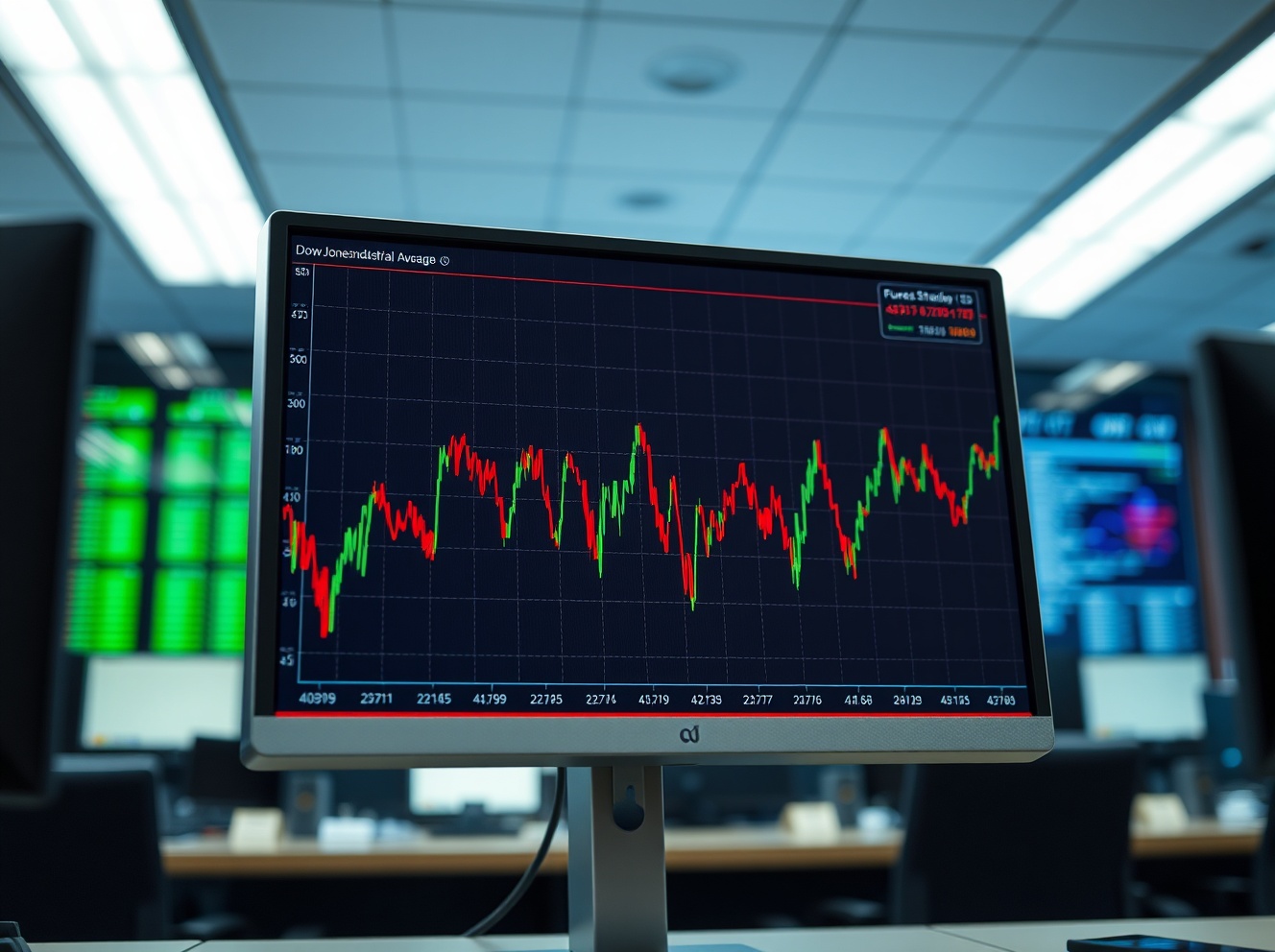
Dow Jones Futures Plunge: Stark Volatility Returns as Iran Tensions Escalate
NEW YORK – Global financial markets convulsed on Monday as Dow Jones Industrial Average futures exhibited extreme whiplash, plunging sharply in overnight trading before paring some losses. This dramatic volatility directly followed reports of renewed military tensions involving Iran, immediately triggering a classic flight to safety among institutional investors. Consequently, the pre-market session set a deeply uncertain tone for Wall Street’s opening bell, highlighting the market’s acute sensitivity to geopolitical flashpoints.
Dow Jones Futures React to Geopolitical Shockwaves
The price action was stark and immediate. E-mini Dow Jones Industrial Average futures, which trade nearly 24 hours a day, fell by over 400 points at their overnight lows. This swift decline represented one of the most significant single-session drops in recent months. Market technicians quickly noted that the sell-off breached several key short-term support levels. However, the session also demonstrated the whiplash effect, as futures subsequently recovered roughly half of those losses by the early European morning. This pattern of rapid decline and partial recovery is a textbook market response to unfolding geopolitical events, where initial panic selling is often met with opportunistic buying.
Analysts point to a clear causal chain. First, news of escalated regional tensions acts as a catalyst. Subsequently, algorithmic trading systems, programmed to react to headline keywords, execute sell orders. Finally, human traders and risk managers then adjust positions, often amplifying the initial move. The CBOE Volatility Index (VIX), Wall Street’s ‘fear gauge,’ spiked in tandem with the futures drop. This correlation confirms that the move was driven by a broad reassessment of risk, not isolated to a single sector.
Historical Context of Iran Tensions and Market Impact
This is not the first instance where Middle Eastern geopolitics have rattled global equity markets. Financial historians often reference the oil price shocks of the 1970s and 1990s, which were precipitated by regional conflicts. More recently, markets experienced similar volatility following events like the 2019 attacks on Saudi oil facilities and the 2020 assassination of Iranian General Qasem Soleimani. In each case, the initial market shock was profound, but the duration and depth of the sell-off depended on the perceived risk of a prolonged, broader conflict.
A comparative analysis reveals a consistent pattern:
| Event | Approx. DJIA Drop | Primary Channel |
|---|---|---|
| 2019 Saudi Aramco Attacks | -1.5% | Oil Supply Fear |
| 2020 Soleimani Strike | -1.2% | Direct Conflict Fear |
| Current Tensions (Initial) | ~-1.2% (Futures) | Multi-Factor Risk |
The current environment introduces additional complexities, including persistently high inflation and elevated interest rates, which may limit the Federal Reserve’s ability to respond to any economic slowdown caused by such shocks.
Expert Analysis on Risk Transmission
Dr. Anya Sharma, Chief Global Strategist at Meridian Capital, provided context. “The market’s reaction is a function of multiple transmission channels,” she explained. “The primary channel is energy. Iran’s role in global oil transit routes means any disruption threatens supply, pushing crude prices higher. This immediately stokes inflation fears. The secondary channel is the safe-haven flow. Capital exits equities and moves into traditional havens like the US Dollar, Treasury bonds, and gold.”
Furthermore, she noted that the whiplash in futures is exacerbated by the structure of modern markets. “The overnight session is dominated by electronic and algorithmic trading with lower liquidity. This magnifies price moves. When London and other European desks come online, we often see a recalibration, which creates the volatile, back-and-forth action.” This analysis underscores that the futures market often acts as a leading indicator and pressure-release valve for pent-up geopolitical anxiety before the cash market opens.
Sector-by-Sector Breakdown of Expected Impact
The impact of geopolitical-driven volatility is never uniform across the market. Based on the initial futures action and historical precedent, certain sectors are poised for disproportionate moves. Investors should monitor these areas closely:
- Energy: Typically sees initial gains due to rising crude oil prices. Major integrated oil companies and exploration & production firms may benefit, while airline and transportation stocks suffer from higher fuel costs.
- Defense & Aerospace: Often experiences inflows as investors anticipate potential increases in government defense spending. This is considered a classic geopolitical hedge.
- Technology & Growth Stocks: These are usually among the hardest hit. Their high valuations are predicated on long-term growth, making them vulnerable when discount rates rise on increased risk. They are also considered “risk-on” assets.
- Consumer Staples & Utilities: These defensive sectors typically demonstrate relative resilience. Their stable earnings and dividend yields attract capital during periods of uncertainty.
- Financials: Reaction can be mixed. Higher volatility can boost trading revenues for large banks, but the prospect of economic disruption and a potentially steeper yield curve presents risks.
The Role of Macroeconomic Fundamentals
While the immediate catalyst is geopolitical, the underlying market vulnerability stems from current macroeconomic conditions. The Federal Reserve’s restrictive monetary policy stance has already tightened financial conditions. Consequently, markets are operating with a lower tolerance for additional shocks. A sharp, sustained rise in oil prices could complicate the inflation fight, potentially forcing central banks to maintain higher interest rates for longer. This scenario would pressure corporate earnings and equity valuations beyond the initial geopolitical fear.
Additionally, the US dollar’s status as the world’s primary reserve currency means it often strengthens during crises. While this can dampen imported inflation, it also creates a headwind for large US multinational companies that derive significant revenue from overseas. A stronger dollar makes their exports more expensive and converts foreign earnings back into fewer dollars. This dynamic can create a second wave of selling pressure after the initial geopolitical spike subsides.
Conclusion
The severe whiplash in Dow Jones Industrial Average futures serves as a potent reminder of financial markets’ intrinsic connection to global geopolitics. The rapid sell-off and partial recovery underscore a market in tension, weighing immediate risk against longer-term fundamentals. While the direct impact on the US economy from regional tensions may be limited, the indirect effects—through energy prices, inflation expectations, and risk sentiment—are powerful and immediate. For investors, this episode reinforces the necessity of diversification, robust risk management, and a focus on long-term horizons rather than reacting to short-term volatility driven by headlines. The path of the Dow Jones futures in the coming sessions will depend heavily on whether the geopolitical situation stabilizes or escalates further.
FAQs
Q1: Why do Dow Jones futures move before the stock market opens?
Dow Jones futures trade virtually around the clock on electronic exchanges. They allow investors to hedge risk or speculate on the market’s future direction based on news that breaks outside of regular trading hours, such as geopolitical developments in other time zones.
Q2: How do Iran tensions specifically affect the US stock market?
The effect is primarily indirect. The main concerns are the potential disruption of oil supplies from the Middle East, which raises energy prices and inflation fears, and a general increase in global risk aversion, which causes investors to sell riskier assets like stocks.
Q3: What does ‘whiplash’ mean in market terms?
Market whiplash refers to a condition where prices swing violently in opposite directions over a very short period. It is characterized by sharp declines followed by rapid recoveries (or vice versa), often driven by conflicting headlines or traders quickly reassessing risk.
Q4: Are futures a reliable indicator of where the stock market will open?
While not perfect, futures are a highly watched leading indicator. They reflect the collective sentiment of global participants trading before the US cash market opens. However, the actual opening price is determined by a multitude of orders at 9:30 AM ET, so a gap between futures and the open can occur.
Q5: What assets typically benefit from this kind of geopolitical volatility?
Traditional safe-haven assets often see inflows. These include US Treasury bonds, gold, the Japanese Yen, and the Swiss Franc. Within the equity market, defensive sectors like utilities, consumer staples, and certain segments of healthcare may show relative strength.
This post Dow Jones Futures Plunge: Stark Volatility Returns as Iran Tensions Escalate first appeared on BitcoinWorld.
