






EthCC 2026 Signals Ethereum's Institutional Breakout | CoinLineup
 VOTE
VOTE
 ETH
ETH
 2026
2026
 8
8
 CC
CC
EthCC 2026, Ethereum's flagship European conference, is marking a visible shift from its hacker-centric origins toward institutional legitimacy. Running March 30 to April 2 in Cannes, France, the ninth edition of the event has introduced a dedicated institutional forum, premium pricing tiers, and investor-focused programming that reframe Ethereum as infrastructure for capital markets, not just a playground for builders.
Why EthCC 2026 Feels Different From Earlier Ethereum Gatherings
The contrast is structural, not cosmetic. EthCC[9] now features The Agora, a curated institutional forum organized by digital asset data provider Kaiko in partnership with EthCC. Scheduled for March 31, The Agora is designed as a space for executives to examine market infrastructure evolution, operational efficiency, and institutional capital deployment in digital assets.
The pricing tells its own story. A bundled Full Pass plus Agora ticket costs 1,300 euros including VAT, more than double the 500-euro regular EthCC Full Pass. That gap signals who the organizers expect to attract, and what those attendees are willing to pay for access to.
EthCC has also added EthVC, a track explicitly bridging investors and startups. Combined with The Agora, the conference now operates on a hub-and-spoke model where builder culture remains the core but institutional and capital-formation tracks radiate outward as formal, ticketed programming.
Jerome de Tychey, president of Ethereum France, framed the shift directly. "2026 is the year of professionalisation of Ethereum and the wider crypto ecosystem," he said, according to DL Research reporting that described the event as a period of convergence between TradFi and DeFi. The conference is expected to gather more than 400 speakers across its programming.
None of this erases Ethereum's builder roots. The regular conference pass still exists, and the technical programming remains. The difference is that EthCC 2026 has added an institutional layer on top, rather than replacing what came before.
What an Institutional Turn Means for Ethereum
The timing is not accidental. MiCA, the European Union's Markets in Crypto-Assets regulation, entered into full application on December 30, 2024, giving EthCC's 2026 institutional push a clearer regulatory backdrop than any previous edition. For the first time, firms attending have a comprehensive EU-wide framework to operate within, reducing the legal ambiguity that kept many traditional players on the sidelines.
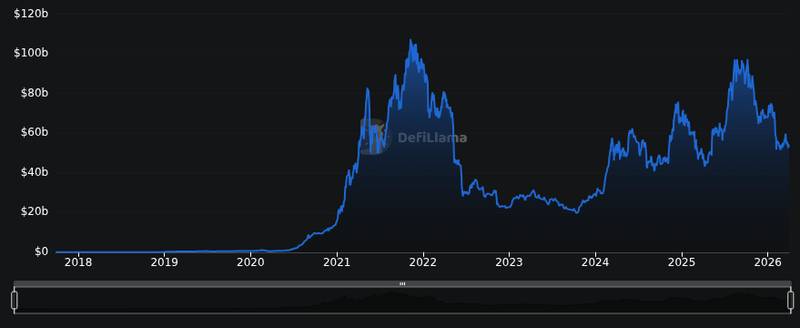
That regulatory clarity matters because Ethereum remains the dominant chain for onchain finance. Total value locked across Ethereum protocols sits at roughly $111.86 billion, reinforcing why institutional conversations about tokenization, custody, and compliance infrastructure gravitate toward this network rather than alternatives.
The institutional turn also connects to a broader trend of traditional assets migrating onchain. Projects like the iBoxx Treasury Index moving onchain via Canton Network illustrate how bond indices and fixed-income products are finding blockchain rails, often settling or referencing Ethereum-based infrastructure.
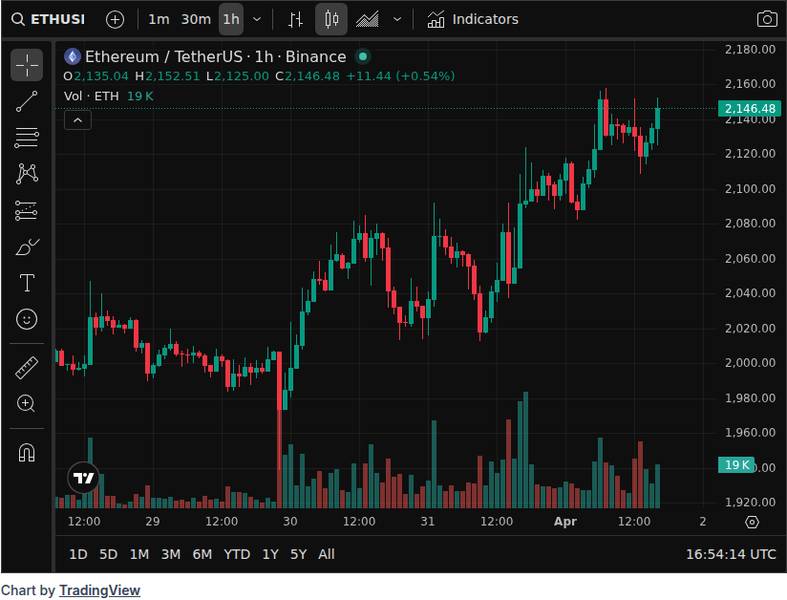
ETH itself was trading at $2,146.41 at the time of data collection, up 2.73% over 24 hours, with a market cap of approximately $258.95 billion and 24-hour trading volume near $19.09 billion.
The conference's institutional pivot is happening against a risk-off backdrop. The Crypto Fear and Greed Index sat at 8 out of 100, deep in "Extreme Fear" territory. That disconnect, institutional confidence building at an event level while broader market sentiment stays cautious, mirrors the pattern seen across crypto markets where macro catalysts can quickly reverse sentiment.
The Bigger Signal Behind Ethereum's Institutional Moment
EthCC 2026 reads as both a branding milestone and a strategic pivot. The branding side is visible: premium pricing, executive-level programming, and a name like "The Agora" that signals gravitas over hackathon energy. The strategic side is the bet that Ethereum's next growth phase depends on institutional capital flows, not just developer activity.
The hub-and-spoke metaphor from the original headline captures something real. Ethereum's core community still builds at the center, but the spokes now reach fund managers, compliance officers, and enterprise treasury teams. Whether those spokes carry enough weight to shift Ethereum's trajectory depends on whether the infrastructure, from post-quantum security considerations to regulated custody solutions, matures fast enough to meet institutional requirements.
The signals to watch after EthCC are concrete: whether Agora-style institutional side events become permanent fixtures at Ethereum conferences, whether EthVC deal flow produces visible funding rounds, and whether MiCA-compliant products built on Ethereum gain measurable market share in Europe over the next two quarters.
No single conference makes an ecosystem institutional. But when the pricing, programming, and partnerships all point the same direction, the conference becomes a leading indicator of where attention and capital are heading next.
Disclaimer: This article is for informational purposes only and does not constitute financial or investment advice. Cryptocurrency and digital asset markets carry significant risk. Always do your own research before making decisions.
Read original article on coinlineup.com