



Fed’s Powell Flags Urgent Review of Accommodative Policy at Next Meeting
 POWELL
 ZER
ZER
 RSRV
RSRV
 HIGHER
 WOULD
WOULD
BitcoinWorld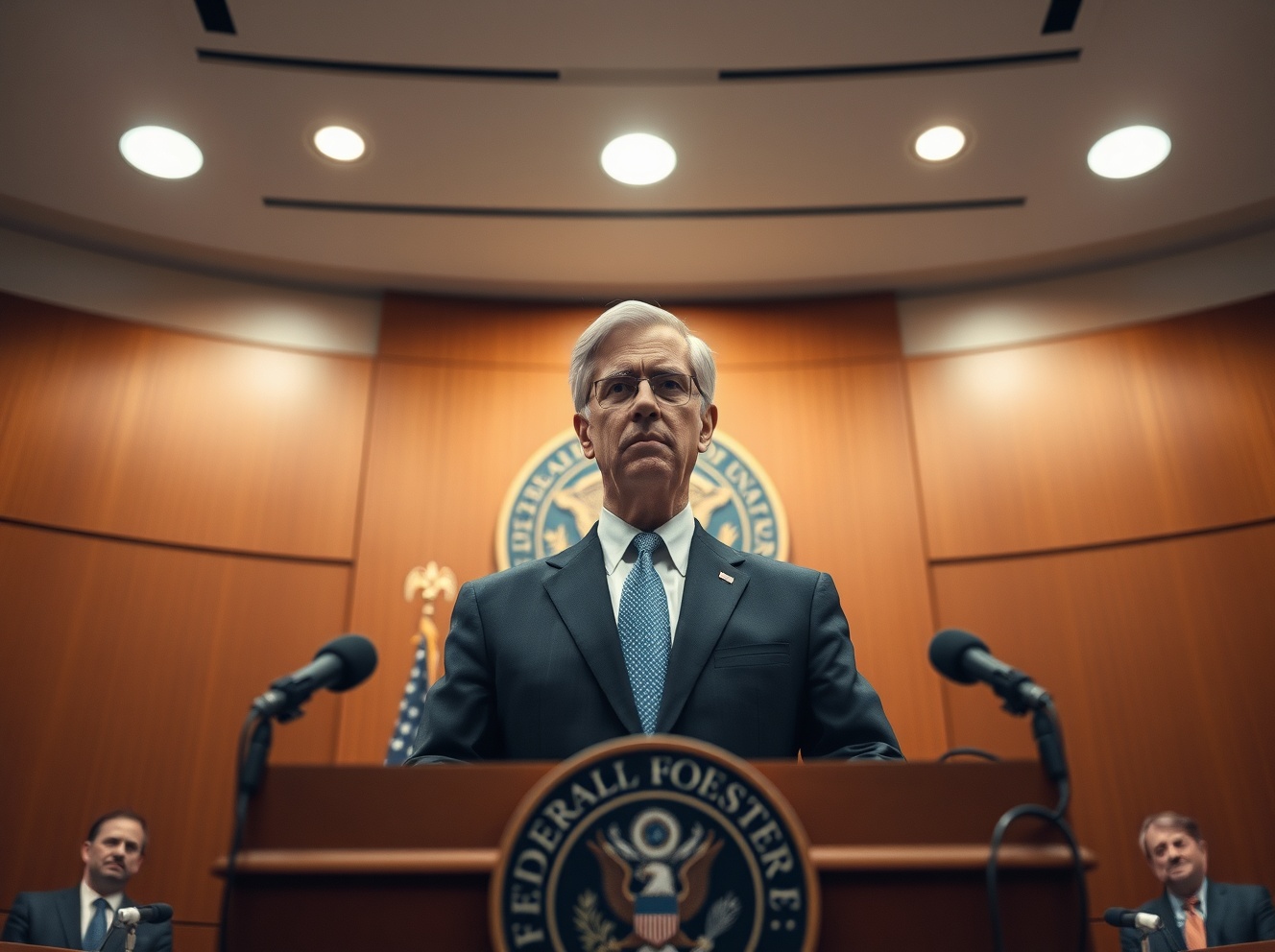
Fed’s Powell Flags Urgent Review of Accommodative Policy at Next Meeting
The Federal Reserve Chairman Jerome Powell has signaled a potential shift in the central bank’s approach. At a recent event, Powell stated the Fed could review its current accommodative policy stance at the next meeting. This announcement has sent ripples through financial markets. Investors now anticipate a possible change in interest rates. The move reflects the Fed’s commitment to managing inflation and economic growth.
Understanding the Fed’s Accommodative Policy
Accommodative policy refers to a central bank’s strategy to stimulate the economy. It typically involves low interest rates and quantitative easing. The Federal Reserve has maintained this stance since the pandemic. This approach aimed to support borrowing, spending, and investment. However, persistent inflation now pressures the Fed to act. Powell’s comments suggest a pivot toward tighter monetary conditions.
Key elements of the current accommodative stance include:
- Near-zero interest rates since March 2020
- Large-scale asset purchases of Treasury and mortgage-backed securities
- Forward guidance on maintaining low rates until full employment is achieved
These measures have fueled a rapid economic recovery. Yet, they have also contributed to rising consumer prices. The annual inflation rate now exceeds 6%, far above the Fed’s 2% target. This gap forces the Fed to reconsider its strategy.
Powell’s Statement: Key Takeaways
During a speech at the National Press Club, Powell emphasized the need for flexibility. He noted that the economy no longer requires such aggressive support. The labor market has improved significantly. Unemployment has fallen to 4.2%, near pre-pandemic levels. Meanwhile, supply chain disruptions continue to push prices higher.
Powell said, “The time has come to discuss a review of our accommodative stance.” He added that the next meeting will include a detailed assessment. This marks a clear departure from earlier dovish tones. Market participants now expect a taper of asset purchases. Some analysts predict a rate hike as early as mid-2023.
Immediate Market Reactions
Following Powell’s remarks, the U.S. dollar strengthened. The yield on the 10-year Treasury note rose to 1.7%. Stock markets experienced volatility, with the S&P 500 falling 1.2%. Bond prices declined as investors priced in tighter policy. These reactions highlight the sensitivity of markets to Fed communication.
Global markets also felt the impact. Emerging market currencies weakened against the dollar. Commodity prices, including gold and oil, dropped. Investors now rebalance portfolios in anticipation of higher interest rates.
Historical Context: Fed Policy Shifts
The Federal Reserve has a long history of adjusting its policy stance. During the 2008 financial crisis, the Fed slashed rates to zero. It then maintained an accommodative stance for seven years. The taper tantrum of 2013 serves as a cautionary tale. When the Fed first hinted at reducing bond purchases, markets reacted sharply. Powell’s current approach appears more measured. He has emphasized gradual and transparent communication.
| Period | Policy Stance | Key Actions |
|---|---|---|
| 2008-2015 | Accommodative | Zero rates, QE1, QE2, QE3 |
| 2015-2018 | Tightening | Gradual rate hikes, balance sheet reduction |
| 2020-2021 | Accommodative | Emergency rate cuts, massive QE |
| 2022-2023 | Potential pivot | Tapering, rate hike discussions |
This table illustrates the cyclical nature of Fed policy. Each shift responds to prevailing economic conditions. The current review reflects a similar logic.
Impact on Borrowers and Savers
A shift away from accommodative policy will affect households and businesses. Borrowers face higher costs for mortgages, credit cards, and loans. The average 30-year fixed mortgage rate has already risen to 3.5%. Further increases could slow the housing market. Savers, however, may benefit from higher returns on deposits. Banks have kept savings rates near zero for years. A rate hike would improve yields on savings accounts and CDs.
Small businesses also face challenges. Many rely on low-interest loans for expansion. Higher rates could reduce profit margins. The Fed must balance these competing interests carefully.
Expert Opinions and Analysis
Economists have mixed views on the timing of the review. Former Fed Governor Laurence Meyer stated, “The economy is overheating. The Fed must act soon.” Others, like Nobel laureate Joseph Stiglitz, urge caution. They argue that supply-side issues, not demand, drive inflation. Tightening policy too quickly could harm the recovery.
Market strategists at Goldman Sachs predict a taper announcement in December. They expect the first rate hike in June 2023. This timeline aligns with Powell’s gradual approach. The Fed will likely provide clear signals to avoid market disruption.
Global Implications of a Fed Pivot
The Federal Reserve’s decisions have worldwide consequences. A tighter U.S. policy often leads to capital outflows from emerging markets. Countries like Turkey and Argentina already face currency crises. Higher U.S. rates also increase the cost of dollar-denominated debt. This could trigger financial instability in vulnerable nations.
Central banks in Europe and Japan watch closely. The European Central Bank maintains its own accommodative stance. However, the Fed’s move could force adjustments elsewhere. Coordinated action may be necessary to maintain global economic stability.
What to Expect at the Next Meeting
The next Federal Open Market Committee meeting is scheduled for December 14-15. Powell’s statement indicates that a formal review will occur. Key agenda items include:
- Assessment of current economic conditions
- Discussion of asset purchase taper timeline
- Projections for interest rate paths
- Communication strategy for policy changes
Market participants expect the Fed to announce a reduction in monthly bond purchases. The current pace of $120 billion per month may slow to $90 billion. A full taper could take eight to ten months. Rate hikes would follow once the taper concludes.
Conclusion
Jerome Powell’s signal to review the Fed’s accommodative policy marks a pivotal moment. The central bank must navigate a complex economic landscape. Inflation remains high, but the recovery is still fragile. A careful, data-driven approach will guide the next steps. Investors, businesses, and consumers should prepare for a gradual shift. The Fed’s commitment to transparency offers some reassurance. The next meeting will provide crucial clarity on the path ahead.
FAQs
Q1: What does accommodative policy mean?
A1: Accommodative policy refers to a central bank’s strategy of low interest rates and asset purchases to stimulate economic growth. It aims to encourage borrowing and spending.
Q2: Why is the Fed reviewing its accommodative stance?
A2: The Fed is reviewing its stance due to persistent inflation above its 2% target and a strong labor market recovery. This suggests the economy no longer needs such aggressive support.
Q3: How will a policy shift affect interest rates?
A3: A shift could lead to higher interest rates. The Fed may first taper asset purchases, then raise the federal funds rate. This would increase borrowing costs for consumers and businesses.
Q4: When will the next Federal Reserve meeting take place?
A4: The next FOMC meeting is scheduled for December 14-15, 2021. Powell indicated that a formal review of policy will occur at this meeting.
Q5: What is the impact on global markets?
A5: A tighter U.S. policy can strengthen the dollar and cause capital outflows from emerging markets. It also raises the cost of dollar-denominated debt, potentially triggering financial instability in vulnerable economies.
This post Fed’s Powell Flags Urgent Review of Accommodative Policy at Next Meeting first appeared on BitcoinWorld.
