



Intel Terafab Project: Strategic Alliance Powers Musk’s Bold Chip Factory Vision in Texas
 CHIP
CHIP
 VSN
VSN
 VSN
VSN
 CHIP
CHIP
 BOLD
BOLD
BitcoinWorld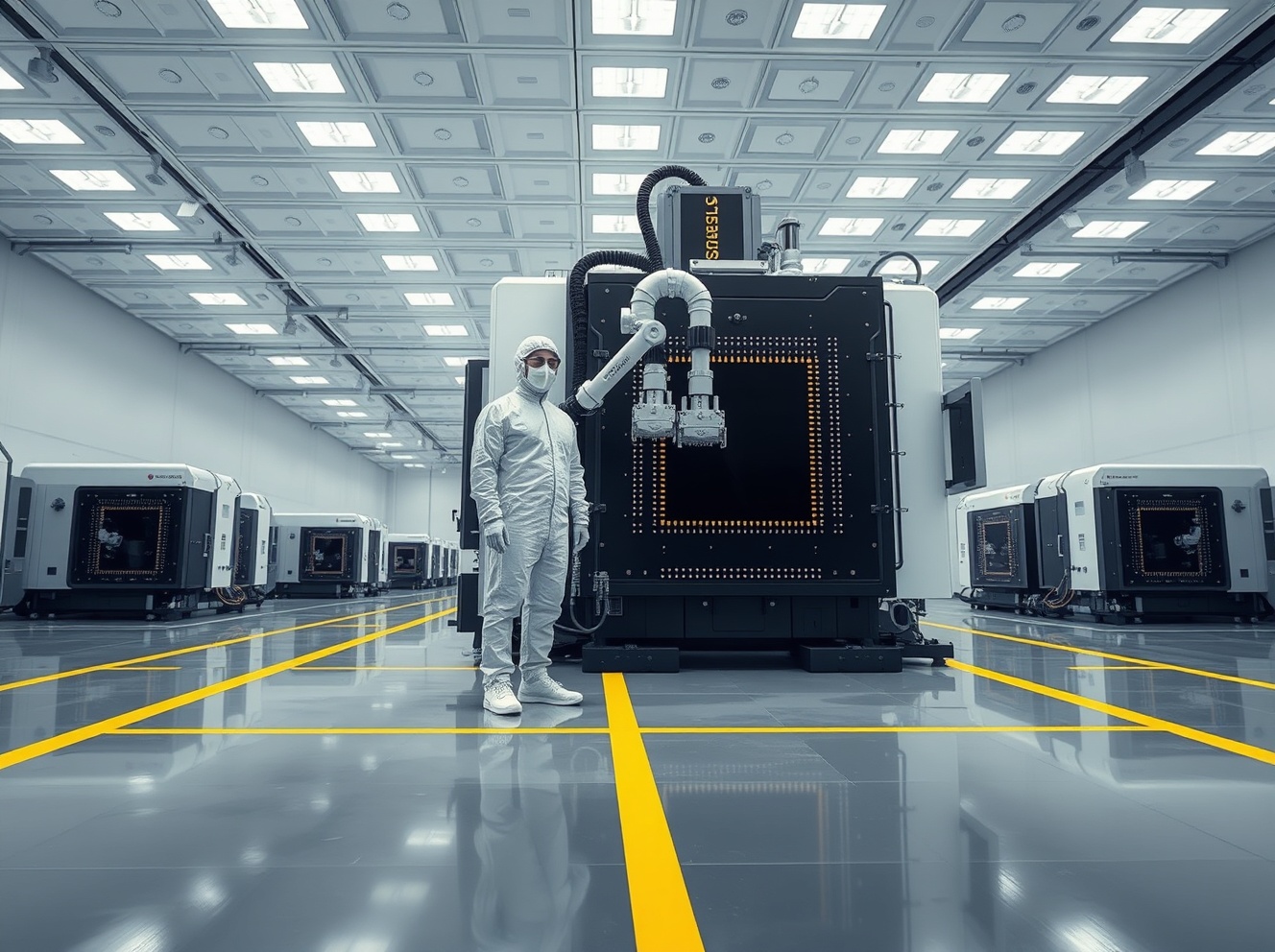
Intel Terafab Project: Strategic Alliance Powers Musk’s Bold Chip Factory Vision in Texas
In a significant move for U.S. semiconductor sovereignty, Intel Corporation has officially joined Elon Musk’s ambitious Terafab chips project, partnering with SpaceX and Tesla to establish a new advanced fabrication facility in Texas. Announced on April 7, 2026, this collaboration aims to construct a factory capable of producing one terawatt per year of computing power to fuel next-generation artificial intelligence and robotics. The partnership directly addresses critical gaps in domestic chip manufacturing while leveraging Intel’s established foundry expertise with Musk’s visionary engineering approach.
Intel Terafab Project Details and Strategic Goals
Intel confirmed its participation through a corporate statement on social media platform X. The company emphasized that its design, fabrication, and packaging capabilities would accelerate Terafab’s primary objective. Consequently, the facility targets unprecedented production scale for high-performance semiconductors. This initiative responds directly to growing global demand for AI-specific processors. Furthermore, it strengthens U.S. supply chain resilience amid ongoing geopolitical tensions affecting chip availability.
Elon Musk initially revealed the SpaceX and Tesla partnership in March 2026. The project specifically aims to develop custom chips for several applications. These include artificial intelligence compute clusters, satellite systems for SpaceX’s proposed space data centers, and hardware for future autonomous Tesla vehicles and robots. However, constructing a leading-edge semiconductor fab represents one of the most complex industrial undertakings. Typically, such projects require multi-year timelines and investments exceeding $20 billion.
The Critical Role of Intel’s Foundry Business
Intel’s involvement provides the missing piece for Terafab’s execution. Previously, analysts questioned how SpaceX and Tesla, despite their engineering prowess, could efficiently enter the highly specialized chip manufacturing sector without foundational experience. Intel, conversely, brings decades of semiconductor fabrication knowledge. The company has actively sought large anchor customers to support its expanding foundry services business. Now, it secures two high-profile clients in SpaceX and Tesla.
This partnership arrives at a pivotal moment for Intel. Once the undisputed leader in U.S. silicon production, the company has watched rivals like Nvidia and AMD surge ahead in designing advanced processors. Many competitors adopted a “fabless” model, outsourcing manufacturing to dedicated foundries like TSMC. Intel’s strategic pivot to become a major foundry player for external customers now gains tremendous momentum with the Terafab commitment. Market reaction was immediately positive, with Intel’s stock rising over 3% following the announcement.
Texas Semiconductor Fab: Economic and Technological Impact
The selection of Texas for the Terafab facility aligns with broader trends in U.S. high-tech manufacturing geography. The state offers significant incentives, established infrastructure, and a growing tech workforce. Moreover, it already hosts major operations for both Tesla and SpaceX. This co-location can streamline logistics and foster tighter collaboration between the engineering teams. The project will likely create thousands of high-skilled jobs, from construction to ongoing fab operations.
Building a fab of this scale involves monumental challenges. The core of the facility is the clean room, a controlled environment thousands of square meters in size. It must be virtually free of dust particles to prevent microscopic defects in silicon wafers. Inside, thousands of precision machines perform complex processes like photolithography, etching, and deposition. Intel’s existing IP and process technology will be foundational. However, the project may also incorporate novel engineering approaches from SpaceX and Tesla, known for radically accelerating development cycles in aerospace and automotive.
Analyzing the 1 TW/Year Compute Target
Terafab’s stated goal of producing one terawatt per year of compute power is audacious. To contextualize this, consider that total global data center power consumption was estimated in the hundreds of terawatt-hours annually in the mid-2020s. This target suggests the factory’s output will power an immense expansion of AI training and inference workloads. It also hints at the energy requirements for future technologies like autonomous robot fleets and orbital data centers. Achieving this will demand extreme improvements in chip performance per watt, an area where Intel has extensive R&D.
Expert Analysis on the Partnership’s Viability
Industry observers note the complementary strengths of the three companies. Intel provides the semiconductor manufacturing bedrock. SpaceX contributes expertise in radical cost reduction, reliable systems for extreme environments, and a direct need for space-grade electronics. Tesla brings real-world AI deployment experience at scale through its Full Self-Driving and Optimus robot projects. This triad could potentially bypass traditional industry inertia. However, successful execution will require deep integration of distinct corporate cultures and engineering philosophies.
The financial structure of the deal remains undisclosed. Typically, a greenfield fab requires capital expenditure shared between the foundry operator and its anchor customers. Given Musk’s history of leveraging vertical integration at Tesla and SpaceX, Terafab will likely aim for significant control over its supply chain. For Intel, securing long-term, high-volume commitments from such prominent customers validates its foundry strategy and provides a stable revenue stream to offset the massive capital costs of process node development and fab tooling.
Timeline and Broader Industry Context
While no specific groundbreaking or production start date was announced, industry benchmarks suggest a timeline of three to five years from planning to volume output. This project will unfold alongside other major U.S. fab projects spurred by the CHIPS and Science Act. It positions the U.S. to compete more aggressively in producing the most advanced chips, reducing reliance on Asian foundries. The focus on AI and robotics compute also indicates a strategic bet on the defining technological markets of the late 2020s and 2030s.
Conclusion
The Intel Terafab project marks a watershed moment in semiconductor manufacturing, uniting a traditional industry titan with two of the world’s most disruptive technology leaders. By combining Intel’s fabrication mastery with the innovative drive of SpaceX and Tesla, the Texas-based factory aims to secure a leading position in the AI compute era. This partnership not only boosts U.S. technological independence but also sets a new benchmark for ambitious, vertically integrated hardware development. The success of this venture will significantly influence the global balance of power in advanced chip production and the pace of innovation in artificial intelligence and robotics for years to come.
FAQs
Q1: What is the main goal of the Intel Terafab project?
The primary goal is to build a new U.S. semiconductor factory in Texas capable of producing one terawatt per year of computing power to advance AI, robotics, satellite systems, and autonomous vehicles.
Q2: Why is Intel’s involvement crucial for this project?
Intel provides essential semiconductor fabrication expertise and infrastructure that SpaceX and Tesla lack. Building an advanced chip fab is extremely complex and capital-intensive, requiring specialized knowledge that Intel possesses.
Q3: Where will the Terafab factory be located?
The factory will be built in Texas, a state where both SpaceX and Tesla already have significant operational presence, which facilitates logistics and collaboration.
Q4: How did the stock market react to Intel’s announcement?
Intel’s stock price rose more than 3% on the news, reflecting investor confidence that securing SpaceX and Tesla as anchor customers validates and strengthens Intel’s foundry business strategy.
Q5: What challenges does the Terafab project face?
Key challenges include the multi-billion dollar cost, the multi-year construction timeline, integrating three distinct corporate cultures, and executing the highly complex technical process of advanced semiconductor manufacturing at a unprecedented scale.
This post Intel Terafab Project: Strategic Alliance Powers Musk’s Bold Chip Factory Vision in Texas first appeared on BitcoinWorld.
