






Pound Sterling Today: GBP Plummets as Fragile Ceasefire Sparks Intense Dollar Demand
 DOLLAR
 2024
2024
 BANK
BANK
 2024
2024
 APRIL
APRIL
BitcoinWorld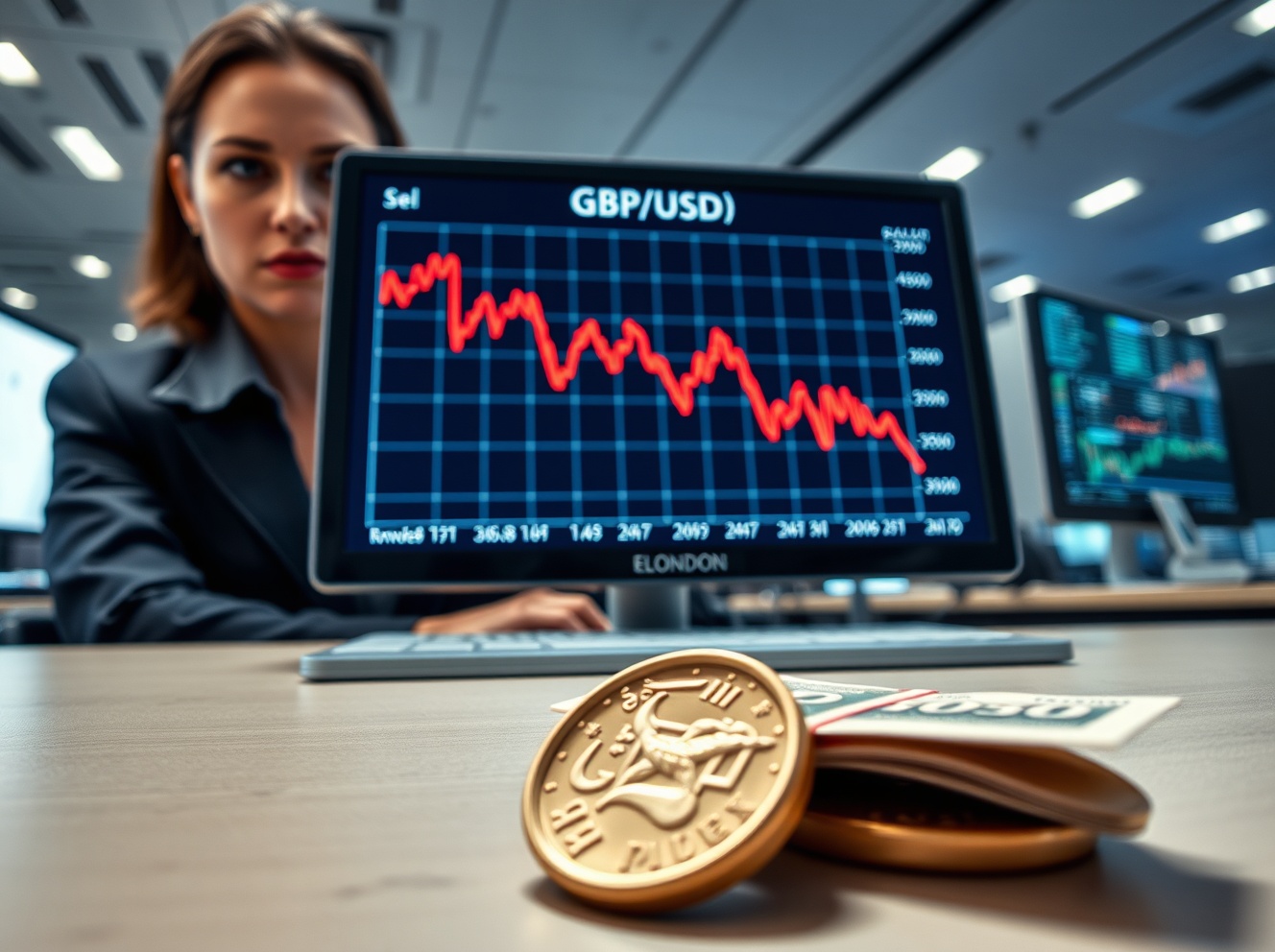
Pound Sterling Today: GBP Plummets as Fragile Ceasefire Sparks Intense Dollar Demand
LONDON, April 2025 – The British pound sterling faced significant downward pressure in global currency markets today, as a newly announced but fragile geopolitical ceasefire triggered a sharp flight to the safety of the US dollar. Consequently, the GBP/USD exchange rate experienced its most substantial single-day decline in over a month, reflecting heightened investor anxiety and shifting capital flows.
Pound Sterling Today: Analyzing the Immediate Market Reaction
Currency traders witnessed a rapid sell-off of the pound sterling during the London session. Market data from major financial institutions shows the GBP/USD pair falling from an opening near 1.2650 to a session low of 1.2515. This movement represents a decline of over one percent. Meanwhile, the pound also weakened against the euro and the Japanese yen. The immediate catalyst was the announcement of a tentative ceasefire in a prolonged regional conflict. However, analysts quickly noted the agreement’s precarious nature. Consequently, market participants sought the traditional safe-haven status of the US dollar, driving its value higher against most major currencies, including sterling.
This risk-off sentiment overshadowed domestic UK economic data. Recent reports indicated stable services sector activity. Furthermore, the Bank of England has maintained a cautious stance on interest rates. Nevertheless, these factors provided little support for the pound today. The dominant narrative in forex markets became one of global risk aversion. Therefore, the sterling’s fate became intrinsically linked to broader dollar strength.
The Mechanics of Dollar Demand in Times of Uncertainty
Historically, the US dollar benefits from its role as the world’s primary reserve currency. During periods of geopolitical tension or uncertainty, investors execute a predictable pattern. First, they reduce exposure to riskier assets like equities from emerging markets. Next, they often repatriate capital to US Treasury bonds and money markets. This process increases demand for dollars to facilitate these transactions. The current situation presents a classic example of this dynamic. Although a ceasefire typically reduces fear, a fragile one can have the opposite effect. Markets now price in the risk of a sudden collapse and renewed escalation.
Expert Insight from Currency Strategists
Senior analysts at leading investment banks have provided context. “The market is treating this not as peace, but as an unstable pause,” noted a chief FX strategist at a major European bank. “Our models show a strong correlation between geopolitical risk indices and dollar strength. The pound, being a pro-cyclical currency, is particularly vulnerable when these indices spike.” This analysis is supported by flows data showing net selling of sterling by institutional funds. Additionally, options markets show a rising cost to protect against further pound weakness, indicating sustained concern.
The impact extends beyond the GBP/USD pair. A stronger dollar has wide-ranging effects. For instance, it makes dollar-denominated commodities like oil more expensive for UK importers. This could potentially feed into future inflation metrics. It also increases the burden for emerging market countries with dollar-denominated debt. For the UK, a weaker pound makes imports more costly but can boost the competitiveness of exports. The net effect on the economy depends on the duration of this currency move.
Historical Context and Comparative Analysis
To understand today’s move, it is useful to examine similar historical episodes. The table below compares recent geopolitical events and their impact on the GBP/USD pair over a one-week period.
| Event | Date | GBP/USD Initial Reaction | Key Driver |
|---|---|---|---|
| Initial Invasion Phase (2022) | Feb 2022 | -3.8% | Safe-haven rush, energy security fears |
| Banking Sector Turmoil | Mar 2023 | -2.1% | Dollar liquidity demand, UK banking exposure |
| Previous Ceasefire Announcement | Nov 2024 | +0.5% (faded) | Initial risk-on, then skepticism |
| Current Fragile Ceasefire | Apr 2025 | -1.1% (intraday) | Uncertainty-driven dollar demand |
As the data indicates, the current decline is significant but less severe than during outright conflict phases. This suggests markets are cautiously pessimistic, not panicked. The pound’s performance relative to other currencies is also telling. Today, it has outperformed more risk-sensitive currencies like the Australian dollar but underperformed traditional havens like the Swiss franc. This positioning confirms its middle-ground status in the global currency hierarchy.
Forward Outlook for the Pound and Key Levels to Watch
The sterling’s trajectory in the coming days will hinge on two primary factors. First, the durability of the geopolitical ceasefire will be paramount. Any signs of violation will likely extend dollar strength and pound weakness. Second, upcoming UK and US economic data releases will regain influence as the initial shock absorbs. Key releases include UK GDP revisions and US inflation data. Technical analysts are now watching several critical support levels for GBP/USD.
- Immediate Support: The 1.2500 psychological level and the 200-day moving average near 1.2480.
- Resistance: The previous support zone around 1.2600, which has now turned into resistance.
- Bank of England Policy: The Monetary Policy Committee’s next meeting remains a focal point. Persistent sterling weakness could complicate their inflation fight, potentially influencing future rate decisions.
Market consensus, as reflected in futures and swaps markets, suggests a period of consolidation is probable. However, the bias remains skewed to the downside until the geopolitical picture clarifies. For businesses and travelers, this means continued volatility in exchange rates. Hedging strategies are therefore advisable for those with exposure to sterling-dollar flows.
Conclusion
The pound sterling today serves as a clear barometer of global risk sentiment. Its decline against a strengthening US dollar underscores how fragile geopolitical developments can override domestic economic fundamentals. While the immediate trigger was the ceasefire announcement, the deeper driver was market skepticism and a resulting surge in safe-haven demand. Moving forward, the currency’s recovery will depend on sustained geopolitical stability and incoming economic data. For investors and policymakers alike, the episode highlights the interconnected nature of modern forex markets, where events thousands of miles away can directly impact the value of the pound sterling.
FAQs
Q1: Why does a ceasefire make the dollar stronger and the pound weaker?
A ceasefire, especially a fragile one, creates uncertainty about the future. Markets dislike uncertainty, leading investors to buy assets perceived as safe, like US Treasury bonds. This requires purchasing US dollars, increasing its demand and value relative to riskier currencies like the pound sterling.
Q2: How does a weaker pound sterling affect UK consumers?
A weaker pound increases the cost of imported goods and services, from food to fuel. This can contribute to higher inflation. However, it can make UK exports cheaper for foreign buyers, potentially benefiting certain manufacturing and service sectors.
Q3: Is the Bank of England likely to intervene to support the pound?
Direct intervention in forex markets by the Bank of England is rare. It typically only occurs during periods of extreme disorderly market conditions. The current move, while significant, is seen as a market-driven adjustment to news. The BoE is more likely to respond through interest rate policy if currency moves threaten its inflation target.
Q4: What other currencies are affected by safe-haven dollar demand?
Most major currencies weaken against the dollar in such scenarios. Risk-sensitive currencies like the Australian dollar (AUD), New Zealand dollar (NZD), and emerging market currencies often see larger declines. Traditional havens like the Swiss franc (CHF) and Japanese yen (JPY) tend to hold their value better or even appreciate.
Q5: Where can I find reliable, up-to-date information on the pound sterling exchange rate?
Reliable sources include the financial data terminals of Reuters and Bloomberg, the websites of major central banks (Bank of England, Federal Reserve), and the forex pages of reputable financial news organizations which provide real-time charts and analysis.
This post Pound Sterling Today: GBP Plummets as Fragile Ceasefire Sparks Intense Dollar Demand first appeared on BitcoinWorld.
