



SEC Gives Some Self-Custody Crypto Apps 5-Year Relief
 GREED
GREED
 SEC
SEC
 APRIL
APRIL
 READ
READ
 CPTL
CPTL
The SEC did not hand self-custody crypto apps a clean five-year runway to become registered broker-dealers. On April 13, 2026, the agency's Trading and Markets staff issued a narrow, interim no-objection statement that will be considered withdrawn on April 13, 2031 absent Commission action, covering only certain wallet-linked interfaces that meet strict conditions.
What the SEC Actually Announced on April 13
The SEC's Division of Trading and Markets released a staff statement on April 13, 2026 addressing broker-dealer registration for certain user interfaces that help people transact in crypto asset securities through self-custodial wallets, according to the SEC. Self-custody means the user, not a company, controls the private keys that move the assets.
This is interim relief, not a blanket exemption. The staff said it would not recommend enforcement against covered interface providers that meet listed conditions, and the statement will be considered withdrawn effective five years from April 13, 2026 unless the Commission acts.
The popular framing that the SEC gave self-custody apps five years to obtain traditional broker licenses overstates the text. According to unconfirmed reports tied to the headline, a hard licensing deadline was imposed, but the official staff statement only sets a sunset date of April 13, 2031 for the temporary no-objection posture itself.
Which Self-Custody Crypto Apps Are Covered and Which Are Not
The relief applies to websites, browser extensions, and software applications, including tools embedded in wallets, that help users prepare transactions in crypto asset securities through a self-custodial wallet. Think front ends that surface routes and prices while the user signs from their own wallet.
Providers qualify only if they operate through objective and pre-disclosed parameters, do not solicit specific transactions, and keep compensation fixed and agnostic to product, execution route, execution venue, and counterparty. Law firm Sidley noted that the statement permits transaction-based compensation from users while continuing to bar payment for order flow or other third-party compensation.
The statement does not extend to providers that hold or access user funds, securities, or stablecoins, or that execute or settle transactions, or take or route orders. That excludes centralized exchanges, custodial wallets, and most order-routing brokers from the relief. This is not a free pass for platforms that touch customer assets, a distinction that continues to shape parallel debates over stablecoin oversight on Capitol Hill.
Why the 5-Year Window Matters for Users, Builders, and the Market
Commissioner Hester Peirce backed the staff position but argued for a more durable fix, warning that overly broad broker interpretations could sideline useful wallets and front ends. In her accompanying comments, Peirce said people have shown great ingenuity in developing crypto wallets and front ends that serve users well.
For builders, a temporary staff no-objection is weaker than a Commission-level rule. It can be revisited at any time, and the constraints on fee design, route display, and custody remain binding for anyone relying on the position. Developers who touch settlement, order routing, or customer balances stay firmly inside the existing broker-dealer perimeter.
For ordinary holders, the practical stake is continued access to non-custodial interfaces that front-end on-chain trading of tokens the SEC views as securities. If the Commission does not convert the approach into something permanent before April 13, 2031, the baseline legal risk for those front ends could reset.
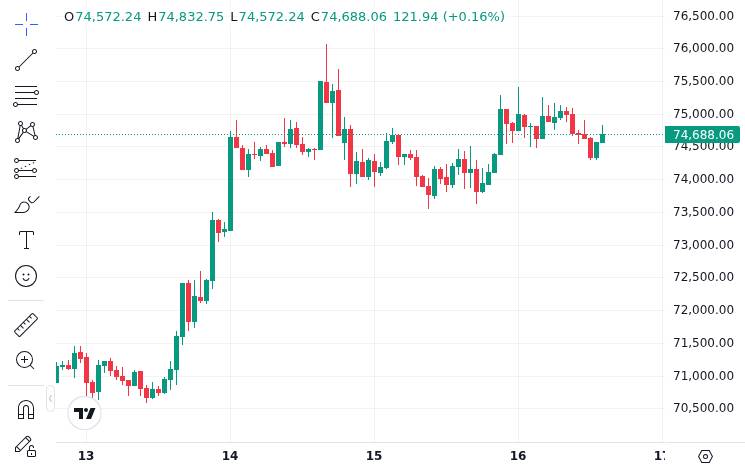
Market reaction was muted and the policy did not appear to move price in any obvious way. Bitcoin traded near $74,702, up about 0.67% over 24 hours in the research snapshot, even as the Fear and Greed Index sat at 23, or Extreme Fear. That sentiment backdrop echoes the cautious tape seen when bitcoin was hovering near its true market mean ahead of key Fed data.
The regulatory context matters too. Peirce referenced reasoning from the 2024 SEC v. Coinbase wallet discussion, where the court declined to treat a wallet service as a broker solely because it enabled user-signed blockchain interactions, a backdrop that also colors how stablecoin issuers frame their own compliance posture.
Between now and April 2031, the signals to watch are whether the Commission turns this interim approach into a formal rule, whether staff tightens or loosens the conditions, and whether enforcement actions test the line between a covered interface and an unregistered broker.
Disclaimer: This article is for informational purposes only and does not constitute financial or investment advice. Cryptocurrency and digital asset markets carry significant risk. Always do your own research before making decisions.
Read original article on coinlineup.com