



Silver Declines Sharply as Fed Holds Interest Rates Steady, Boosting USD and Yields
 2024
2024
 2024
2024
 INDUSTRIAL
 RSRV
RSRV
 HIGHER
BitcoinWorld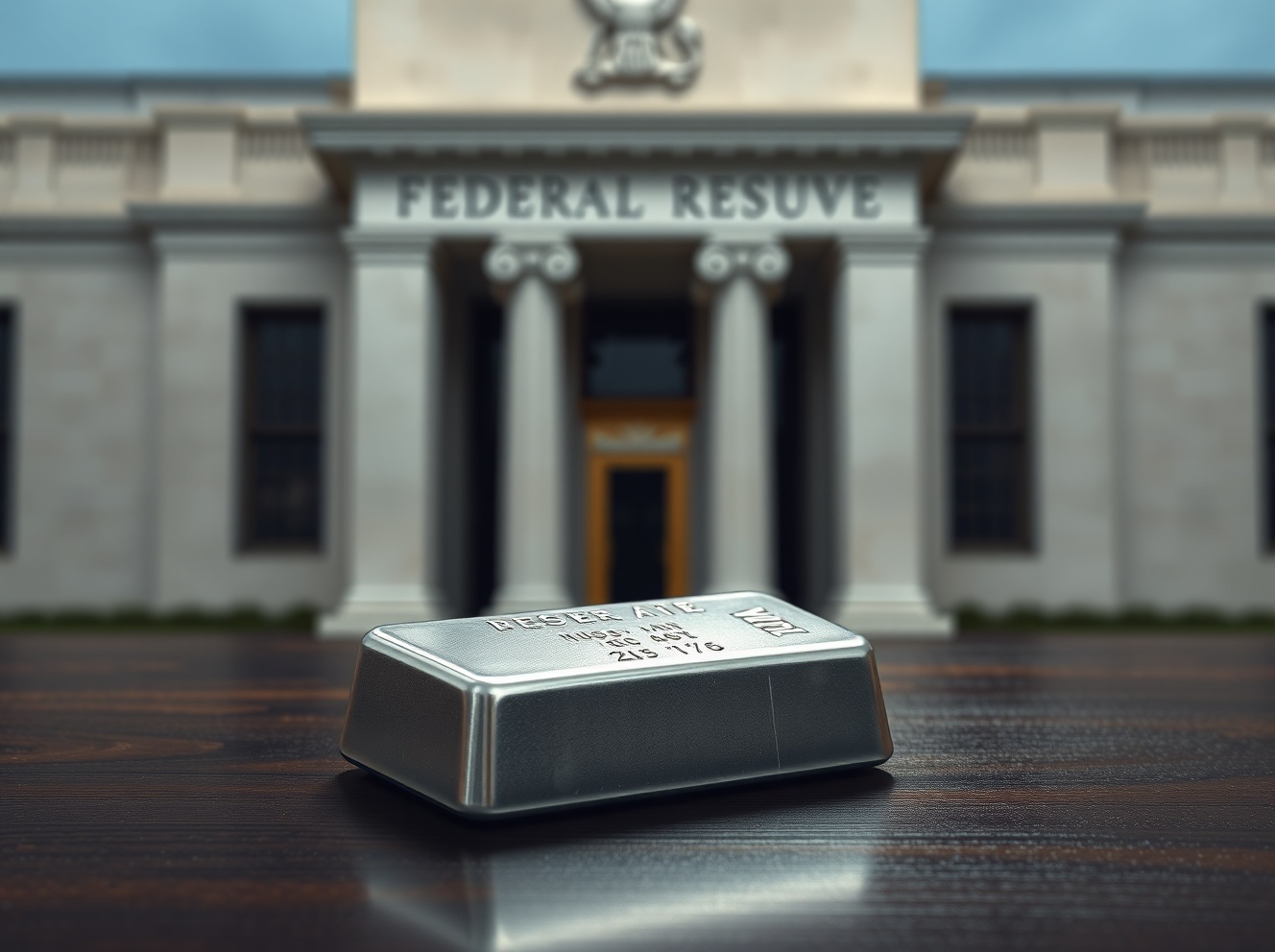
Silver Declines Sharply as Fed Holds Interest Rates Steady, Boosting USD and Yields
Silver declines sharply in today’s trading session after the Federal Reserve maintains its current interest rate stance. The decision strengthens the US dollar and pushes Treasury yields higher. This creates a challenging environment for precious metals.
Silver Declines Amid Fed’s Steady Interest Rate Decision
The Federal Reserve announces no change to its benchmark interest rate. This decision aligns with market expectations. However, the accompanying statement signals a cautious approach to future cuts. This hawkish tone immediately impacts silver prices.
Silver drops by 2.3% in early trading. The metal now trades near $24.50 per ounce. This marks a significant reversal from recent gains. Traders react swiftly to the news. They adjust their positions to reflect the stronger dollar.
The Fed’s decision directly influences the precious metals market. Higher interest rates increase the opportunity cost of holding non-yielding assets like silver. Investors prefer assets that generate returns. This shift reduces demand for silver.
USD Strengthens as Yields Rise
The US Dollar Index jumps 0.6% following the Fed’s announcement. A stronger dollar makes silver more expensive for international buyers. This reduces global demand. The correlation between the dollar and silver remains strong.
US Treasury yields also climb. The 10-year yield rises to 4.35%. Higher yields attract investors seeking safe returns. This diverts capital away from precious metals. The combined effect pressures silver prices downward.
Market Reactions and Trading Volume
Trading volume for silver futures spikes 40% above the 20-day average. This indicates heightened market activity. Many traders close long positions. Others initiate short bets against the metal. The bearish sentiment dominates the session.
Key support levels for silver now sit at $24.00 and $23.50. A break below these levels could trigger further selling. Analysts watch these price points closely. The next Fed meeting in March will provide additional direction.
Historical Context of Silver Declines After Fed Decisions
Silver historically reacts strongly to Fed policy changes. In 2022, the metal fell 15% after a series of rate hikes. Similar patterns emerge in 2023 and 2024. The current decline fits this established trend.
The table below shows silver’s performance after recent Fed decisions:
| Fed Meeting Date | Rate Decision | Silver Change (%) |
|---|---|---|
| January 2025 | Hold | -2.3% |
| December 2024 | Cut 25 bps | +1.8% |
| September 2024 | Cut 50 bps | +3.5% |
| June 2024 | Hold | -1.5% |
This data confirms the inverse relationship between rate decisions and silver prices. Cuts boost silver. Holds or hikes depress it. The pattern holds across multiple cycles.
Broader Impact on Precious Metals Market
Gold also declines, dropping 1.1% to $2,050 per ounce. Platinum falls 0.8%. Palladium loses 1.2%. The entire precious metals sector feels the pressure. Silver leads the losses due to its higher volatility.
Industrial demand for silver provides some support. The metal is essential for solar panels, electronics, and medical devices. This demand floor limits the downside. However, investor sentiment currently drives prices more than industrial factors.
Central banks worldwide hold significant silver reserves. Their buying patterns influence the market. Recent data shows increased purchases from Asian central banks. This helps stabilize prices during sell-offs.
Expert Analysis and Forward Outlook
Market analysts offer mixed views on silver’s near-term trajectory. Some predict a recovery if the Fed signals future cuts. Others expect continued weakness if inflation remains sticky. The divergence creates trading opportunities.
“Silver declines reflect the market’s repricing of rate expectations,” says a senior commodities strategist. “The Fed’s cautious stance removes the immediate catalyst for a rally. We need clearer signals on inflation before silver can recover.”
Technical indicators show silver approaching oversold territory. The Relative Strength Index falls to 35. Readings below 30 suggest a potential bounce. Traders watch for buying opportunities at these levels.
Seasonal patterns also favor silver in the coming months. February and March historically see increased demand from the jewelry and electronics sectors. This could provide a temporary floor under prices.
Conclusion
Silver declines as the Federal Reserve holds interest rates steady. The stronger USD and higher yields create headwinds for the metal. Investors should monitor upcoming economic data and Fed communications for direction. The precious metals market remains sensitive to monetary policy changes. Silver’s industrial demand and historical patterns offer some hope for recovery. However, near-term volatility will likely persist.
FAQs
Q1: Why does silver decline when the Fed holds interest rates steady?
A: Silver declines because higher interest rates increase the opportunity cost of holding non-yielding assets. Investors prefer yield-bearing instruments like bonds, reducing demand for silver.
Q2: How does a stronger USD affect silver prices?
A: A stronger dollar makes silver more expensive for international buyers. This reduces global demand and pushes prices lower. The inverse correlation between the dollar and silver is well-established.
Q3: What are the key support levels for silver after this decline?
A: Key support levels are $24.00 and $23.50 per ounce. A break below these could trigger further selling. The next major support sits at $22.00.
Q4: Can industrial demand prevent further silver declines?
A: Industrial demand provides a floor but does not fully prevent declines. Silver is essential for solar panels, electronics, and medical devices. However, investor sentiment currently dominates price action.
Q5: When might silver prices recover from this decline?
A: Recovery depends on Fed policy signals. A clear indication of future rate cuts could trigger a rebound. The next Fed meeting in March will be crucial. Seasonal demand in February and March may also help.
This post Silver Declines Sharply as Fed Holds Interest Rates Steady, Boosting USD and Yields first appeared on BitcoinWorld.
