






Strait of Hormuz Blockade: Iran’s Critical Move Bars All Ships Amid Rising Tensions
 GUARD
GUARD
 UTED
UTED
 APRIL
APRIL
 HOPE
HOPE
 SECURITY
BitcoinWorld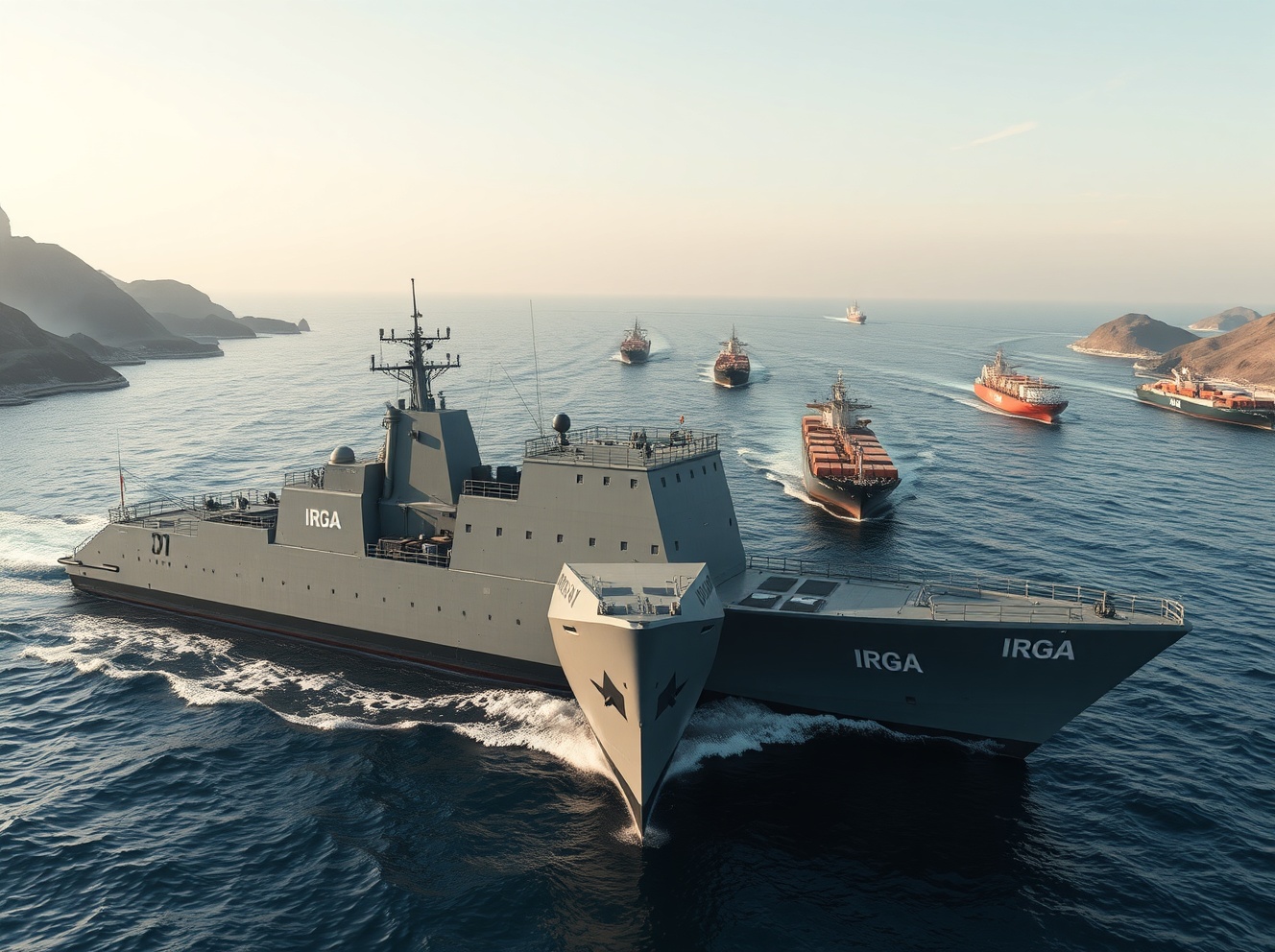
Strait of Hormuz Blockade: Iran’s Critical Move Bars All Ships Amid Rising Tensions
TEHRAN, Iran — April 21, 2025: Iran has declared a complete blockade of the strategically vital Strait of Hormuz, placing all maritime traffic under the strict control of its Islamic Revolutionary Guard Corps Navy. This dramatic escalation follows what Tehran describes as a U.S. violation of a ceasefire agreement. Consequently, no vessels may pass through this critical chokepoint until Iran receives guarantees regarding the lifting of maritime restrictions against its own shipping. The Strait of Hormuz blockade represents one of the most significant disruptions to global energy security in decades.
Understanding the Strait of Hormuz Blockade Announcement
The Iranian government made its formal announcement through state media channels on Monday. Officials stated the IRGC Navy now exercises full authority over navigation within the strait. Furthermore, they emphasized that the prohibition applies universally. Commercial tankers, container ships, and even military vessels face an absolute ban. Tehran’s central demand remains clear. It seeks verifiable assurances that all maritime blockades targeting Iranian commerce are completely removed.
This decision did not occur in isolation. It follows weeks of heightened rhetoric between Iranian and U.S. officials regarding naval activities in the Persian Gulf. Analysts immediately noted the timing. The announcement came precisely 72 hours after a reported incident involving U.S. and Iranian patrol boats near the strait’s entrance. Regional observers had anticipated a response, but the scale of this move—a total closure—surprised many security experts.
Historical Context of Hormuz Tensions
The Strait of Hormuz has long been a flashpoint in Middle Eastern geopolitics. This narrow waterway, only 21 nautical miles wide at its narrowest point, serves as the world’s most important oil transit corridor. Approximately 20-30% of global seaborne crude oil passes through it daily. Consequently, any disruption triggers immediate concern in international energy markets.
Iran has previously threatened to close the strait during periods of heightened conflict. For instance, similar threats emerged during the 2019 tanker crises and the 2020 escalation following the U.S. drone strike that killed General Qasem Soleimani. However, authorities never implemented a full, publicly declared blockade until now. This action marks a definitive shift from threat to enforcement.
- 2019: Multiple tanker attacks and seizures increased tensions.
- 2020: Iran conducted major military exercises simulating a strait closure.
- 2023: The U.S. and Iran entered a fragile maritime security understanding.
- 2025 (April): The current total blockade is announced.
Expert Analysis on Maritime Security Implications
Maritime security analysts express deep concern about the blockade’s implementation. “The IRGC Navy possesses significant asymmetric capabilities in these confined waters,” explains Dr. Elena Vance, a senior fellow at the Maritime Security Institute. “Their fleet of fast attack craft, submarines, and extensive coastal missile batteries creates a formidable deterrent. Enforcing a blockade, however, represents a complex operational challenge.”
International law provides specific frameworks for blockades. The 1909 London Declaration outlines that a blockade must be effective and publicly declared to be legally recognized. Iran’s announcement meets the declaration criterion. Its effectiveness will depend on sustained naval presence and enforcement actions. The United Nations Convention on the Law of the Sea (UNCLOS) also guarantees transit passage through straits used for international navigation. Iran, not a party to UNCLOS, has consistently asserted greater control over what it considers territorial waters.
Immediate Global Economic Impact
The global energy market reacted swiftly to the news. Brent crude oil futures surged by over 8% in early Asian trading. Natural gas prices also experienced significant volatility. This reaction is predictable. The strait is the primary export route for oil producers like Saudi Arabia, Iraq, the United Arab Emirates, Kuwait, and Iran itself. Additionally, nearly all Qatar’s liquefied natural gas (LNG) exports transit this route.
Shipping companies immediately began rerouting vessels. Alternative pathways exist but add substantial cost and time. For example, tankers could use the Bab el-Mandeb Strait and the Cape of Good Hope, adding approximately 15 days to a voyage from the Gulf to Europe. Insurance premiums for vessels remaining in the region skyrocketed. Lloyd’s Market Association listed the Persian Gulf as a high-risk zone, triggering war risk surcharges.
| Country | Barrels Per Day (Millions) | Primary Destination |
|---|---|---|
| Saudi Arabia | 6.2 | Asia, Europe |
| Iraq | 3.8 | Asia, United States |
| UAE | 2.7 | Japan, India |
| Kuwait | 2.1 | Asia |
| Qatar (LNG) | ~3.7 (Mtoe)* | Global |
*Million tonnes of oil equivalent for LNG.
Regional Military Posture and U.S. Response
The United States Fifth Fleet, headquartered in Bahrain, maintains a significant presence in the region. A U.S. Department of Defense statement called Iran’s action “an unlawful and destabilizing escalation.” The statement further affirmed America’s commitment to “freedom of navigation and the free flow of commerce.” However, it did not outline specific military responses. Observers note that any attempt to breach the blockade by force could lead to direct conflict.
Regional allies have also responded. Saudi Arabia and the UAE called for an emergency meeting of the Gulf Cooperation Council. Oman, which shares governance of the strait’s territorial waters with Iran, urged restraint and dialogue. The United Kingdom’s Royal Navy, which conducts joint patrols with the U.S., stated it is monitoring the situation closely.
Meanwhile, the IRGC Navy has reportedly mobilized its entire fleet of fast attack craft and missile boats. It also deployed additional sea mines and coastal defense cruise missile batteries along the shoreline. This show of force aims to demonstrate the blockade’s seriousness and Iran’s capability to enforce it.
The Path to De-escalation
Diplomatic channels remain active behind the scenes. Several neutral nations, including Switzerland and Oman, are reportedly acting as intermediaries. The core Iranian demand—lifting maritime blockades against its ships—refers primarily to U.S. sanctions enforcement that impedes Iranian oil exports. A potential compromise might involve sequenced actions: a partial reopening of the strait in exchange for sanctions relief talks. However, the public positions of both sides currently appear inflexible.
International bodies are also engaging. The International Maritime Organization (IMO) issued a safety circular warning ships to avoid the area. The United Nations Security Council scheduled emergency consultations. Past resolutions, such as UNSCR 2231 endorsing the 2015 nuclear deal, are frequently cited by both sides to justify their positions, highlighting the deep-rooted nature of this dispute.
Conclusion
The Iranian Strait of Hormuz blockade creates an immediate and severe crisis for global energy markets and regional security. This action represents a strategic gamble by Tehran, using its control over a critical geographic chokepoint to gain leverage in broader geopolitical negotiations. The coming days will test the resilience of global supply chains and the diplomatic agility of world powers. The situation remains fluid, but the blockade’s enforcement underscores a stark reality: the stability of the world’s oil supply hinges on the tense waters of the Persian Gulf. All maritime traffic now waits for a political solution to this dangerous impasse.
FAQs
Q1: What exactly did Iran announce regarding the Strait of Hormuz?
Iran announced a complete maritime blockade of the Strait of Hormuz on April 21, 2025. The Iranian Islamic Revolutionary Guard Corps (IRGC) Navy now controls all navigation, prohibiting the passage of all commercial and military vessels until Iran receives guarantees that blockades against its shipping are lifted.
Q2: Why is the Strait of Hormuz so important globally?
The Strait of Hormuz is the world’s most critical oil transit chokepoint. An estimated 20-30% of global seaborne traded oil, primarily from Saudi Arabia, Iraq, the UAE, and Kuwait, passes through this narrow waterway. Its closure disrupts global energy supplies and markets.
Q3: What was the trigger for this blockade?
Iran cites a violation of a ceasefire agreement by the United States as the direct trigger. This follows recent incidents involving U.S. and Iranian naval vessels and is part of a longer-term dispute over U.S. sanctions and maritime security in the Persian Gulf.
Q4: How is the blockade being enforced?
The IRGC Navy is enforcing the blockade with its fleet of fast attack craft, missile boats, and coastal defense systems. Ships attempting to pass are being warned away and could be subject to interception, boarding, or seizure if they defy the order.
Q5: What are the alternatives for shipping if the strait remains closed?
The main alternative for oil tankers is to sail around the Arabian Peninsula, through the Bab el-Mandeb Strait, and around the Cape of Good Hope in Africa. This route adds significant time (roughly 15 extra days) and cost to voyages from the Gulf to Europe or the Americas.
This post Strait of Hormuz Blockade: Iran’s Critical Move Bars All Ships Amid Rising Tensions first appeared on BitcoinWorld.
