






Strait of Hormuz is choking Bitcoin, not just oil. But there's a catch
 AI
AI
 SATS
SATS
 SATOSHI
 JPMORGAN
 BTC
BTC
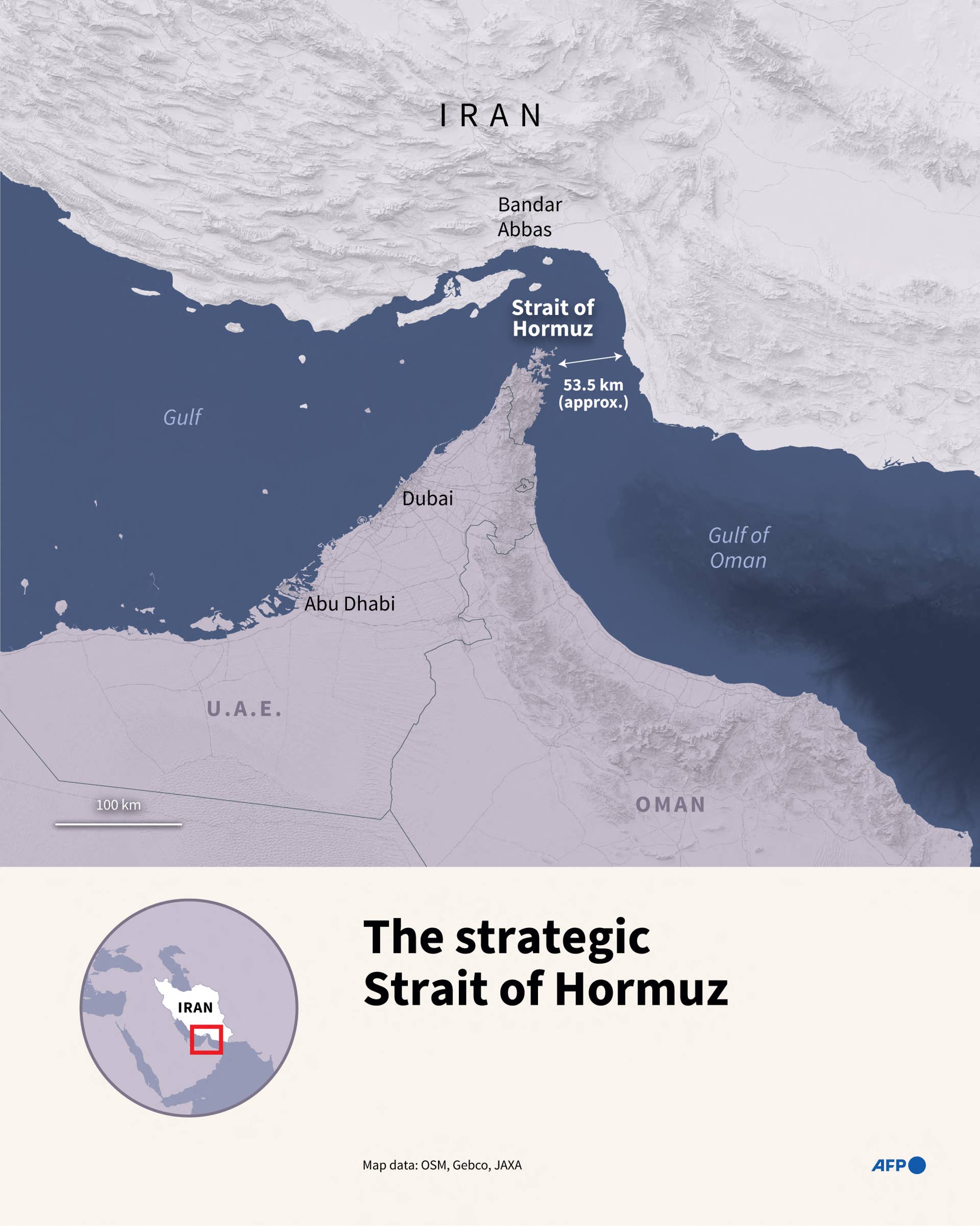
The Strait of Hormuz might be just 21 nautical miles wide, but it is a vital artery connecting the Persian Gulf to the global market.
With the ongoing conflict involving the United States, Israel, and Iran, the narrow passageway is now the ground for an ultimate showdown.
The cost is global supply chain disruption for energy and trade.
"The conflict in the Middle East has highlighted the Strait of Hormuz as a single point of failure when it comes to getting oil, gas, and critical raw materials out of the Gulf region," Geraint John, Vice President of Research and Advisory of Zero100, told TheStreet Roundtable.
Since the war began on February 28, 2026, this corridor has been choked by a naval blockade and intensified military activity.
Because the Strait oversees the passage of more than 20% of the total global oil supply, any disruption carries immediate ramifications for energy prices.
And there is no easy workaround, unlike other major waterways such as the Suez Canal or the Panama Canal, which can be bypassed at a cost.
Since the outbreak of hostilities, oil prices have teetered above $100 per barrel, with occasional retreats toward the $84 mark.
To put this volatility into perspective, on February 26, just two days before the first strikes, WTI crude oil traded at $65 per barrel.
By March 6, it had surged 40% to $90. For the global economy, this represents a massive inflationary shock; for the cryptocurrency industry, the impact is even more nuanced and powerful.
Getty Images
Related: Energy chief warns Europe only has six weeks of fuel left
Digital gold’s fossil fuel connection
While oil prices rattle traditional stock markets, they create a specific set of hurdles for digital asset miners.
Bitcoin mining is the process of using high-performance computers to solve complex mathematical puzzles to secure the network and earn rewards in the form of new coins.
To run these machines, miners require a massive and consistent supply of energy.
According to the Cambridge Digital Mining Industry Report from April 2025, the Bitcoin network consumes approximately 211.58 terawatt-hours annually.
While 52.4% of the energy mix now comes from non-fossil fuel sources like hydropower and wind, a significant 47.6% still relies on fossil fuels, primarily natural gas.
Although oil accounts for only 0.5% of the direct energy mix, Chris Brendler, Senior Research Analyst at Rosenblatt Securities, told TheStreet Roundtable that miners such as those in Texas still depend heavily on it.
But the global oil shortage has other ways of directly impacting Bitcoin mining.
The great mining divide: U.S. vs. Iran
The current conflict has highlighted a startling disparity in global mining economics.
In 2025, Cambridge research revealed that it cost approximately $1,300 to mine a single Bitcoin in Iran, making it the cheapest location on earth for the industry.
Iran legalized crypto mining in 2019. Licensed operators can use subsidized electricity in exchange for selling mined BTC to the central bank.
This is driven by heavily subsidized electricity rates as low as $0.005 per kilowatt-hour.
At current Bitcoin prices near $77,596.10 as of press time, Iranian miners enjoy a staggering profit margin of over 98%.
In contrast, the situation for U.S.-based miners has become existential. Data from CheckOnchain indicates that by early April 2026, the average cost to mine one Bitcoin in the U.S. had climbed to somewhere between $85,000 and $90,000.
With production costs now exceeding the asset's market price, many domestic miners are operating at a net loss.
Brendler noted,
"The price is the biggest direct impact because every dollar they make is basically based on the price of Bitcoin."
But he added that the comparison between Iran and U.S. mining costs should be more nuanced. He pointed out the number of unregistered Bitcoin miners in the country.
Back in 2025, Akbar Hasan Beklou, CEO of the Tehran Province Electricity Distribution Company, noted that Iran's heavily subsidized electricity prices made it a “paradise for illegal miners.”
However, ever since the war broke out on Feb. 28, even the Iranian mining profit margin appears to have dipped.
Iran has lost 7 EH/s of hash rate quarter-over-quarter, according to an April report by Hashrate Index. Some have estimated that Iran earlier had 9 EH/s. In that case, this is a 77% decline in hash rate.
EH/s stands for Exahash per second. It is the unit used to measure Bitcoin mining power (hashrate). A "hash" is a single computational guess a mining machine makes when trying to solve a Bitcoin block.
The more hashes per second a miner or a country's collective mining capacity can produce, the more competitive they are on the network.
Most Popular on TheStreet Roundtable:
- JPMorgan has stark message for investors on market weakness
- New report reveals nearly 40% of Americans have less than $500 in savings
- Wall Street legend's firm reports $3.8 billion in quarterly loss
The halving and the profitability trap
The mining industry was already under immense pressure following the 2024 Bitcoin Halving.
This pre-programmed event, designed by creator Satoshi Nakamoto to control inflation, cuts the block reward given to miners by exactly 50% every four years.
While the reward was 50 BTC at launch in 2009, it dropped to 3.125 BTC in 2024 and is expected to fall to 1.5625 BTC in 2028.
For a miner, the halving is a "zero-hour" event. Revenue is cut in half instantly while hardware and energy costs remain the same.
Before the 2024 event, miners could stay profitable at rates up to $0.12 per kWh; afterward, that breakeven point dropped to roughly $0.07.
This has forced a strategic rethink. To survive, major firms are moving away from being "pure-play" miners and adopting a "Dual-Engine" model, in which Bitcoin mining and high-performance computing (HPC) for AI run side by side.
HIVE Digital Technologies (NASDAQ: HIVE) provides a roadmap for how the industry is adapting to this high-cost environment.
Unlike competitors relying on fossil-fuel-heavy grids, HIVE has built a cost structure that is largely immune to the Hormuz crisis.
“HIVE's entire operating footprint runs on renewable energy, primarily hydroelectric power,” HIVE CFO Darcy Daubaras told TheStreet Roundtable.
“In practice, that means our electricity costs do not change when Brent crude spikes.”
With 440 MW operational and another 100 MW under development in Paraguay, HIVE uses contractually fixed power costs.
AFP via Getty Images
Daubaras explained that HIVE operates a fleet at roughly 17 joules per terahash. When paired with stable renewable power pricing, the result is a cost structure that remains flat while much of the industry absorbs a sharp increase in energy costs.
“In a compressed-margin environment, that stability is a structural advantage,” he noted.
This energy independence, established since the firm's founding in 2017, allows HIVE to avoid the "curtailment" decisions many other operators face.
While fossil-fuel-dependent miners are forced to power down machines when input costs spike, HIVE’s costs remain stable.
In fact, as higher-cost operators go offline, network difficulty adjusts, allowing efficient players to capture a larger share of the rewards.
Related: JPMorgan says CLARITY Act nearing finish line as talks advance
The pivot to the AI supercycle
The most compelling reason for the industry’s shift toward AI is the revenue differential. While Bitcoin mining generates between $0.08 and $0.12 per kilowatt-hour, AI workloads can generate $2 to $3.
“Across the industry, it is well established that AI and HPC workloads can generate three to twenty-five times more revenue per megawatt than Bitcoin mining,” Daubaras explained.
“The math is straightforward: on a like-for-like power footprint, GPUs running AI workloads produce meaningfully higher revenue today than ASICs mining Bitcoin at current difficulty and block rewards.”
The company recently reported record revenue of $93.1 million, bolstered by $30 million in new AI cloud contracts. However, HIVE views this as an additive strategy.
“Our response has not been to abandon Bitcoin; it has been to systematize capital allocation between two engines,” Daubaras noted.
He clarified that HIVE is scaling AI on top of Bitcoin mining, not in place of it, utilizing the same green infrastructure to deliver contracted, dollar-denominated recurring revenue.
Is the war the final nail in the coffin?
Daubaras noted that due to the rising cost of mining a single Bitcoin, the industry is bifurcating.
“Miners with diversified, contract-based revenue and low-cost renewable power are pulling away, while those with single-threaded revenue and volatile energy costs are under mounting pressure.”
Meanwhile, Brendler is clear that the network is built to endure.
"There will always be Bitcoin miners. There will always be companies that are able to operate profitably over the long run."
He pointed to Bitcoin's difficulty adjustment mechanism as the critical safeguard of a self-correcting system. It automatically recalibrates mining difficulty every two weeks based on how long blocks are taking to produce.
As less efficient miners are forced offline by deteriorating economics, the network simply gets easier to mine for those who remain, ensuring that the most efficient operators stay profitable.
"The hash rate will always protect the most efficient miners," Brendler noted.
What the current environment is producing, in his view, is not collapse but a natural culling.
The Iran-related hash rate drop, while significant for the region, is, in his assessment, too small to materially shift the global picture.
Bitcoin, as Brendler sees it, does not break. It just gets more efficient.
Related: Trump blockade order sends global oil prices above $100
