



US Dollar Index Soars: Defiant Rally to 98.50 Fueled by Escalating Middle East Crisis
 DOLLAR
 RLY
RLY
 DEFIANT
 RALLY
RALLY
 CHF
CHF
BitcoinWorld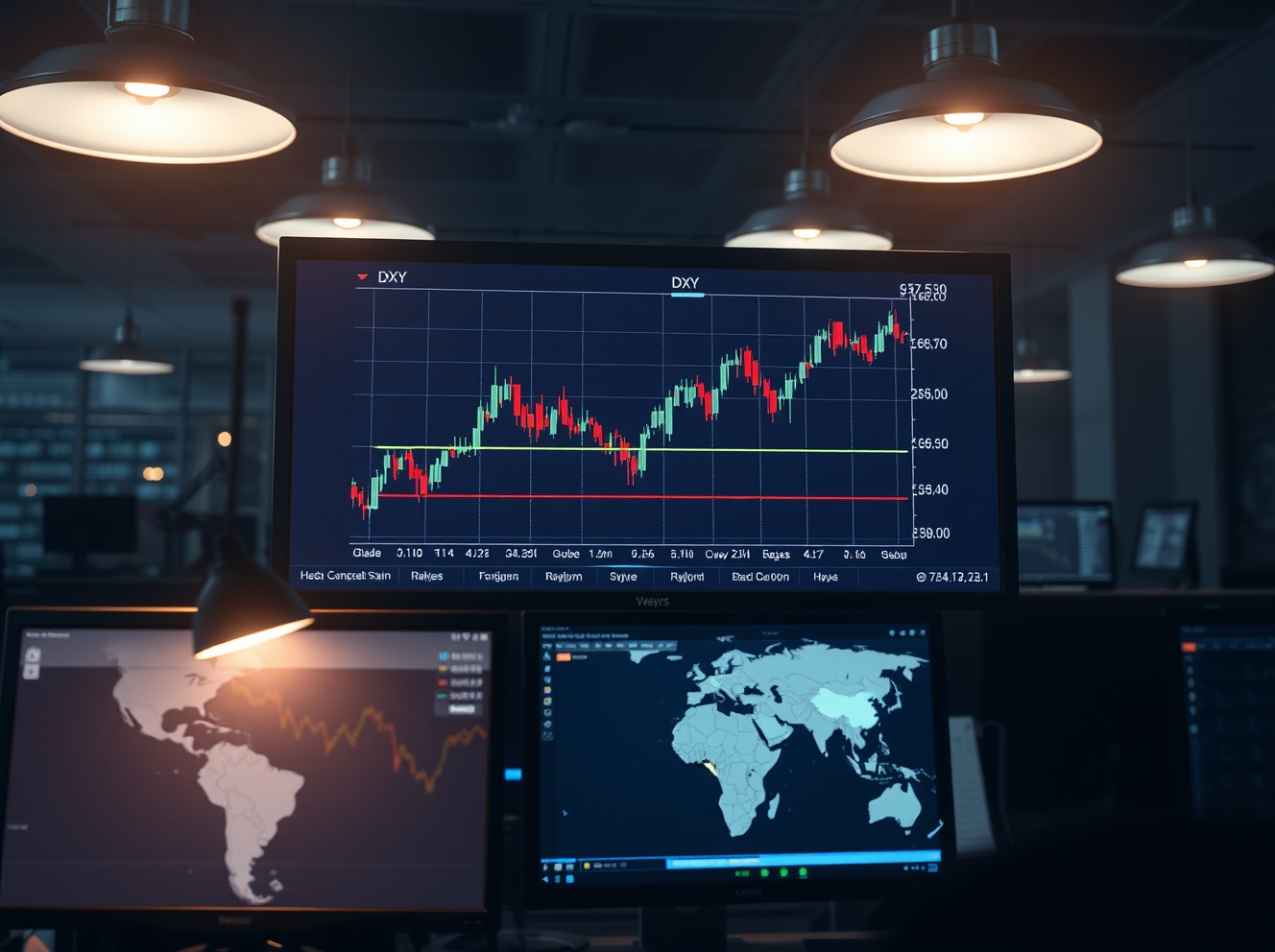
US Dollar Index Soars: Defiant Rally to 98.50 Fueled by Escalating Middle East Crisis
NEW YORK – April 10, 2025: The US Dollar Index (DXY) demonstrates remarkable resilience, holding firm near the 98.50 level in Thursday’s trading session. This sustained strength directly correlates with a significant flare-up of geopolitical tensions in the Middle East, triggering classic safe-haven flows into the world’s primary reserve currency. Consequently, analysts now scrutinize the potential for prolonged dollar strength and its broad implications for global trade, emerging markets, and the Federal Reserve’s monetary policy trajectory.
US Dollar Index Holds Ground Amid Geopolitical Uncertainty
The DXY, which measures the dollar’s value against a basket of six major currencies, consolidated its weekly gains. Market participants globally shifted capital toward perceived safety. This movement follows reports of escalated military posturing in a key Middle Eastern maritime corridor. Historically, such events create immediate demand for the US dollar and US Treasury securities. Furthermore, the current environment combines this geopolitical risk with existing macroeconomic crosscurrents, including divergent central bank policies.
Currency traders closely monitor several technical and fundamental levels. The 98.50 zone now acts as a critical short-term resistance point. A decisive break above could open the path toward the 99.00 psychological handle. Conversely, a de-escalation in tensions would likely prompt profit-taking, pulling the index back toward its 50-day moving average near 97.80. The dollar’s performance against individual components tells a nuanced story, with particular strength evident against commodity-linked and risk-sensitive currencies.
Anatomy of a Safe-Haven Rally: How Geopolitics Moves Forex Markets
Geopolitical instability reliably catalyzes specific patterns in the foreign exchange market. Firstly, investors and corporations seek the liquidity and stability of the US financial system. Secondly, global oil price volatility often increases, which can paradoxically support the dollar as the currency for crude oil transactions. Thirdly, expectations for Federal Reserve policy may subtly shift if instability threatens global growth, potentially delaying rate cuts.
This episode’s impact is visible across the currency basket:
- Euro (EUR/USD): Pressured below 1.0800, reflecting the Eurozone’s geographic and economic exposure to Middle Eastern energy supplies.
- Japanese Yen (USD/JPY): The traditional safe-haven underperformed the dollar, trading higher near 152.00, as the Bank of Japan’s ultra-accommodative stance limits its appeal.
- Swiss Franc (USD/CHF): Showed relative strength, though less than the dollar, confirming its secondary safe-haven status.
- British Pound (GBP/USD): Retreated toward 1.2600, as the UK’s growth outlook remains fragile.
Expert Analysis: Beyond the Immediate Headline
Market strategists emphasize the difference between a short-term flight-to-safety and a sustained trend. “While the DXY pop is headline-driven, its persistence depends on whether the conflict disrupts trade flows or energy supplies,” notes a senior forex analyst at a major global bank. “The market is also weighing this against the Fed’s data-dependent stance. Strong US economic data could merge with safe-haven demand to create a powerful bullish cocktail for the dollar.”
Historical precedent provides context. Past Middle East crises in 2022 and 2020 saw the DXY spike 2-4% over two weeks before partially retracing. The current macroeconomic backdrop, however, is distinct, with US interest rates already at restrictive levels. This limits the Fed’s ability to ease policy in response to a growth shock, potentially making the dollar’s strength more persistent if global growth fears mount.
Broader Market Implications and Future Trajectory
A stronger dollar carries significant consequences. It makes dollar-denominated debt more expensive for emerging markets, tightening global financial conditions. It also pressures commodities priced in dollars, like gold and copper, though gold can also benefit from safe-haven bids. For US multinational corporations, a robust dollar translates to reduced overseas revenue when converted back, potentially impacting equity earnings.
The following table contrasts key drivers of the DXY:
| Bullish Drivers (Supporting DXY) | Bearish Drivers (Pressuring DXY) |
|---|---|
| Geopolitical risk & safe-haven flows | De-escalation of tensions |
| Relative US economic strength | Coordinated central bank intervention |
| Hawkish Federal Reserve policy expectations | Recession fears shifting focus to Fed cuts |
| Weakness in major counterpart economies (EU, China) | Successful diplomatic resolutions |
Looking ahead, traders will monitor diplomatic channels, oil inventory reports, and statements from Federal Reserve officials. The next US Consumer Price Index (CPI) report remains a critical data point. It will test whether inflation concerns or growth fears dominate the dollar’s narrative once the initial geopolitical shock absorbs.
Conclusion
The US Dollar Index holding near 98.50 underscores the currency’s enduring role as the global financial sanctuary during times of uncertainty. While fueled by renewed Middle East tensions, the rally’s sustainability hinges on the conflict’s duration and economic spillover. Market participants must now navigate a landscape where geopolitics directly influences monetary policy expectations and global capital allocation. The DXY’s trajectory will serve as a crucial barometer for risk sentiment and international economic stability in the coming weeks.
FAQs
Q1: What is the US Dollar Index (DXY)?
The US Dollar Index is a measure of the value of the United States dollar relative to a basket of six major world currencies: the Euro, Japanese Yen, British Pound, Canadian Dollar, Swedish Krona, and Swiss Franc.
Q2: Why does the dollar strengthen during geopolitical crises?
The US dollar is considered the world’s primary reserve currency and safe-haven asset. During crises, global investors seek its perceived stability and the deep liquidity of US financial markets, increasing demand and driving its value higher.
Q3: How do Middle East tensions specifically affect the DXY?
Tensions can disrupt global oil supplies, increasing volatility. Since oil is priced in dollars, uncertainty can boost dollar demand. Additionally, any threat to global trade or growth prompts capital to flee riskier assets for the safety of US Treasuries, strengthening the dollar.
Q4: Could this rally change the Federal Reserve’s policy plans?
Potentially. A significantly stronger dollar tightens global financial conditions and could dampen US inflation by making imports cheaper. This might give the Fed more room to delay or reduce the scale of future interest rate cuts if price pressures ease.
Q5: What are the risks of a strong US Dollar Index for the global economy?
A strong dollar makes servicing dollar-denominated debt more expensive for emerging markets and foreign corporations. It also hurts the export competitiveness of US companies and can exert deflationary pressure on commodity prices, impacting producer nations.
This post US Dollar Index Soars: Defiant Rally to 98.50 Fueled by Escalating Middle East Crisis first appeared on BitcoinWorld.
