





USD/CAD Post-FOMC Spike Fades Sharply During Powell’s Presser: A Critical Analysis
 SPIKE
SPIKE
 SPIKE
SPIKE
 SPIKE
SPIKE
 RSRV
RSRV
 SPIKE
SPIKE
BitcoinWorld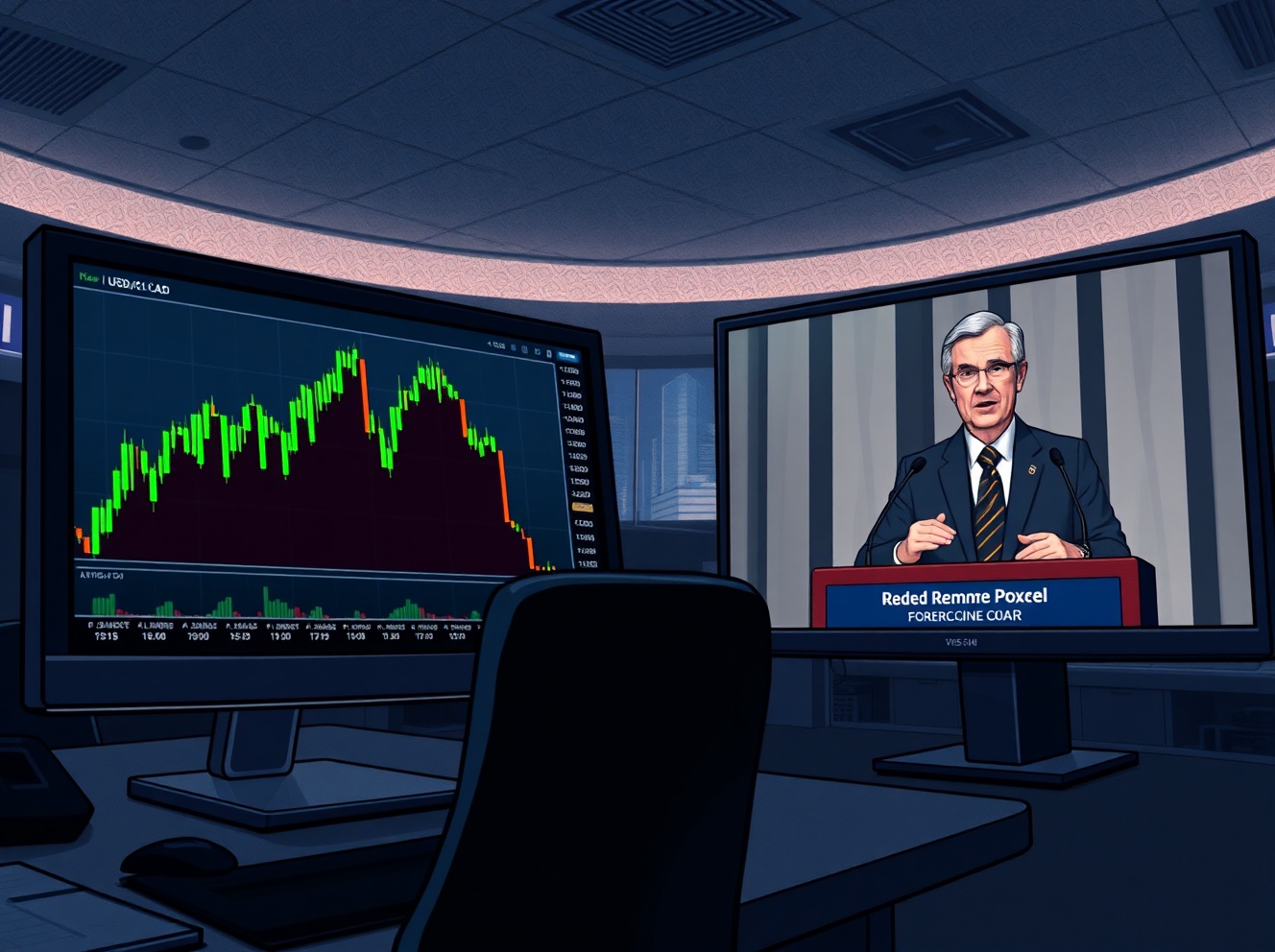
USD/CAD Post-FOMC Spike Fades Sharply During Powell’s Presser: A Critical Analysis
The USD/CAD post-FOMC spike reversed dramatically during Federal Reserve Chair Jerome Powell’s press conference. This sharp move caught many traders off guard. The initial surge came after the Fed’s rate decision. But Powell’s dovish tone quickly erased those gains. This article provides a detailed analysis of the event, its causes, and its implications for forex markets.
Understanding the USD/CAD Post-FOMC Spike
The Federal Reserve held its key interest rate steady at 5.25%–5.50%. This decision matched market expectations. The USD/CAD pair initially jumped by 0.4% within minutes. Traders interpreted the unchanged rate as a hawkish signal. They expected the Fed to maintain a tight monetary policy. However, this reaction proved short-lived.
Why Did the Initial Spike Occur?
The initial spike reflected a knee-jerk reaction. Market participants focused on the rate decision itself. They ignored the accompanying statement’s nuances. The statement noted that inflation remains elevated. But it also acknowledged progress toward the 2% target. This subtle shift was overlooked during the first few minutes.
Key factors behind the initial spike:
- Rate decision: The Fed held rates steady, as expected.
- Market positioning: Many traders were short USD/CAD before the announcement.
- Short covering: The initial move triggered a wave of short covering.
- Algorithmic trading: Automated systems amplified the move.
The Powell Presser Fade: A Textbook Reversal
The Powell presser fade began as soon as the chair started speaking. Powell emphasized the Fed’s cautious approach. He stated that rate cuts are not imminent. But he also opened the door for future easing. This balanced tone disappointed hawkish traders.
Powell’s key comments that triggered the fade:
- Inflation progress: He noted that inflation has eased significantly.
- Labor market: He highlighted a cooling labor market.
- Economic outlook: He expressed caution about growth prospects.
- Rate path: He suggested that the next move could be a cut.
These remarks shifted market sentiment. The dollar weakened across the board. The USD/CAD pair reversed its initial gains. It eventually traded 0.3% lower on the day.
Comparing the Fed’s Stance with the Bank of Canada
The Bank of Canada (BoC) has already begun its easing cycle. It cut rates by 25 basis points in June 2024. This divergence between the two central banks plays a crucial role in USD/CAD movements.
Key differences between the Fed and BoC:
| Central Bank | Current Rate | Recent Action | Future Outlook |
|---|---|---|---|
| Federal Reserve | 5.25%–5.50% | Held steady | Potential cuts in 2024 |
| Bank of Canada | 4.75% | Cut 25 bps in June | Further cuts expected |
This table shows the policy gap. The BoC is ahead of the Fed in easing. This typically supports the Canadian dollar. However, the USD/CAD pair remains sensitive to other factors.
Technical Analysis of the USD/CAD Chart
The USD/CAD post-FOMC spike created a clear technical pattern. The pair formed a bearish engulfing candle on the daily chart. This pattern signals a potential reversal. The spike failed to break above the 1.3700 resistance level. This level has held firm for several weeks.
Key technical levels to watch:
- Resistance: 1.3700, 1.3750, 1.3800
- Support: 1.3600, 1.3550, 1.3500
- Moving averages: The 50-day MA is at 1.3650, the 200-day MA is at 1.3580
- RSI: The Relative Strength Index is at 48, neutral territory
These levels provide a roadmap for traders. The pair remains range-bound. A break above 1.3700 would be bullish. A break below 1.3600 would be bearish.
Impact of Oil Prices on USD/CAD
Oil prices play a significant role in USD/CAD movements. Canada is a major oil exporter. Higher oil prices typically support the Canadian dollar. Conversely, lower oil prices weigh on it.
Recent oil price action:
- West Texas Intermediate (WTI): Crude oil traded around $78 per barrel.
- Supply concerns: OPEC+ production cuts support prices.
- Demand worries: Slowing global growth limits upside.
The correlation between oil and USD/CAD remains strong. Traders should monitor oil prices closely. A sustained rally in oil could push USD/CAD lower.
Market Sentiment and Positioning
Market sentiment shifted dramatically during Powell’s presser. The Powell presser fade reflected a change in risk appetite. Traders reduced their long dollar positions. They increased their exposure to riskier assets.
Sentiment indicators:
- US Dollar Index (DXY): The DXY fell 0.4% on the day.
- Stock markets: US equities rallied on dovish Fed comments.
- Bond yields: The 10-year Treasury yield dropped to 4.25%.
These indicators show a clear shift. The market now expects the Fed to cut rates in September. This expectation will continue to influence USD/CAD.
Expert Perspectives on the Move
Forex analysts provided their insights on the USD/CAD post-FOMC spike and subsequent fade.
Analyst 1: “The initial spike was a classic false breakout. Traders who chased the move got caught on the wrong side. Powell’s comments were the catalyst for the reversal.”
Analyst 2: “The USD/CAD pair is now at a critical juncture. The failure to break above 1.3700 is a bearish signal. I expect the pair to test support at 1.3600 in the coming days.”
Analyst 3: “The Fed’s cautious tone supports the case for a weaker dollar. The Canadian dollar should benefit from this. However, oil prices remain a wildcard.”
These expert views provide context. They highlight the importance of the event.
Timeline of Events
A clear timeline helps understand the price action.
- 2:00 PM ET: Fed announces rate decision. USD/CAD spikes to 1.3695.
- 2:05 PM ET: Powell begins press conference. Pair starts to fade.
- 2:15 PM ET: Powell discusses inflation progress. Pair drops to 1.3660.
- 2:30 PM ET: Powell mentions labor market cooling. Pair falls to 1.3640.
- 3:00 PM ET: Press conference ends. Pair settles at 1.3630.
This timeline shows the speed of the reversal. The entire move unfolded in less than an hour.
Implications for Forex Traders
The USD/CAD post-FOMC spike and fade offer valuable lessons for traders.
Key takeaways:
- Don’t chase initial moves: Knee-jerk reactions often reverse.
- Wait for the press conference: The real market-moving information comes during the Q&A.
- Use stop-losses: Protect your capital from sudden reversals.
- Monitor multiple timeframes: The daily chart shows a clear range.
These lessons can improve trading performance. They apply to all major forex events.
Conclusion
The USD/CAD post-FOMC spike that faded during Powell’s presser highlights the importance of reading between the lines. The initial market reaction did not reflect the full picture. Powell’s dovish tone shifted sentiment quickly. The Canadian dollar gained strength as the dollar weakened. This event reinforces the need for a comprehensive analysis. Traders should focus on central bank guidance, not just rate decisions. The USD/CAD pair remains in a tight range. A breakout is likely in the coming weeks. The direction will depend on future economic data and central bank comments.
FAQs
Q1: Why did the USD/CAD spike after the FOMC decision?
A1: The initial spike occurred because traders focused on the rate decision itself. They ignored the dovish tone in the accompanying statement. Short covering and algorithmic trading amplified the move.
Q2: What caused the reversal during Powell’s press conference?
A2: Powell’s comments about inflation progress and a cooling labor market shifted market sentiment. He opened the door for future rate cuts. This weakened the dollar and strengthened the Canadian dollar.
Q3: How does the Bank of Canada’s policy affect USD/CAD?
A3: The BoC has already started cutting rates. This divergence with the Fed typically supports the Canadian dollar. However, other factors like oil prices also play a role.
Q4: What are the key technical levels for USD/CAD?
A4: Key resistance is at 1.3700, 1.3750, and 1.3800. Key support is at 1.3600, 1.3550, and 1.3500. The pair remains range-bound between these levels.
Q5: What should traders learn from this event?
A5: Traders should avoid chasing initial moves. They should wait for the full context, including press conferences. Using stop-losses and monitoring multiple timeframes is essential.
This post USD/CAD Post-FOMC Spike Fades Sharply During Powell’s Presser: A Critical Analysis first appeared on BitcoinWorld.
