



USD/CHF Plummets to 0.7900 Threshold as Critical US-Iran Ceasefire Talks Stall
 DOLLAR
 BANK
BANK
 MAJOR
MAJOR
 T
T
 CHF
CHF
BitcoinWorld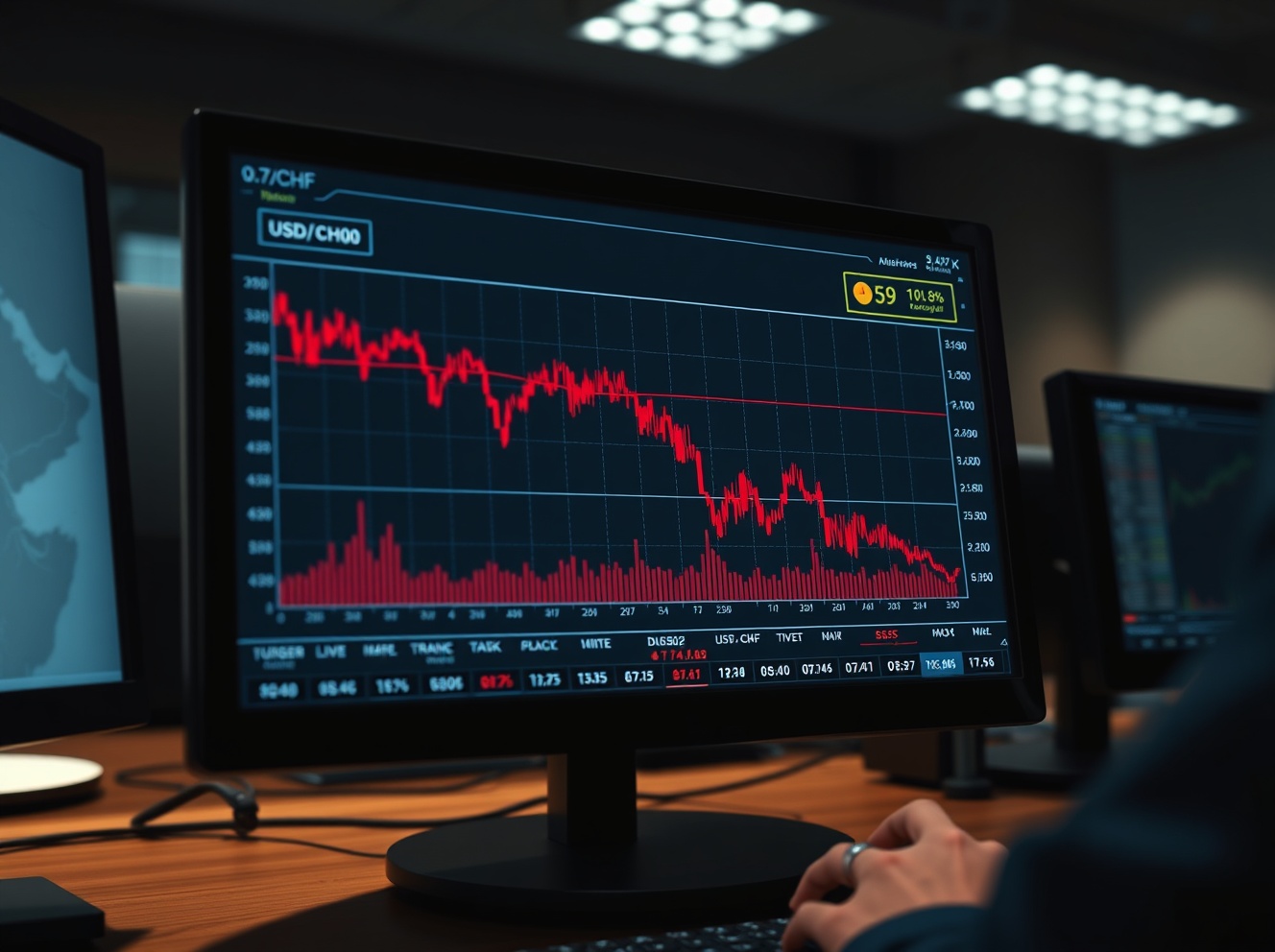
USD/CHF Plummets to 0.7900 Threshold as Critical US-Iran Ceasefire Talks Stall
The USD/CHF currency pair experienced a sharp decline in early European trading, breaching key support levels to hover perilously near the 0.7900 handle. This significant move, observed on Wednesday, March 19, 2025, directly correlates with escalating uncertainty surrounding fragile ceasefire negotiations between the United States and Iran. Consequently, traders are flocking to the Swiss Franc’s traditional safe-haven status, applying intense selling pressure on the US Dollar.
USD/CHF Technical Breakdown and Market Reaction
The pair’s descent to multi-week lows represents a clear technical breakdown. Market analysts immediately identified the 0.7950 level as a crucial support zone. However, the breach of this level triggered automated sell orders and intensified the downward momentum. The Swiss National Bank (SNB) has historically intervened to prevent excessive Franc appreciation, but no official statements have emerged yet. Meanwhile, the US Dollar Index (DXY) also showed broad weakness, falling 0.4% against a basket of major currencies. This parallel movement confirms the geopolitical news is driving a broad-based risk-off sentiment across forex markets.
Forex market volatility, as measured by key indices, spiked by over 15% during the Asian and European sessions. The following table illustrates the immediate pair movements across major sessions:
| Trading Session | USD/CHF Price Action | Key Driver |
|---|---|---|
| Asian Session | Steady decline from 0.7980 | Initial headlines on stalled talks |
| European Open | Accelerated sell-off to 0.7915 | Confirmed reports from European diplomats |
| Current (London) | Consolidation near 0.7905 | Profit-taking and await US session liquidity |
Geopolitical Context: The Stalled US-Iran Negotiations
The immediate catalyst for the forex turbulence stems from the Middle East. Diplomatic sources confirmed that indirect talks, mediated by Oman, have hit a substantial impasse. Key sticking points reportedly include the scope of sanctions relief and verification protocols for Iran’s nuclear activities. Historically, geopolitical tension in the region triggers a flight to safety. The Swiss Franc benefits disproportionately due to Switzerland’s political neutrality, robust current account surplus, and substantial gold reserves. Conversely, the US Dollar often suffers in such scenarios due to America’s direct involvement and the potential for the conflict to disrupt global energy supplies, impacting US economic forecasts.
Previous episodes of US-Iran tension provide clear precedent. For instance, following the 2020 escalation, the USD/CHF pair fell over 300 pips in a week. The current price action mirrors those historical patterns, suggesting traders are pricing in a prolonged period of uncertainty. Furthermore, the lack of a clear timeline for resumed talks removes a potential stabilizing factor from the market.
Expert Analysis on Safe-Haven Flows
Senior currency strategists at major international banks have weighed in on the dynamics. “The market is treating the Swiss Franc as a pure geopolitical hedge,” noted Elena Vargas, Head of FX Strategy at Global Banc. “The correlation between CHF strength and Middle East volatility indices has tightened significantly this quarter. Until investors see verifiable progress at the negotiation table, the bias for USD/CHF remains skewed to the downside.” This analysis is supported by fund flow data showing increased allocations to CHF-denominated assets in the past 48 hours. Moreover, options markets show a sharp rise in demand for contracts protecting against further Franc appreciation, indicating institutional concern.
Broader Financial Market Implications
The ripple effects extend beyond the forex market. Typically, a stronger Swiss Franc presents challenges for Switzerland’s export-oriented economy. Major Swiss multinationals in pharmaceuticals and manufacturing see their overseas earnings reduced when converted back to CHF. However, the SNB maintains a toolbox of potential interventions, including verbal guidance and direct market operations. Simultaneously, other traditional safe havens like gold and Japanese Yen also registered gains, though less pronounced than the Franc’s move. This selective strength underscores the market’s view of the Swiss currency as the primary beneficiary of this specific geopolitical strain.
Key factors traders are monitoring include:
- Diplomatic Communications: Any official statement from US State Department or Iranian officials.
- SNB Sentiment: Signals from the Swiss National Bank regarding Franc strength.
- Oil Price Volatility: A sharp rise in crude oil could exacerbate USD weakness globally.
- US Economic Data: Upcoming releases may compete for market attention if geopolitics calm.
Conclusion
The USD/CHF pair’s decline to the 0.7900 region serves as a direct barometer of market anxiety over the stalled US-Iran ceasefire. The Swiss Franc’s rally highlights its entrenched role as a premier safe-haven currency during geopolitical crises. The immediate technical outlook remains bearish, with further support levels at 0.7880 and 0.7850 now in focus. Ultimately, the trajectory of the USD/CHF exchange rate will be predominantly dictated by developments in the negotiation room, with sustained uncertainty likely to maintain downward pressure on the pair.
FAQs
Q1: Why does the Swiss Franc strengthen during geopolitical uncertainty?
The Swiss Franc is considered a safe-haven currency due to Switzerland’s political neutrality, historical stability, strong fiscal position, and large gold and foreign currency reserves. Investors buy CHF to preserve capital during global risk-off events.
Q2: How does US-Iran tension specifically affect the USD/CHF pair?
As the US is a direct party to the conflict, the US Dollar can face selling pressure due to potential economic and military costs. Simultaneously, demand for the safe-haven Swiss Franc rises, causing the USD/CHF pair (the amount of USD needed to buy one CHF) to fall.
Q3: What is the significance of the 0.7900 level for USD/CHF?
0.7900 is a major psychological and technical support level. A sustained break below it could trigger further automated selling and open the path toward lower support zones, signaling a deeper market conviction about prolonged risk aversion.
Q4: Could the Swiss National Bank intervene to weaken the Franc?
Yes, the SNB has a history of intervening in forex markets to prevent excessive appreciation of the CHF, which hurts Swiss exports. They can use verbal intervention (warnings) or direct market operations (selling CHF).
Q5: Besides USD/CHF, what other assets are sensitive to this news?
Other safe havens like gold, the Japanese Yen (JPY), and US Treasury bonds typically see buying interest. Conversely, global stock markets and oil prices may experience volatility due to the risk of regional supply disruptions.
This post USD/CHF Plummets to 0.7900 Threshold as Critical US-Iran Ceasefire Talks Stall first appeared on BitcoinWorld.
